At noon in Upper Egypt, the desert sun owns every inch of stone. Heat rises off the Nile in bright waves. Then, for six minutes, the light goes out.
On Monday, August 2, 2027, the shadow of the Moon will cross the North Atlantic and graze southern Spain. It will sweep over Morocco, Algeria, Tunisia, and Libya. Then it will cut straight across Upper Egypt and cross the Red Sea. Astronomers call this the Eclipse of the Century for one plain reason. Southeast of Luxor, total darkness will hold for six minutes and twenty-three seconds. No other land eclipse in our century lasts that long.
When a shadow that wide crosses four-thousand-year-old temples, rumors run wild. Clips online tie the 2027 eclipse to hidden rooms, red stars, and prophecies at the Great Sphinx. Putting real sky math and stone history beside modern tales makes the real sky feel larger than any rumor.
What crosses Luxor and what touches Giza
NASA charts by Fred Espenak show a dark shadow path about two hundred fifty-eight kilometers wide. In Luxor, total darkness starts near 1:02 PM local time and peaks around 1:05 PM. The Sun hangs high overhead. People near Karnak and the Avenue of Sphinxes will stand for six minutes and twenty-two seconds beneath the white solar crown. Desert air drops in heat at once. Street noise stops. Amber light rings the whole edge of the sky.
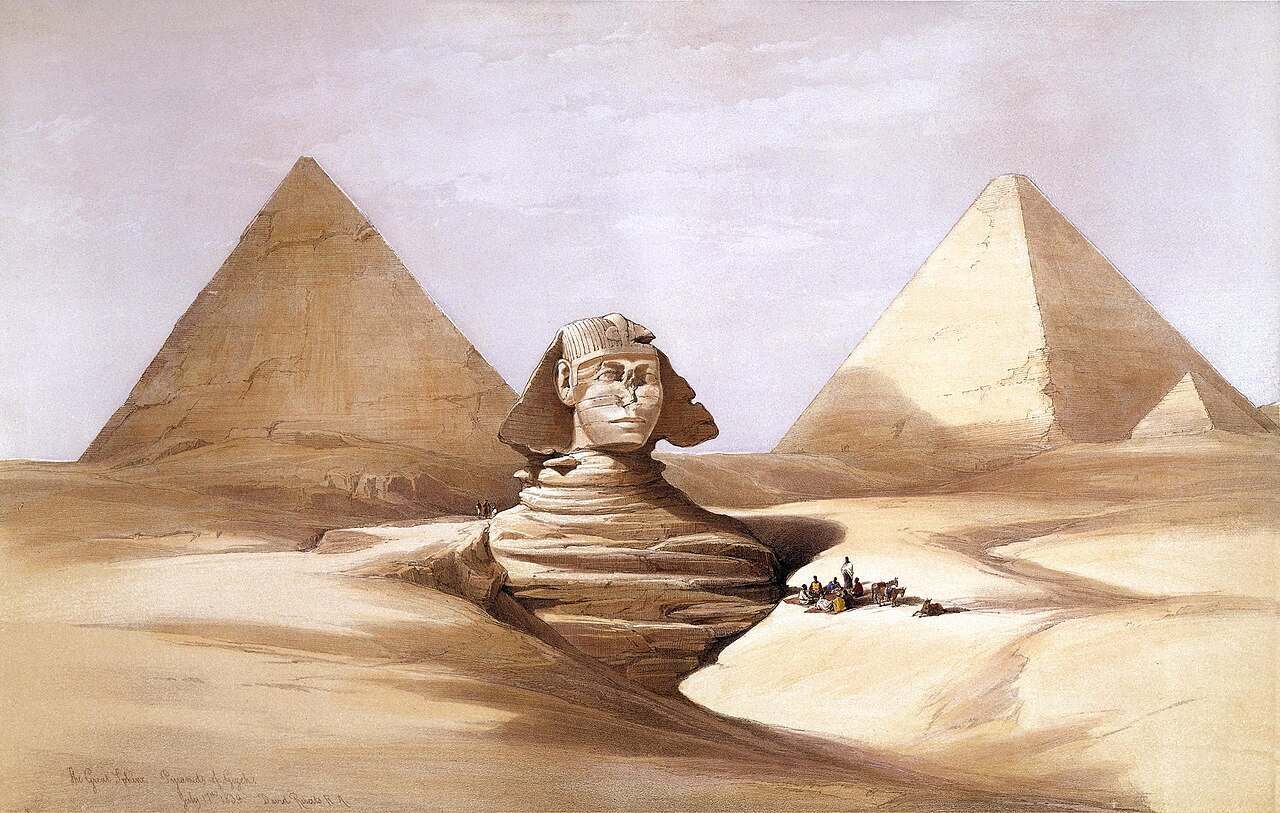
One map fact gets lost in almost every online video. Cairo and the Great Sphinx at Giza stand more than three hundred miles north of Luxor. They sit well outside the path of full darkness. On August 2, 2027, crowds at the Sphinx will see a deep partial eclipse. The Moon will cover ninety-four to ninety-five percent of the Sun. Daylight will turn to a strange gray dusk, yet full night will stay far south.
Stone, stars, and four claims at Giza
Even outside totality, the Sphinx pulls modern legends toward itself. Four distinct stories show where stone history ends and recent lore begins.
Geologists and scholars of Egypt date the Great Sphinx to King Khafre around 2500 BCE. Workers carved it out of Giza bedrock as a guard for the Sun. Later ages named it Hor-em-akhet, which means Horus in the Horizon. Its face looks due east toward the sunrise at the equinox. That direction points to Old Kingdom sun worship, never to a secret clock set for our decade.
In the 1990s, writers Robert Bauval and Graham Hancock wrote The Message of the Sphinx. They claimed water marks and star lines pointed back to 10,500 BCE. Geologists reject that early date based on the rock layers themselves.
Two newer prophecies around the stone face also break down under simple checks. In the 1930s, Edgar Cayce spoke in trance of an Atlantean Hall of Records under the right paw. He said it would open near the year 2000. Radar scans and shaft checks found natural rock cracks and sealed test holes.
More recently, Chris Bledsoe shared a vision tying a world shift to a red star Regulus rising before dawn in the gaze of the Sphinx. Three plain sky facts answer that claim. First, Regulus is a blue-white star, never red. Second, Earth carries the Sun past Regulus each August, so Regulus rises before dawn every autumn. Third, on August 2, 2027, the eclipsed Sun stands near ten degrees of Leo while Regulus sits past zero degrees of Virgo, over twenty degrees away.
Outside literal rock digs, modern intuitive teachers treat Giza as a threshold for human awareness. In her Thoth writings, Maia Nartoomid calls the stone Sphinx an outer shell for a star pattern she names the Guardian of Mazzaroth. She links it to the lion-headed Sun Lords who watch the Eye of Ra. In the Law of One books, channeled by Carla Rueckert with Don Elkins and Jim McCarty, Ra calls the Giza stones instruments built to focus light and wake the mind. Those teachings belong to spirit lore. Limestone and star charts tell the story of the ground.
Two temples in Luxor and the Eye of Ra
Walk into Luxor Temple beneath the real path of totality, and two human drives stand carved in stone.
King Amenhotep III built the inner rooms to human scale. His walls honor balance between king, people, sky, and the Nile flood. That same king filled Thebes with hundreds of dark stone statues of Sekhmet, the lioness of Egypt. She is the Eye of Ra, the fire that leaves the Sun and turns back when it sees its own face.
Later on, Ramesses II built huge outer courts lined with giant statues of war and royal pride. Five thousand years of stone hold both ways of rule side by side. Every age still chooses between quiet care inside the house and loud power at the gate.
Six minutes of silence at ten degrees of Leo
In old sky lore, the Sun stands for visible rule, pride, and the center of the stage. Leo is its own sign, linked to the heart, courage, and bright display.
When the Moon hides the Sun at ten degrees of Leo over Luxor, whatever rules the stage loses its light for six minutes. No eclipse opens secret doors under the sand. Still, six minutes of cool noon shadow works like an honest mirror. When showmanship halts and the desert grows quiet, false pride, rush, and borrowed fear stand out in plain sight.
You do not need a plane ticket to Upper Egypt in 2027 to step under that mirror. Set down online countdowns. Check real facts before you pass rumors along. Give steady care to the people who share your table.
To see where this eclipse touches your chart, open the free birth chart and find ten degrees of Leo. Notice which house holds that spot and which planets stand nearby. You can also explore Eclipses or Your Transits to trace how the 2027 shadow crosses your path.