At noon in an old city, thick stone walls and full grain rooms could make a king feel safe. Then the Sun turned black overhead. Birds dropped into the trees, lamps were lit at midday, and crowns looked small under the dark sky.
Across Babylon, Assyria, China, Egypt, and Greece, skywatchers refused to stop at fear. Court scribes stamped the month, shadow depth, sky direction, and town news onto clay and bamboo. Bit by bit, those notes built one of the oldest sky records on Earth.
Clay tablets and royal scribes in Babylon
In Babylon and Assyria, watching eclipses was public work like irrigation books and land treaties. Historian Nicholas Campion writes in Astrology and Cosmology in the World's Religions about Enuma Anu Enlil. That vast clay archive paired solar and lunar eclipses with grain crops, wars, and kings in plain if-then lines.
Specific tablets still sit in museums today. The Assyrian eponym chronicle notes the solar eclipse of June 15, 763 BCE, called the Bur-Sagale eclipse. It lists that dark noon right beside unrest in Ashur. A late Babylonian tablet in the British Museum lists lunar eclipse notes next to the 465 BCE killing of Persian king Xerxes I.
Tying a dark moon to palace murder sounds odd at first glance. To Mesopotamian scribes, sky and city shared one law. Writing down each shadow reminded kings that earthly thrones sit on borrowed time under heaven.
How old shadows lock down deep history
Those omen scribes also handed modern historians a priceless clock. Old Near Eastern lists reset year one whenever a new king took power. Because of that, king lists drifted across centuries. One dated eclipse cuts straight through that fog.
Scientists run orbit math backward while tracking Delta-T, the slow braking of Earth's spin from ocean tides. They measure that drift by checking Ptolemy's Almagest against Babylonian clay tablets. That math pins old shadows to exact afternoon hours.
Egypt left fewer eclipse tables than Babylon. Even so, clay tablets like the Amarna Letters tie Egypt directly to Hittite and Babylonian kings. Hittite annals under King Mursili II note a solar sign before a war march. Dating that shadow helps lock Late Bronze Age time across the whole eastern sea.
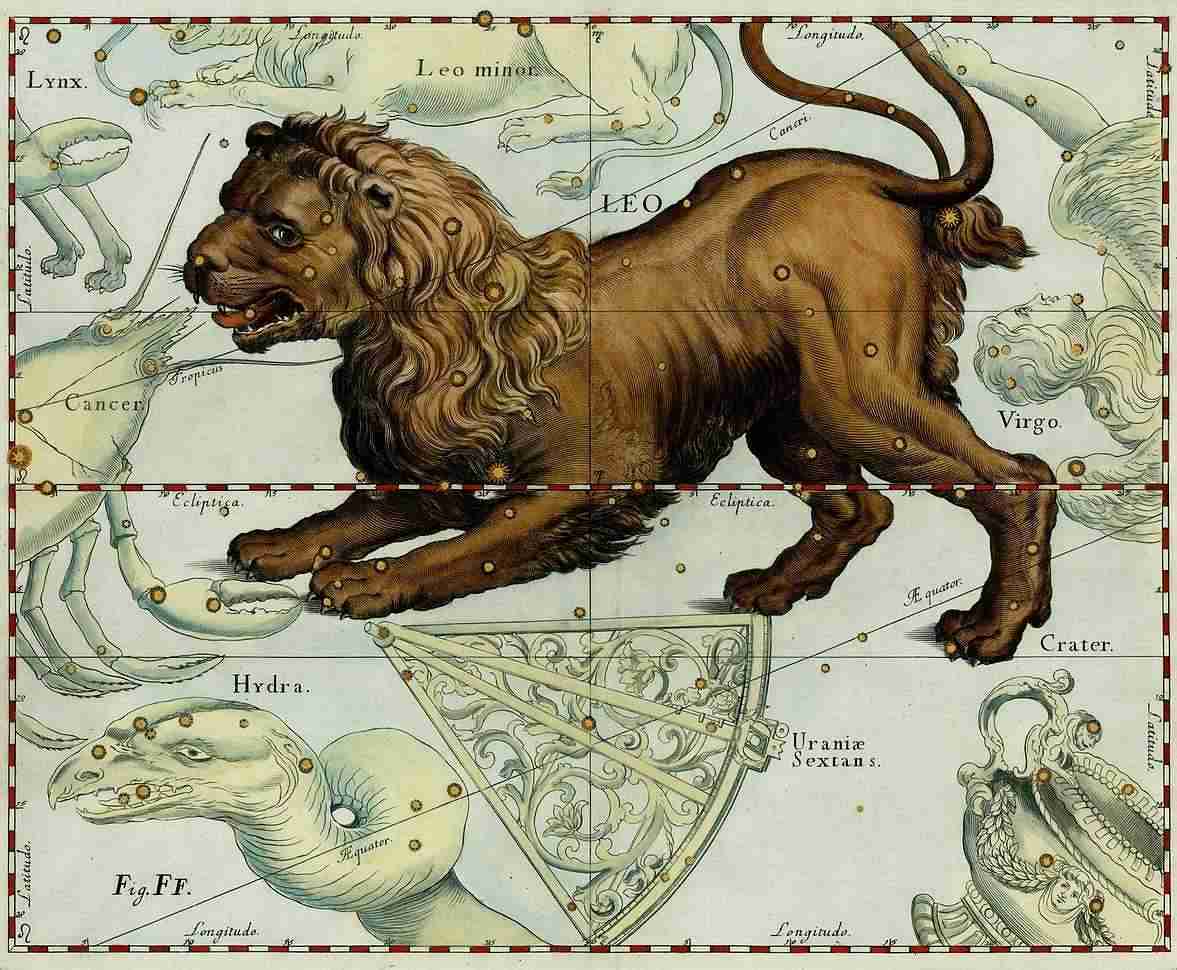
Old watchers paired moving shadows with bright stars near the path of the sun. Chief among them stood Regulus, the blue-white star at the heart of Leo. Latin writers called it Cor Leonis, Heart of the Lion. Johannes Hevelius drew Leo and Regulus in his sky book Firmamentum Sobiescianum. Fixed stars gave watchers steady marks to measure eclipses and planets against.
Over centuries of tracking dates on clay and bamboo, skywatchers spotted a deeper beat beneath sudden shadows. Eclipses happen only near the Lunar Nodes, the two crossing points where the Moon's tilted track meets Earth's solar path. When a New Moon or Full Moon lands there, the Sun, Earth, and Moon line up in space. Babylonians found that a matching family of eclipses returns every eighteen years and eleven days, a rhythm later called the Saros. What looked at first like a sudden omen kept strict sky time.
Looking up without fearing every cloud
Why do shaken times send crowds out onto rooftops to watch the sky?
Part of the pull is sheer scale. Earth, Moon, and Sun keep an exact meeting across millions of miles with zero rush. Physicist Carlo Rovelli writes that nature shows itself through meetings between things. All of it moves in one vast web. Watching an eclipse breaks the small noise of daily fights.
Old court watchers scanned dark moons to guess which ruler might fall next. You can bring a wiser question to the sky today. Where has daily rush persuaded you that steady order is gone? Treat an eclipse as a noon silence that stops frantic scrolling and brings back true scale.
To see where eclipse cycles touch your own sky, look up the Sun, Moon, and Lunar Nodes in the free birth chart. You can also explore Eclipses to track where coming solar and lunar shadows fall across your houses.