A Flickering Candle in the Dark
By autumn 1922, British archaeologist Howard Carter was down to his last chance. For several long seasons he had moved mountains of rubble in Egypt's Valley of the Kings without finding the lost boy-king Tutankhamun. His backer, the fifth Earl of Carnarvon, had agreed to pay for just one more season. Then, on November 4, workers clearing the remains of ancient workmen's huts found a stone step cut into the rock. (A later story gives the credit to a young water boy.)
Three weeks later, on the afternoon of November 26, 1922, Carter stood with Lord Carnarvon, Carnarvon's daughter Lady Evelyn Herbert, and Carter's helper Arthur Callender at the bottom of a cleared passage, about thirty feet down the slope from the outer door. In front of them was a second sealed doorway, stamped with royal seals like the first. The plaster showed that it had been opened and closed again long ago: robbers had broken in during ancient times, and officials had sealed the doorways again, more than 3,000 years before.
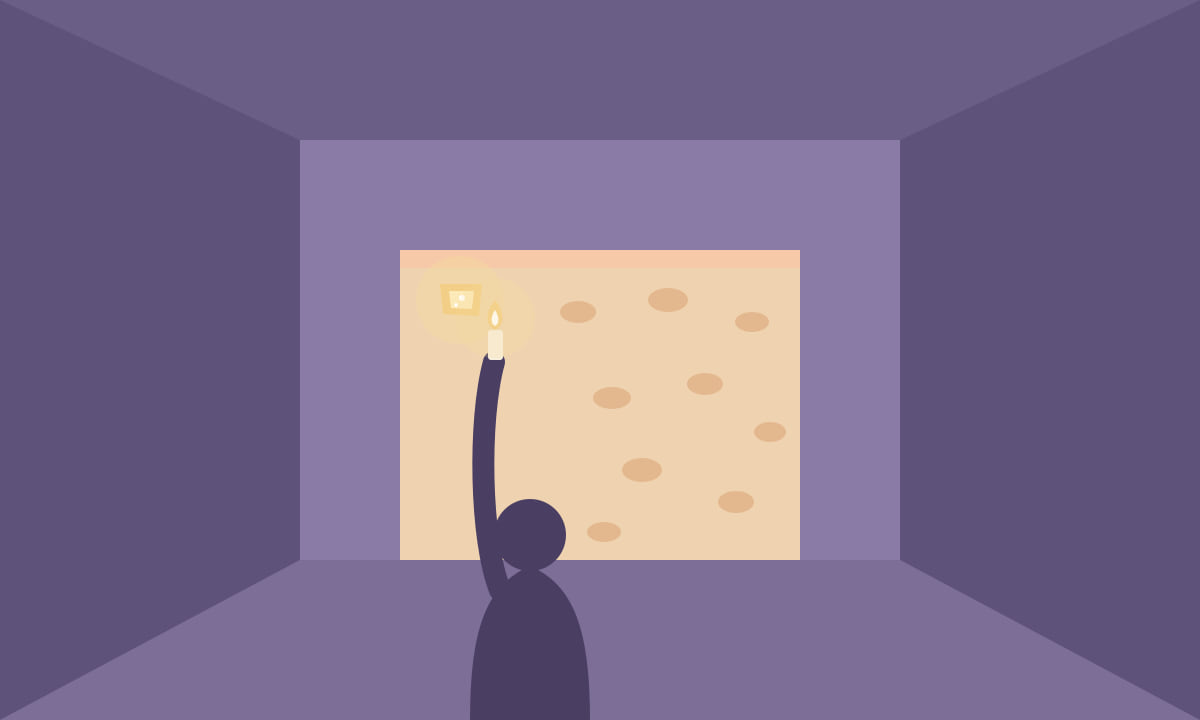
Later that afternoon (Carter's pocket diary says "about 4 pm"), Carter made a small hole in the top left corner. He held up a lit candle, the old test for bad air. Hot air escaping from the chamber made the flame flicker. At first he saw nothing. Then, as his eyes got used to the dim light, shapes came out of the dark: gilded couches with animal heads, two black statues of a king in gold sandals, alabaster vases, and the glint of gold everywhere. When Carnarvon asked if he could see anything, Carter answered, in the famous version of the story: "Yes, wonderful things." In Carter's own excavation journal, the words were simpler: "Yes, it is wonderful."
The Legend of the Curse
A few months later, the story took a sad turn that filled newspapers around the world. In March 1923, a razor cut opened a mosquito bite on Lord Carnarvon's face, and the bite became infected. Doctors blamed blood poisoning and pneumonia. He died at around 2 a.m. on April 5, 1923, at the Continental-Savoy Hotel in Cairo.
Legends grew fast. The story goes that the lights of Cairo went out at the moment he died. According to family stories, his dog Susie, back at Highclere Castle in England, howled and died that night too. Newspapers called it "the Mummy's Curse." But Carter himself, who spent about ten more years working inside the tomb, called the curse talk "tommy-rot." He lived to sixty-four.
What Stood in the Sky That Afternoon
Nobody wrote down the minute Carter first looked through the hole. His excavation journal says they reached the doorway in "the middle of the afternoon," and his pocket diary says it was opened "about 4 pm." So we set our own engine, built on NASA JPL data, for the sky over the Valley of the Kings, near Luxor, across that whole afternoon. We read only the planets, which barely moved in those hours. We leave out the horizon, which changes every few minutes.
Mars, the planet astrologers link with tools, hard work, and breaking through, stood in Aquarius. Across the sky, opposite Mars, sat Neptune in Leo, less than one degree from a perfect face-off (180 degrees). Neptune is the planet of dreams and hidden things. Leo is the sign of kings and gold. In astrology's picture language, hard digging stood face to face with a royal dream.
Mercury, the planet of writing and seals, sat in late Scorpio, the sign of buried and secret things. It made a trine, a smooth 120-degree angle, with the Moon's South Node in late Pisces, within half a degree. Astrologers read the South Node as the past. The South Node itself sat less than one degree from Scheat, one of the four bright corner stars of the Great Square of Pegasus.
Venus, the planet astrologers link with beauty and riches, was hidden in the Sun's glare in early Sagittarius. Just the day before, it had passed between the Earth and the Sun.
What Sleeps Beneath the Surface
More than five thousand objects came out of that small tomb, and they changed how the world pictures ancient Egypt. They came back into the light under a sky where Mars faced dreamy Neptune in the sign of kings.
Astrology cannot predict a great find like this one. It describes the weather of a time. Knowing your own transits, the planets passing over your birth chart, can help you choose when to rest, when to take care, and when to push. If you would like to see what was in your sky the hour you were born, your free birth chart is waiting below.
A note from Mike Astrology: This is a case study. We look at the sky at moments history remembers. The sky does not cause what happens, and nothing here blames or judges anyone.
We remember everyone involved with respect.
Sources: event time from Howard Carter's 1922 pocket diary ("about 4 pm") and excavation journal ("the middle of the afternoon"), Griffith Institute, Oxford; no birth data used; sky positions from Mike Astrology's own engine.