A Mountain Swelling Five Feet a Day
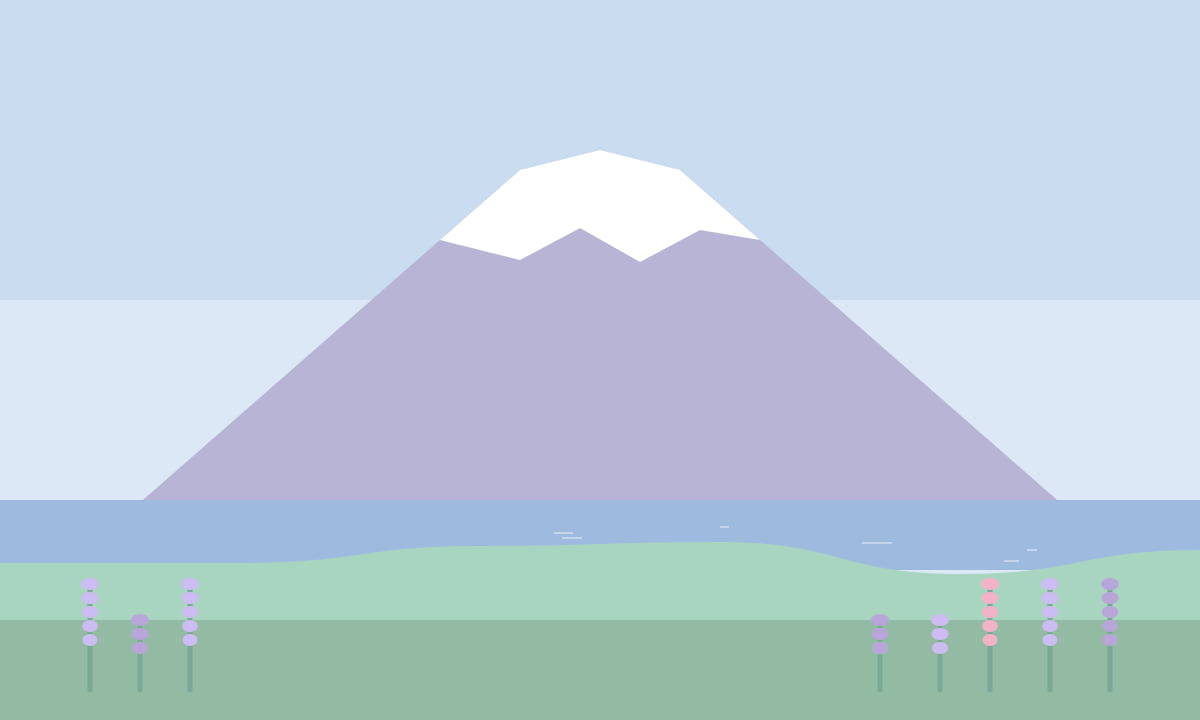
Before 1980, Mount St. Helens (46°12'N, 122°11'W) stood 9,677 feet tall in southern Washington. Its smooth, snowy cone was so even that some people called it the "Fuji of America." In March 1980, after more than a hundred years of quiet, small earthquakes and bursts of steam woke the mountain.
Molten rock rising inside the volcano pushed out a huge bulge high on its north side. By mid-May the bulge had moved more than 400 feet outward, and it was still growing about five feet a day. Down by Spirit Lake, 83-year-old lodge owner Harry R. Truman refused repeated orders to leave his home and his sixteen cats. Six miles north, at the Coldwater II observation post, 30-year-old U.S. Geological Survey volcanologist David Johnston agreed to cover the post for a colleague. He took over the post on the evening of Saturday, May 17.
Five Words on the Radio at 8:32 AM
At 8:32 AM Pacific Daylight Time on Sunday, May 18, a magnitude 5.1 earthquake shook the mountain. Within seconds, the weakened north side broke away. About two-thirds of a cubic mile of rock and ice slid down in the largest landslide on land in recorded history. With that weight gone, the gas-filled magma inside burst out, like a shaken bottle with its cap pulled off.
The blast did not go straight up. It shot sideways: a wall of hot rock, gas and ash moving at hundreds of miles per hour. It knocked down about 230 square miles of forest. Johnston called the USGS office in Vancouver, Washington, on his radio: "Vancouver! Vancouver! This is it!" Moments later, his radio went silent. A few miles from the summit, photographer Robert Landsburg kept taking pictures as the dark cloud came toward him. Then, in the account most often told, he rewound his film, put his camera in his backpack and lay on top of it. When his body was found seventeen days later, the film had survived.
Fifty-seven people died. The mountain lost about 1,300 feet of its summit. The ash column rose about fifteen miles high, and by noon, towns as far east as Spokane were dark as night. Within about two weeks, some of the ash had drifted around the globe.
Uranus in Scorpio and the Eclipse Points
We set the sky for 8:32:11 AM Pacific Daylight Time (15:32:11 UTC), the time the USGS earthquake catalog gives for the earthquake, at the volcano itself. Here we read only the planets and the stars.
Uranus, the planet astrologers link with sudden breaks and shocks, stood at 23°22' Scorpio. Astrologers link Scorpio with what is hidden under the surface. Uranus made a square (a 90-degree angle) to the lunar nodes at 24°12' Leo and Aquarius, 49 arcminutes from exact, a little under one degree. The nodes are the two points where the Moon's path crosses the Sun's path; eclipses happen near them.
At the same time, Mercury at 04°12' Gemini made a square to Mars at 04°42' Virgo, half a degree from exact (0°31'). Astrologers link Mercury with messages, and Gemini, an air sign, with moving air. That morning the air carried a last radio call and a cloud of ash.
The Sun stood at 27°50' Taurus, an earth sign that astrologers link with solid ground, about two degrees before Alcyone, the brightest star of the Pleiades.
Wild Lupine Returning to the Mountain
The ridge where Johnston kept watch now carries his name, and so does the observatory built there, Johnston Ridge Observatory, opened in 1997. It honors a young scientist who, with his colleagues, had pushed to keep people away from the mountain during the weeks of warning. Their stand is credited with keeping the death toll in the dozens, not the thousands. On the gray pumice plain below, purple prairie lupine and herds of elk have slowly come back.
The planets did not move the magma. They only show us what the sky looked like on a day many people still remember.
Astrology cannot predict an eruption, and nothing in a chart could have changed that morning. What it can do is describe the weather of a time. Knowing your own transits, the way the moving planets touch your birth chart, can help you choose how to meet each season of your life: when to rest, when to take care, when to push. If you are curious about the sky on the day you were born, you can make your free birth chart below.
A note from Mike Astrology: This is a case study. We look at the sky at moments history remembers. The sky does not cause what happens, and nothing here blames or judges anyone.
We remember everyone involved with respect.
Sources: event time from the U.S. Geological Survey earthquake catalog (1980-05-18 15:32:11 UTC); event facts from the USGS and Wikipedia; sky positions from Mike Astrology's own engine.