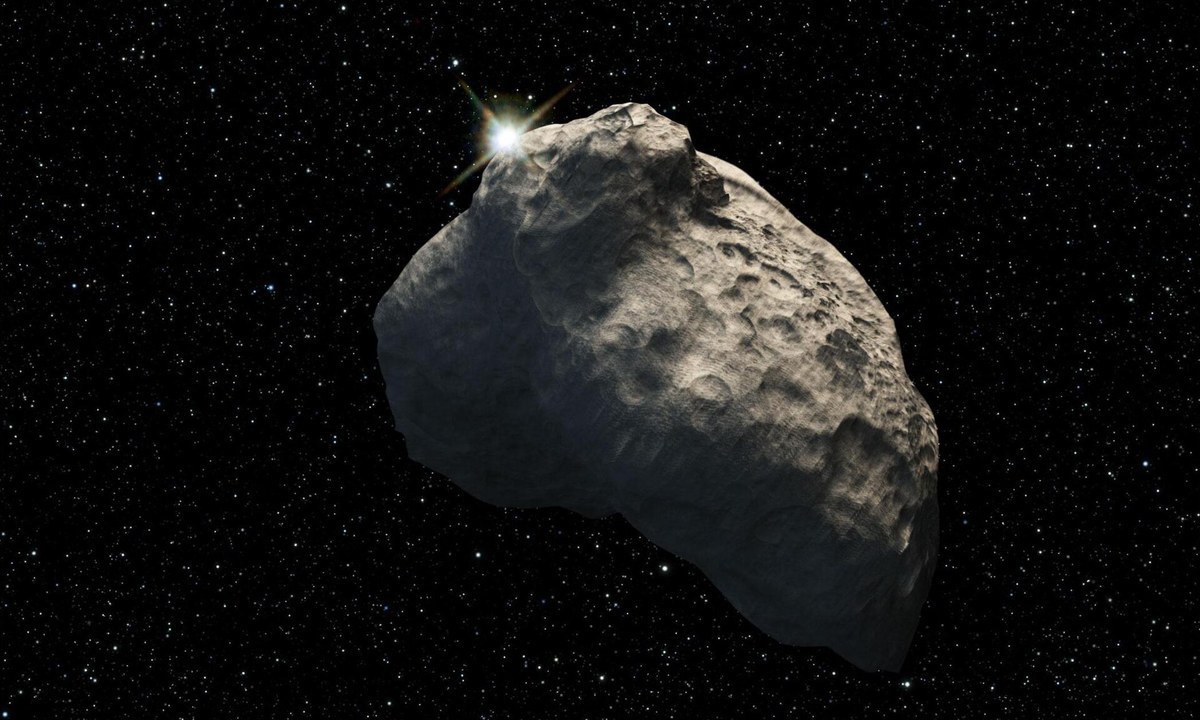
Thirty times farther from the Sun than Earth, sunlight grows dim and ancient ice worlds circle in silence. Just past Neptune's path sits a wide ring of icy worlds, dwarf planets, and scraps from the birth of our solar system. Astronomers call this third zone the Kuiper Belt. Beside it lie the Scattered Disc and the distant Detached zone. Together they form the outer edge of deep-space sky work.
For over sixty years after Clyde Tombaugh found Pluto in 1930, schoolbooks taught that the solar system stopped at nine planets. Pluto seemed to circle alone in the dark. Everything changed on August 30, 1992. That night, David Jewitt and Jane Luu spotted a faint icy body called 1992 QB1, later named Albion, past Neptune. Within twenty years, sky teams found thousands of icy rocks sharing Pluto's track. Quaoar turned up in 2002, Sedna in 2003, Orcus and Haumea in 2004, and Eris and Makemake in 2005. Pluto was never a lone rock. It was the brightest gatekeeper of a vast unseen belt of worlds.
Where the Kuiper Belt sits in space
Star watchers measure space out here in astronomical units. One unit equals the mean distance between Earth and the Sun. Earth orbits at one unit, Jupiter near five, Saturn near ten, Uranus near nineteen, and Neptune near thirty.
The main Kuiper Belt spans from Neptune's track at thirty units out to fifty units. Beyond it sit two wider zones. In the Scattered Disc, oval paths stretch past one hundred units. Farther still sits the Detached or Inner Oort zone, home to worlds like Sedna. Its path never comes near Neptune and swings nearly one thousand units from the Sun.
Because these bodies move so far from solar warmth, they take ages to circle the zodiac once. A Plutino takes roughly 245 to 250 years for one loop. Classical Kuiper Belt worlds take roughly 270 to 315 years. Scattered Disc worlds like Eris and Gonggong take over 550 years. Sedna's huge oval loop lasts roughly 11,400 years. When you read one of these worlds in a chart, its sign marks a whole human age.
The four orbital families
Teachers like Alan Clay and Philip Sedgwick sort these outer worlds by the shape and beat of their paths. How a world moves around the Sun mirrors how its themes enter human life.
The first group is the Plutinos. They share Pluto's two-to-three beat with Neptune, making two loops for every three of Neptune. Pluto, Orcus, Ixion, Huya, and Arawn belong here. At their closest swing to the Sun, they cross inside Neptune's line before heading far back out. In a chart, Plutinos speak to buried truth, broken or kept oaths, shadow work, and trust rebuilt after collapse.
The second group is the Classical Kuiper Belt worlds, nicknamed Cubewanos after 1992 QB1. Worlds like Albion, Quaoar, Haumea, Makemake, Varuna, and Salacia move in nearly round, flat tracks between forty and forty-eight units. They never cross Neptune's track. Their myths come from world birth tales. They point to living rebirth, natural law, fresh life force, and steady growth once an old wall falls.
The third group belongs to the Scattered Disc and high-order beats, including Eris, Gonggong, and Dziewanna. Long ago, Neptune's pull flung these worlds onto steep, tilted, oval tracks high above and below the flat plane of the planets. They act like sacred breakers of polite lies in a chart. They pull hidden wrongs and fierce truth into open daylight.
The fourth group is the Detached or Inner Oort zone, led by Sedna and Leleākūhonua. Sedna never comes near any giant planet. Its closest swing stays past seventy-six units. In personal and long-arc charts, detached worlds point to deep destiny, old survival freezes starting to thaw, and slow turns in human life across centuries.
Global creation names
Under rules set by the International Astronomical Union, Classical Kuiper Belt worlds carry names from birth myths outside Greece and Rome. Haumea comes from the Hawaiian goddess of childbirth and stone life. Makemake comes from the Rapa Nui maker of people. Quaoar comes from the Tongva god who sang and danced the world into order. Varuna comes from Vedic lore as guard of natural law. Sedna comes from the Inuit mother of sea beasts. Gonggong comes from Chinese flood lore.
Naming far worlds after global birth myths widened modern chart work past one old pantheon. Kuiper Belt symbols bring living soil, old earth memory, bodily repair, and shared seas back onto the sky map.
Moons, pairs, and tight orbs
Unlike lone inner rocks, many large Kuiper Belt worlds travel with big moons or equal twins. Pluto walks with Charon, Eris with Dysnomia, Haumea with Hiʻiaka and Namaka, Quaoar with Weywot, Orcus with Vanth, and Gonggong with Xiangliu. NASA's New Horizons probe also took close photos of the joined pair Arrokoth in January 2019. As Alan Clay notes, readers often take the main body as the deep inner shift and its moon as the daily bond where that shift shows up.
Because outer ice worlds drift less than two degrees a year, chart readers keep orbs tight. One degree is the normal span when checking aspects to personal points or fast moons like eclipses.
How this connects to your birth chart
Our World Updates essays pair Kuiper Belt worlds with Uranus, Neptune, and Pluto to trace long waves across the twentieth and twenty-first centuries. To check your personal sky right now, open the free birth chart. It maps your exact spots from the Sun through Pluto. It also maps Chiron, the Lunar Nodes, and Black Moon Lilith. Outer Kuiper Belt dwarf planets are taught in this guide and in those essays. You can also explore Your Transits to see how slow outer cycles meet your chart.