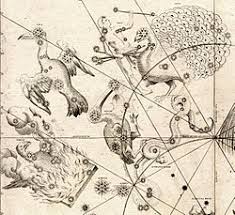
Grus in Astrology
Core Synthesised Meaning: The Watchful Sentinel of the Southern Sky / The Messenger of Prophetic Flight.
Nature: Exceptionally independent, highly intellectual, objective, and deeply receptive; operating with a quiet, overnight containment.
Domain: Systems engineering, depth-psychology, strategic logistics, aviation design, and the preservation of rare heritages.
Gift: Absolute mindfulness—the capacity to remain alert and watchful in a world of mechanical reaction; translating heavy, complex emotional experiences into clean, structured intellectual clarity.
Wound: The isolated sentinel; carrying the heavy weight of administrative isolation; fear of exposure to the public eye; chronic knee, calf, or ankle tension.
Mythology & History
Because Grus is a modern constellation mapped during the great voyages of southern exploration, it does not carry classical Greek or Mesopotamian mythology. Instead, its mythic weight is held by its profound etymological convergence, its deep connection to the ibis of Thoth, and the classical legend of the cranes of Ibycus.
The Eye of Ibycus:
The crane is the ultimate symbol of divine witness and the inevitability of justice. In Hellenistic lore, the poet Ibycus was attacked by robbers in a deserted grove. As he died, he looked up and called upon a passing flock of cranes to witness his murder. Later, while the murderers sat in an open-air theater in Corinth, a flock of cranes hovered overhead. One of the thieves, seized by guilt and mockery, cried out, "Behold the avengers of Ibycus!" The exclamation betrayed them; they were arrested, confessed, and executed. The Crane stands in heaven as the sentinel that cannot be silenced—the eye in the sky that records what is hidden and ensures cosmic balance is restored.
The Scribe of Thoth:
In ancient Egypt, the crane was closely linked to Thoth, the ibis-headed scribe of the gods who governed writing, measurement, mathematics, and magic. The crane was used as the hieroglyph for the astronomer. Like Thoth, the crane represents the detached, analytical mind that observes the world from a lofty altitude, recording the movements of the stars and the deeds of men, holding the scales of cosmic balance.
Muddy Reception vs. Clear Reception
The star does not change. Only the quality of the receiver changes what arrives.
The native experiences the shadow of hyper-vigilance and intellectual anxiety. They are paranoid, suspicious, and emotionally rigid, constantly scanning the environment for threats. They use their sharp, analytical intellect as a defensive weapon to pierce others with cutting observations, suffering from chronic joint spasms, sciatic blockages, or circulatory stagnation—frozen in their own ungrounded fear of vulnerability.
The highest expression of the "Varuna Sentinel." Here, the native operates as a pure channel for the polar axis. Standing in serene, detached presence, they use their precise, diagnostic intellect to protect their entire community, hearing the subtle, unexpressed truths of the universe (Shravana) and translating them into elegant, symphonic systems of collective healing (Dhanishta/Shatabhisha).
Paran Interpretations
Find your parans →Parans form when Grus and a planet simultaneously occupy the four angles at your birth location. The planet's angle determines the life period: Rising = youth, Culminating = prime, Setting = later years, Nadir = lifelong foundation.
Parans are timing signatures — they mark which life period Grus governs for you personally. The four angles below (Rising, Culminating, Setting, Nadir) correspond to youth, prime, later years, and your lifelong foundation. This requires your birth date and place to calculate.
Your Fixed Stars reading names the stars on your planets and in your parans, and what each one means for you.
Get Your Fixed Stars Reading — $44Is Grus ruling your life?
Your Fixed Stars reading names the stars on your planets and in your parans, and what each one means for you.
Get Your Fixed Stars Reading — $44