Late in the evening, a brass hearth lamp throws warm light across a bare wooden dining table. An open brass key and an unlit candle sit side by side on the oak grain. When you stop pacing the hall and sit down at that table, your pulse slows and every object in the room comes back into sharp view.
Archangel Chamuel carries that gift of clear recognition in Jewish mystical texts and later devotional lore. His Hebrew name is Kemuel or Camael, meaning He Who Sees God or He Who Seeks God. Tradition remembers him both as a fiery gatekeeper of heaven and as the helper people call when something small goes missing. His rose crystal, pink light, and twin-heart focus gather scattered attention back into one chord.
When scattered waves find one pitch
Most people picture love as a passing mood that visits by chance. Sound, scripture, and heart research point toward a stricter rule of resonance.
Pluck one string on a wooden instrument, and a second string tuned to the same pitch wakes across the room without a hand touching it. Attention behaves like that. When fear pulls one way and doubt pulls another, focus scatters into static. Once two centers align on one rhythm, strength returns without adding strain.
Lee Carroll, in his Kryon talks from Montreal and Big Sky, speaks of a turn toward heart coherence. Thought and heart meld inside a safe room. That coherence brings peace without drama or force.
Tom Kenyon and the Hathors map where coherence locks inside the chest. In The Secret Passage, Kenyon describes an etheric tunnel joining two centers. One is the physical heart beneath the left ribs. The other is the heart chakra behind the breastbone in front of the spine. The Hathors teach that the heart sends a field up to fifty feet in every direction. Gratitude acts as the harmonic bridge across that tunnel.
Anne Tucker describes waves of coherence reuniting divided parts of mind and body. Truth in shifting times is metered by the heart, she says, until people find shared harmony again.
Chamuel is the old name for that bridge. One chord aligns the scattered room.
At the fiery gate and in the lost room
Two traditions remember Chamuel in scenes that look opposite at first. Put them together, and they lock into one story.
In early Jewish Merkabah and Hekhalot lore, Kemuel stands as a guardian at the gates of heaven. Twelve thousand angels of destruction wait behind him beside thresholds of fire. When Moses climbed Mount Sinai to receive the tablets of the law, Kemuel barred the way and challenged his aim. Why does a mortal born of dust walk where fire burns? Moses answered by speaking the secret names of creation and proved his heart sought service, not pride. Kemuel stepped aside and let him pass.
Centuries later, Western angel lore set Camael near the seam between Geburah, the pillar of fierce strength, and the heart of the Tree of Life. The stern gatekeeper became known as Chamuel, the helper people call when something small goes missing. A lost key, a ring, or a stray letter turns up after a pause and a call to his name.
The fiery guardian of Sinai and the finder of lost keys are one angel. The threshold never moved.
Resonance opens the gate that armor bolts
Those two scenes point to two plain rules of attention.
First, waves out of phase scatter, while waves in phase amplify without strain. You can tear a room apart hunting for a ring while your pulse races. Your eyes pass over the table where it sits because hurry scrambles sight. Stop, breathe, and bring the chest into even rhythm, and your eye catches the glint at once.
Second, an armored gate keeps out what it wants to welcome. Kemuel blocked Moses on Sinai because armor treats every knock as a raid. Self-judgment locks the chest the same way. When you treat mistakes like foes at the wall, twelve thousand inner guards bar the door. Drop the iron latch, and the visitor steps through.
Rose crystal, pink flame, and twin hearts
Look at rose quartz beside a lit lamp. The emblems linked with Chamuel each point to one part of heart coherence.
Pink light carries warmth inside clarity. In the seven devotional rays, red marks raw heat, while white marks clear light. Pink is red fire opened by white brightness. Heat without light scorches whatever comes near. Light without warmth leaves a room cold. Pink holds strength inside gentleness, so a person stays open without collapsing.
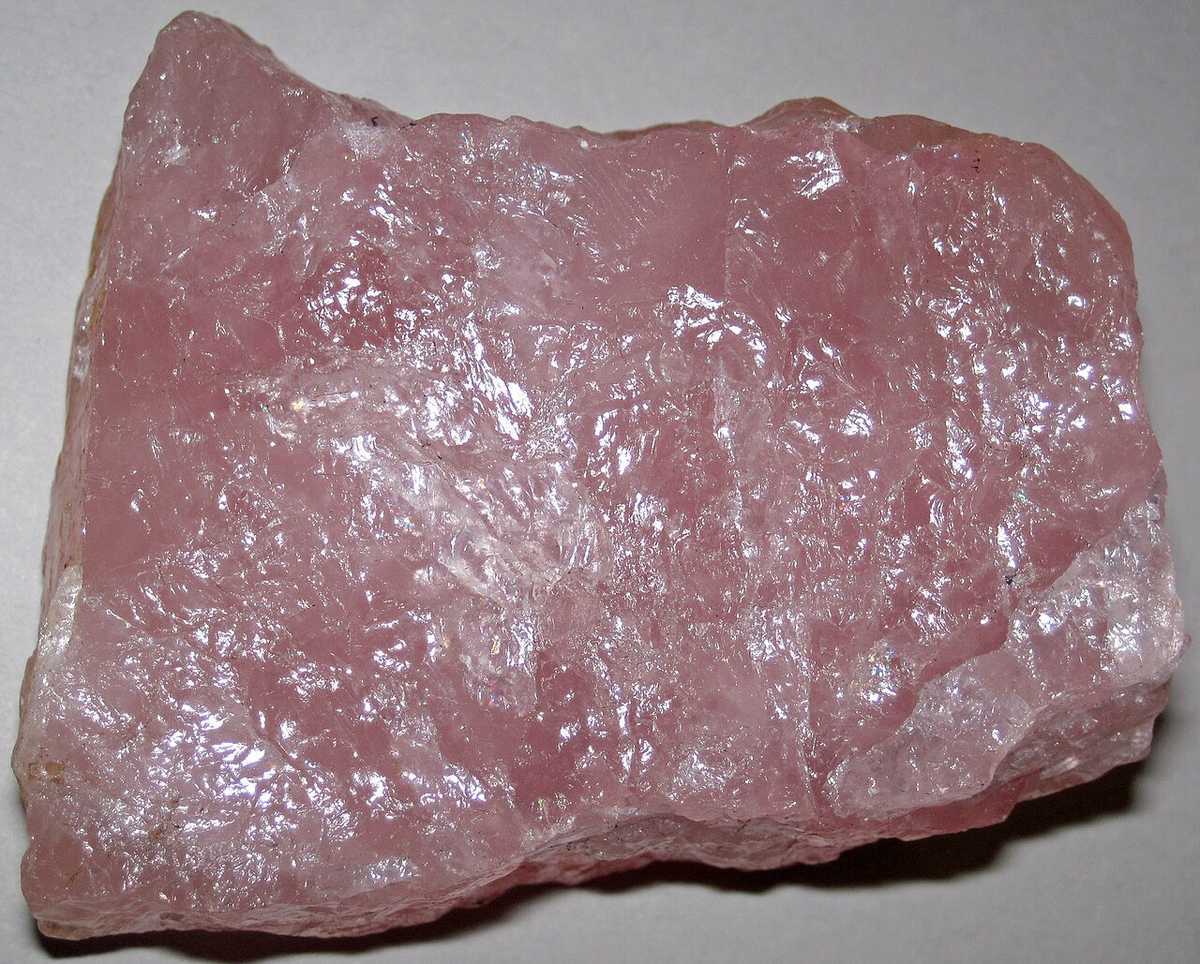
Rose quartz is the pink stone tied to Chamuel. In Maia Nartoomid's Akashic writings on Isis and the crystal skulls, rose quartz holds the first archetype of the heart before it matures into moonstone. A crystal keeps a repeating lattice inside its stone walls. Hold rose quartz in your palm, and you hold an emblem of firm structure paired with warmth.
The pink flame itself joins the tunnel Kenyon describes. When attention rests between the left chest and the breastbone, warmth spreads across the ribs. That warmth is the pink flame inside the body.
Severity, heart, and the center of the earth
Chamuel never works cut off from the rest of the map. He forms a link between fierce order above and the living earth below.
In Kabbalah, Camael sits near Geburah, the sphere of rigor on the Tree of Life. Michael guards the edge with a blade. Chamuel softens the inner wall of that fortress so mercy enters Tiferet, the heart sphere of balance. Strength builds the room. Resonance fills it.
Nartoomid carries that link down into the globe. In her 1980 and 2015 talks on Earth's central sun, which she calls the atoma, four chambers at the core of the planet mirror the four chambers of a human heart. Light enters through the polar gates and bursts into a seed flame at the center, linked from birth to every heart chakra. One pulse moves through chest and stone alike.
Where Chamuel touches a birth sky
Archangel Chamuel is a sacred figure across mystical and devotional traditions, with no planet or asteroid bearing his name in astronomy. Linking him to Western chart placements like Venus, Chiron, or the Lunar Nodes is a modern interpretive overlay, not part of classical Jewish or Christian teaching. Readers who draw that comparison usually look at Venus, the Moon, the Sun, and Chiron.
Look first at Venus in aspect to the Sun or Moon. Venus governs attraction, harmony, and the pull that draws separate notes into one chord. Where Venus meets the Moon, a person learns how belonging feels in the body and where armor tightens around the chest. Where Venus meets Saturn, warmth learns patience and form, echoing Kemuel beside the gate of rigor.
Check Chiron as well. Chiron marks the bruise where a person felt shut out or judged for wanting grace. That sore spot often teaches the cost of iron bars behind the ribs.
In modern chart readings, the fourth and fifth houses also draw attention when birth time is known. The fourth house holds home and the hearth where you set your shield down. The fifth house holds joy, play, and the open heart. The South Node shows old habits of bracing against loss, while the North Node points toward open resonance with life.
Tuning the twin hearts
Call on Archangel Chamuel when you feel scattered by noise, locked behind self-blame, or hunting in vain for something lost in your own house. Ask for inward harmony, never physical fixes. Treat this work as tuning an instrument with two strings.
Sit upright in a chair with your shoulders dropped back and your heels tucked comfortably beneath your knees. If you have rose quartz, hold it loosely in your left palm, or leave both hands bare.
Rest your left palm over your heart beneath your left ribs. Rest your right palm over the center of your breastbone. Feel the warmth under each hand for three breaths.
Recall the Hathors' Secret Passage. Picture a tunnel of pink light linking the heart under your left hand to the center behind your breastbone. Breathe in slowly until both spots feel warm together.
Hold one plain memory of gratitude in mind. Pick something small, such as warm soup in a bowl or sun on wood. Let one shared pulse gather stray sparks of thought into a single focus.
Now hum one gentle vowel, such as ah or oh, on a single breath out. Let the sound vibrate behind your breastbone until your jaw softens.
Name aloud one thing you have lost or shut outside your gate. It may be a house key, a promise, or patience with yourself. Wait in stillness for sixty seconds without forcing an answer. Notice what catches your eye or surfaces in thought.
End the practice with one grounded action in daily life. Lower both hands from your chest and close the notebook in front of you, or pick up your phone to text or call one person clearly about something you had been putting off. Set the rose quartz back beside the hearth lamp and return to your evening.
Questions people ask about Chamuel
What does the name Chamuel mean?
In Hebrew, Kemuel or Chamuel means He Who Sees God or He Who Seeks God. Older Jewish mystical texts name Kemuel as a fiery gatekeeper of heaven, while later devotion remembers Chamuel as the angel of love and mercy.
Why do people ask Archangel Chamuel to find lost things?
Folk tradition links Chamuel with finding keys, rings, and missing paths because his work is coherence. Panic scrambles attention so the eyes miss what sits in front of them, while calm resonance lets scattered pieces match again.
What are Archangel Chamuel's main symbols and colors?
Chamuel is paired with pink light, the pink flame of love, and rose quartz. His center sits at the heart and higher heart in the chest, linking fierce strength to warm openness.
Is Archangel Chamuel a planet or asteroid in astrology?
Chamuel is a mystical and devotional figure, with no planet or asteroid carrying his name. Modern astrologers sometimes compare his themes to Venus, the Moon, Chiron, the Lunar Nodes, and the fourth and fifth houses.
How do you connect with Archangel Chamuel safely?
Sit upright, place one palm over the heart and one over the breastbone, and breathe with gratitude until the chest warms. End by lowering your hands and closing your notebook or sending one clear message.
The archetype of the matched chord
Archangel Chamuel is the gatekeeper who drops the iron latch, the tuning fork that finds what never left the room.