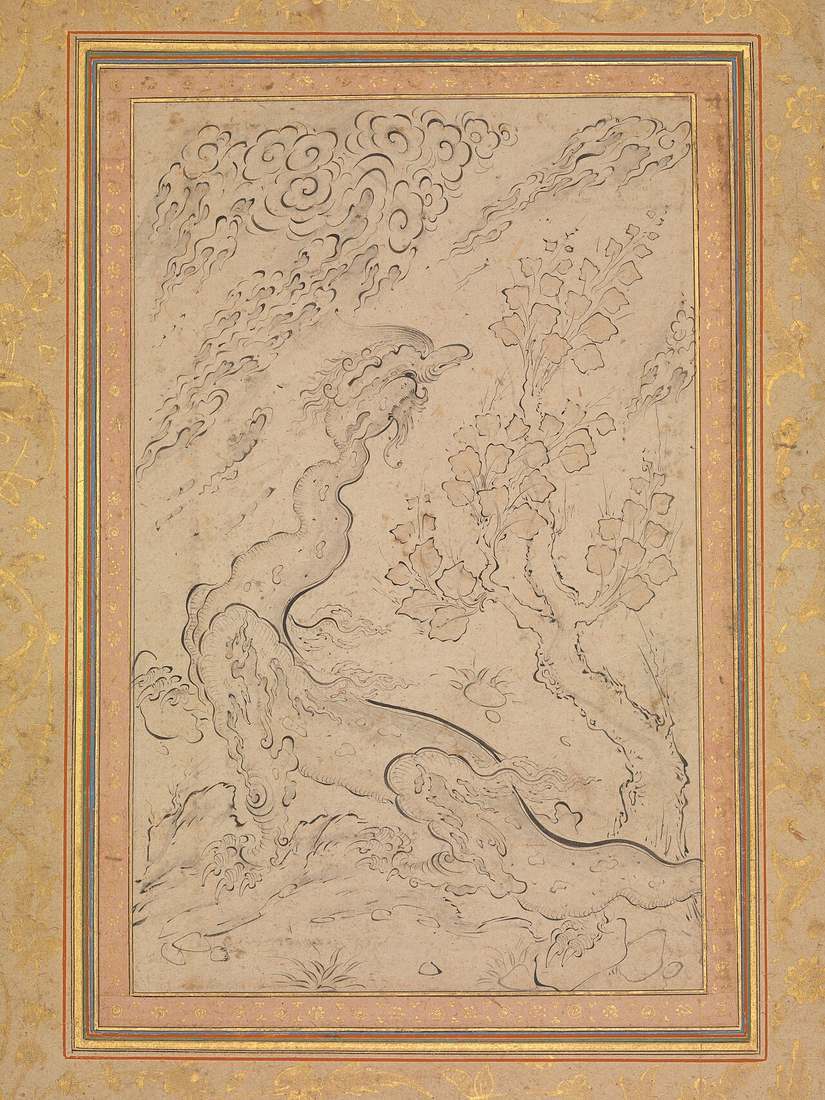
Thick mist rises off pine ridges at daybreak and curls along winding hills like a silver spine. Thunder answers from high clouds while valley streams swell beneath old stone bridges.
Across East Asia, that rising sky power is called the Long, the Celestial Dragon. It is no greedy lizard hiding coins inside a cave. It is the living breath of weather, cosmic current, and seasonal renewal. Chinese sky watchers traced the Azure Dragon across seven mansions of the eastern vault. Together with the Lunar Nodes and the I Ching, the Celestial Dragon maps huge sky movement. It shows how to ride intense force without losing balance.
Currents in the sky and the turning stream
A human mind likes solid boxes that sit still. Sky power never works like a box. It moves like weather, tide, and solar wind.
In his 2014 Newport talk, Lee Carroll and Kryon explain how our solar system crosses a ribbon of space energy. That stream strikes the Sun first. The Sun sends the impulse outward on the solar wind, where it meets Earth's magnetic grid and stirs human awareness.
The Hathors, speaking through Tom Kenyon in Partaking From the Solar Winds, give that solar stream a dragon's name. They call the Sun the dragon and the solar winds its tail. Fighting solar storms wears a person down. Mastery means riding the dragon's tail through heart gratitude so your subtle Ka body drinks the charge.
Diana Cooper carries this sky map into her dragon cosmology. She describes ninth-dimensional Dark Blue Galactic Dragons bringing cosmic wisdom through Pleiadian and Lyran gateways, alongside Violet-Gold Dragons clearing dense collective patterns. She also writes of Golden Atlantean Portal Keepers that remained to tend planetary light grids. Maia Nartoomid adds another face in The Shamir and the Tree of Osiris. Her guide Thoth calls the Eye of Ra the Eye of the Dragon, a primal flash that opens doors across space. Her notes also describe Dragon Lords as carriers of original fire.
Nine dragons in the mist and the six lines
This is the lore kept in the I Ching and on the silk scroll of Chen Rong.
At the start of the I Ching stands Hexagram One, Qian. Its six lines trace a dragon rising from mud to heaven.
In the first line, the dragon hides in deep water and waits. In the second line, it steps into open fields. In the third line, awareness stays alert through day and night. In the fourth line, the dragon tests its wings above the abyss. In the fifth line, it flies across heaven, pouring rain on dry crops without force.
Then comes the sixth line. The I Ching gives a stark warning: the arrogant dragon will have cause to repent. Strength that only climbs runs out of air and falls.
In 1244, painter Chen Rong made the Nine Dragons handscroll on silk with ink and light color. Nine dragons twist through foam, cliffs, clouds, and whirlpools. None wears a chain, and no warrior chases them. One clutches a pearl while lightning splits the mist. Every dragon moves as one pulse of storm and tide.
Long before print, sky watchers in India and Europe traced a dragon across the heavens. They marked the two points where the Moon's path crosses the Sun's road, the places where eclipses happen. In Latin they named them Caput Draconis and Cauda Draconis, the Head and Tail of the Dragon. In Vedic lore those points became Rahu and Ketu.
Rising, turning and knowing when to descend
Put the six lines of the I Ching beside Chen Rong's silk scroll, and two rules of sky power appear.
First, great current moves in cycles of rest and flight. Every seed spends months underground before it breaks soil. When a person tries to live at noon forever without returning to deep water, fuel turns to ash.
Second, power breaks itself the moment pride refuses to descend. The sixth line of the I Ching warns that an arrogant dragon will have cause to repent. Narrow ambition loves pushing straight ahead, chasing output long after a peak has passed. By refusing to step back when a cycle turns, blind pride ruins the ground it stands on.
Pearl, scales and the dragon's path
Four emblems on Chen Rong's scroll and in old sky tables show how cosmic weather moves.
A flaming pearl floats before the dragon's mouth or inside its claw. Some readers see the Moon drawing tides, while others see clear wisdom. The dragon follows that single pearl across the sky and the sea, keeping one aim before its eyes so huge force never threshes blind.
The dragon's body joins stag horns, carp scales, eagle claws, tiger paws, and a serpent's spine. Lore says it shrinks to a silkworm's size or swells to fill the sky. Power takes whatever vessel meets it, small in a breath or vast in a storm.
Long whiskers sweep around its jaw. Those whiskers act like feelers reading slight shifts in wind before a cloud breaks.
In the sky, the Moon's nodes mark the crossing gates. Caput Draconis, the Dragon's Head, pulls new growth forward like a rising breath. Cauda Draconis, the Dragon's Tail, drops what is spent back into the deep sea.
Hidden dragon and flying dragon
A dragon never stays locked at one height. Its power depends on two poles working as one circuit.
At one pole sits the Hidden Dragon beneath dark water. Winter seals the lake. No eye sees motion from the shore, yet strength gathers inside silence without wasting sparks on show.
At the opposite pole sits the Flying Dragon above the clouds. Spring thunder splits the ice, sap climbs through limbs, and rain feeds whole plains.
Without winter depth, spring rain dries up in a week. Without spring flight, winter depth turns to mud. In the same way, the Dragon's Head and Tail sit opposite each other by half a circle in every sky. You cannot pull in at the Head without letting go at the Tail.
How celestial dragons map onto a modern sky lens
Celestial dragons belong to East Asian cosmology and sky lore, so no planet carries their name on a star list. Using a Western birth chart to trace dragon themes is a modern symbolic lens, never an ancient rule or a forecast of events.
The Lunar Nodes offer the clearest starting point. The North Node is the Dragon's Head, symbolizing unfamiliar growth that asks you into open air. The South Node is the Dragon's Tail, symbolizing old skills you already know by heart, which turn stale if you hide inside them.
Jupiter and Uranus echo two sides of sky weather. Jupiter matches the rain-bringing dragon that lifts vision across wide plains. Uranus flashes like lightning inside Chen Rong's mist, breaking habits when life grows stiff.
Pluto and Scorpio carry the deeper pressure of transformation. In her Mazzaroth notes, Maia Nartoomid links Scorpio to dragon power that strips away false shells before Sagittarius carries light upward. When Pluto or the Nodes cross major chart points, modern readers view the moment as a symbolic turn in the dragon's arc.
Standing on the ridge when the wind turns
Approach celestial dragons with respect for the East Asian traditions that honor them at spring rains and temple roofs. Meet this current when changes arrive faster than plans, during eclipse seasons, or when storm fear tempts you to freeze.
Go outside to a porch step or threshold stone before dusk, or sit beside an open window facing moving clouds. Set a small brass or pocket compass in your palm.
Stand or sit with your spine tall and your shoulders low. Rest your free palm lightly over your belly for three breaths, like the Hidden Dragon waiting under water before rising.
Lift your chest as you breathe in. Picture warmth rising along your spine from your hips to your crown, then streaming out into the open sky. Recall Tom Kenyon's counsel on riding the dragon's tail. Feel gratitude for one living thing in your life so your chest softens and energy moves through without bracing.
Hold before your mind the flaming pearl from Chen Rong's painting. Name one clear aim you mean to serve this season instead of chasing ten noisy goals. Breathe out slowly and let excess heat rise like thunder clearing summer air.
When you finish, kneel or bend down and lay the compass flat beside the threshold stone. Watch the needle settle toward north, speak your own name once, and step back inside to your ordinary rooms and tasks.
Questions people ask about celestial dragons
What is a celestial dragon in Chinese tradition?
In Chinese cosmology, the Long is a wise spirit of rain, rivers, clouds, and sky power. It marks seasonal renewal and natural vitality aligned with the eastern sky, far from European monster tales.
Why are the Lunar Nodes called the Dragon's Head and Tail?
Ancient sky watchers saw eclipses happen when a new or full moon met the two points where the Moon's orbit crosses the Sun's path. They pictured an unseen dragon swallowing light at those crossings.
What does the arrogant dragon mean in the I Ching?
In Hexagram One of the I Ching, the top line warns that an arrogant dragon will have cause to repent. Power that keeps climbing past its peak without rest brings its own fall.
How do recent spiritual teachers describe celestial dragons?
Tom Kenyon and the Hathors compare the Sun and solar winds to a dragon whose tail seekers ride through heart gratitude. Lee Carroll and Kryon describe solar winds feeding Earth's magnetic grid. Diana Cooper maps galactic and violet-gold dragon streams, while Maia Nartoomid links the Dragon's Eye to primal fire.
How can someone work with celestial dragon energy safely?
Wait calmly like the Hidden Dragon before acting, keep one clear aim like the pearl before your eyes, and never force intense moods upward. Finish by laying your compass flat beside a threshold stone so the needle settles and you return to everyday work.
The dragon in the turning sky
The celestial dragon is the living current between deep water and high cloud, the storm that feeds the field when pride steps aside.