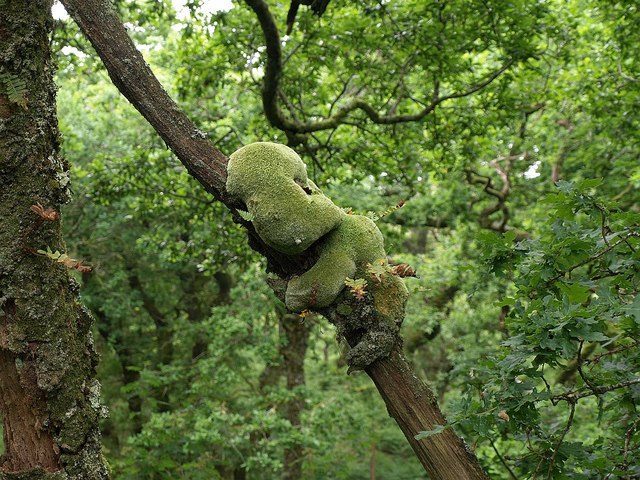
Thick green moss cushions a hollow of dark stone beneath the gnarled roots of an old oak. Rain drips down the bark into black leaf mold, where flecks of quartz glint beside wet earth.
Gnomes, dryads, and earth fae are names European lore gave to intelligence inside rock, soil, and forest roots. In 1566, Swiss physician Paracelsus called earth dwellers gnomes, or pygmies, and placed them inside stone. Greek tales spoke of dryads and hamadryads bound inside trees. Celtic farmers left cream by the door for the Good Neighbors of hollow hills, while Philippine lore honored Anito and Diwata of grove and spring. Across those traditions sits a single memory: the living earth answers human hands when met with respect.
How rock, root and crystal hold memory
Many people look at a stone on a path and see dead weight. Older alchemy and consciousness teachings view mineral matter as awake and responsive.
Lee Carroll and Kryon put that view in plain words. In a 2020 talk, they stated that rocks are alive and that elementals dwell inside them and inside Earth. Kryon teaches that Earth holds a crystalline grid that records human deeds on the land. A walker on an old field picks up that memory through the pineal gland long before the thinking mind names it.
Tom Kenyon and the Hathors show how human bone mirrors that mineral grid. Inside the pineal gland sit calcite crystals that answer light and pressure. When gratitude links heart to ground, those crystals act like stone antennas.
In her talk You Might Be Separating from 3D Already, Anne Tucker adds that elementals share the very room we stand in. We miss them because they vibrate on a separate band, like two radio stations filling one hall.
Diana Cooper connects Earth elementals, Fae, and Landscape Devas to Archangel Sandalphon at the Earth Star Chakra. She pairs them with fourth-dimensional Earth Dragons to mend soil vitality and guard sacred natural sites. In the 1960s, the Findhorn community in Scotland also spoke of partnering with Landscape Devas as organizing minds behind thriving gardens.
Maia Nartoomid adds two details from her Akashic writings with Thoth. Nature spirits wear shapes a witness can recognize, so children often see winged folk out of storybooks. Plants also send out impulse patterns that higher nature spirits work through. In Session 47 of The Law of One dialogues, the speakers call our body the red-ray vehicle. It is built directly from Earth elements before higher centers wake.
The pact of stone, oak and hawthorn
Three old accounts preserve how ancestors dealt with keepers of place. Tell them side by side, and one rule stands clear.
In 1566, Paracelsus wrote a book on the four realms of matter. Water, air, and fire had their dwellers, and earth belonged to the gnomes. He described short stewards who pass through granite as easily as fish swim rivers. They guarded seams of ore and vaults under hills. They asked for no temples of marble, yet they turned fierce when miners tore rock open in greed.
Long before Paracelsus, Greek storytellers spoke of the hamadryad. Unlike wanderers of the woods, a hamadryad lived inside one oak or ash tree and shared its days. When rain fed the bark, she drank. When an axe bit the trunk, she bled, and when the tree fell, her breath ended. Woodcutters who ignored her warnings lost their flocks.
Farther north, Celtic farmers kept a truce with the Aos Si, whom they named the Good Neighbors. Every farm kept a thorn tree or mossy mound where plows never cut the turf. Milk sat beside the hearth at night, and no farmer chopped a lone hawthorn in a pasture. Those who broke the truce woke to sour milk and lame cattle, while those who kept it saw fields hold water through dry summers.
Memory in bedrock and the pact of return
Strip off storybook paint, and those tales state two laws of matter.
First, a place keeps a record of every hand that touches it. Stone walls hold frost and noon sun. Forest soil stores fungal threads from ten generations of oaks. In Kryon's model, the crystalline grid saves human intent the same way. Nothing laid onto land simply fades.
Second, a living web feeds only what feeds it back. When an oak drops leaves, fungi break fiber into minerals that climb the trunk in spring. Take ore or harvest without return, and the link snaps. Spare the hawthorn and pour back care, and the ground answers.
Crystal, bone and the Hathor sound EL
Quartz, tree roots, and human bone share one mineral pattern.
Quartz and calcite crystals keep a repeating lattice that rings when squeezed or warmed. Inside the skull, the pineal crystals Tom Kenyon describes mirror quartz veins under a hill.
Beneath forest moss, no oak stands alone in dirt. Roots of neighboring trees weave into one shared net, while a human body holds its own mineral frame inside the skeleton. Calcium and phosphate lock inside shafts of bone to carry weight so soft organs stay safe.
In Chant of the Four Elements, Tom Kenyon reports that the Hathors gave him the sound EL for Earth. He stresses that EL is a vocal pointer for a complex wave, not an Egyptian word. Outer Earth means soil, stone, moss, and bedrock under your shoes. Inner Earth means the bones inside your legs, spine, and jaw. When gratitude passes between bone and soil on the sound EL, the wall between person and ground thins out.
How the vertical circuit runs
Earth elementals never work cut off from the sky. In Maia Nartoomid's 2010 transcript with Sarafana, one partner enters Earth through the Nature Gate of Deva and Fey while Thoth enters from the stars. Together the two sides meet to form a bridge.
That bridge stands upright in Tom Kenyon's Crystal Palace practice. Focus starts in the chest, drops thanks straight into Earth's core, rises to the pineal crystals in the head, and opens at the crown. Gravity pulls down while sap and spine climb up. Stone anchors light so focus does not drift into mist.
How Earth keepers map onto a modern sky lens
Gnomes, dryads, and earth fae belong to folklore, with no planet or asteroid bearing their names. Reading them through a Western birth chart is a modern symbolic lens, never an ancient rule or a forecast of physical events.
Saturn carries the clearest weight in that lens. Saturn symbolizes bone, rock, slow time, and limits that help forms last. Its sign and house point to where patience builds work that outlives a passing mood.
Venus in earth signs offers the next mirror. In Taurus, Virgo, or Capricorn, Venus symbolizes care for soil, craft in clay and wood, and loyalty to physical things.
When birth time is known, the fourth house and the Lunar Nodes add local ground. The fourth house echoes home turf, lineage, and the earth underfoot. A South Node in earth suggests clinging to old turf, while a North Node in earth invites planting real roots today.
Keeping the truce with stone and root
Meet gnomes, dryads, and earth fae when focus feels scattered, rushed, or cut off from the ground. Treat this work like visiting a neighbor who remembers well and hates hurry.
Step outside in sturdy boots onto a dirt path, beneath an oak, or beside a mossy stone, carrying a rough linen cloth in your pocket. If you must stay indoors, stand on a bare floor beside a pot of damp soil. Leave phones in another room.
Stand tall and let the weight of your hips and heels sink toward the dirt for five breaths. Notice the bones inside your legs and ribs as your own stone frame.
Recall Tom Kenyon's outer and inner Earth phase. Rest attention on the rock, dirt, or roots beneath your boots. Feel thanks for the mineral floor holding your body up. Let that thanks drop into the soil on a low tone of EL until your breath runs out.
Shift focus inside to your skeleton. Hum EL again, sending thanks into heels, spine, and skull. Trade focus between outer ground and inner bone three times.
Offer one small return before asking for insight. Pick up stray litter, water a dry root, or clear dead twigs off a mossy stone. Wait two minutes in silence and watch what shifts in your breath or in details nearby. Kryon notes that nature and elementals speak through sudden knowing in silence instead of chatter.
When you finish, press one bootheel firmly onto the dirt floor beneath you and thank the ground aloud. Wipe both hands briskly on your rough linen cloth, then walk back indoors to finish one ordinary chore.
Questions people ask about gnomes and earth fae
Are gnomes and earth fae real beings or symbols?
Old traditions treat them as real intelligences inside matter without human bodies. Paracelsus placed gnomes inside rock, while Kryon, Diana Cooper, and Anne Tucker describe them as earth forces vibrating on another band inside stones, soil, and woods.
What separates a gnome, a dryad, and a deva?
In European lore, gnomes belong to rock, soil, and deep ore. Dryads and hamadryads belong to trees and woodland groves. Deva is a Sanskrit word meaning shining one, used for organizing minds behind plants, rocks, and entire landscapes.
Why did farmers leave offerings for the Fair Folk?
Offerings sealed a pact between settlers and older keepers of a place. Setting milk or care beside a hedge proved the land was met as a partner instead of loot.
What sound or stone pairs with Earth elementals?
Tom Kenyon and the Hathors pair Earth with the syllable EL, linking soil outside with bones inside. Quartz, granite, and damp dirt act as direct anchors because crystal lattices hold order across ages.
How do you close an Earth elemental session?
Press one bootheel firmly onto the dirt floor and thank the ground aloud. Then wipe both hands on a rough linen cloth before returning indoors to daily chores. That physical act brings focus back into your legs and completes the visit.
The guardian beneath the turf
Gnomes, dryads, and earth fae are the memory of matter that refuses rush and answers every gift in kind.