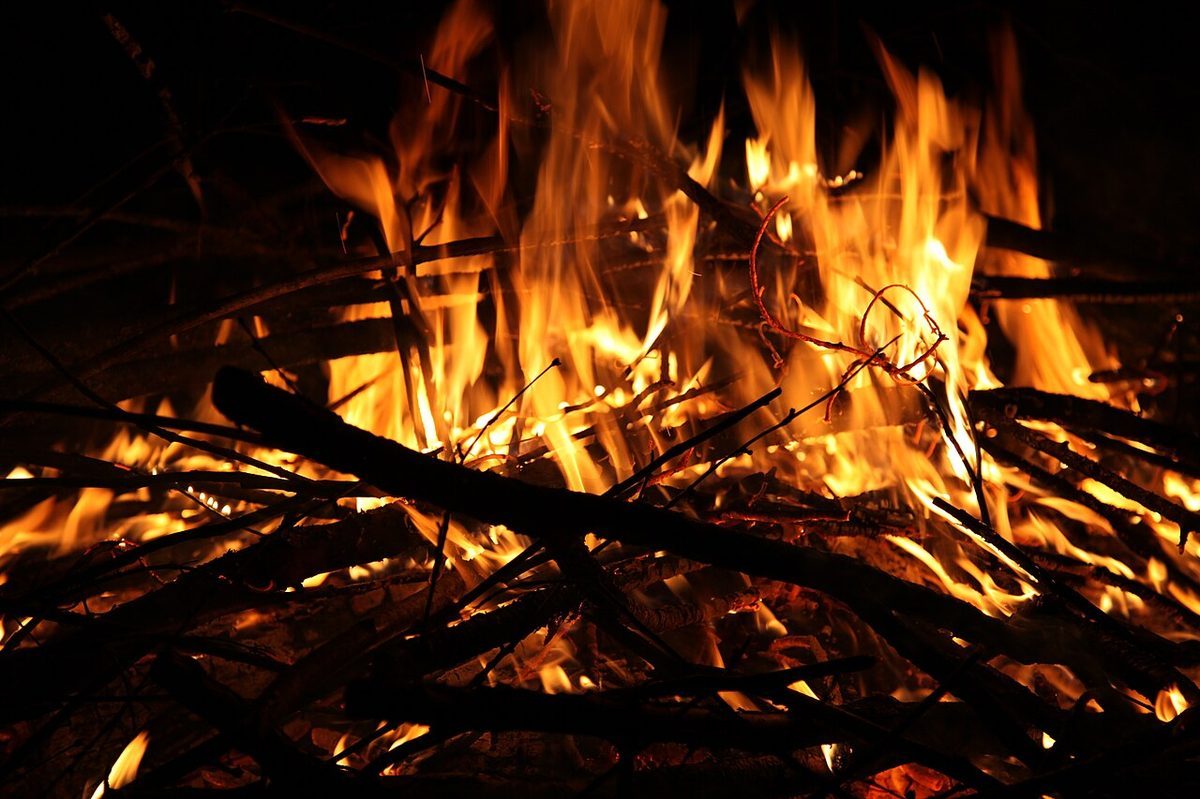
Dry pine resin crackles in the iron grate of a cold hearth. One orange tongue leaps off a knot, splits a blackened log into glowing seams, and sends pale heat up the chimney flue. What sat dead and damp turns into bright motion in a single breath.
Salamanders are the fire elementals of Western alchemy and old natural lore. In 1566, the Swiss physician Paracelsus placed them inside flame as swift spirits of heat and change in his book On the Nymphs, Sylphs, Pygmies, and Salamanders. Earlier writers like Aristotle and Pliny told of cold lizards walking untouched through burning logs. Across temples in India and Tibet, priests met the same fire force under names like Agni. Across those traditions, salamanders name the power that breaks stale form into ash so fresh energy can move.
How solar plexus fire wakes inside the body
Most people think fire only wrecks what it touches. Ancient rites and modern consciousness teachers paint a sharper picture of how heat serves life.
Tom Kenyon and the Hathors map two fires burning in the solar plexus behind the stomach. In his Inner Sun message, Kenyon gives their yogic names. Jathara Agni is the slow burn that breaks food down into fuel. Bhuta Agni is an etheric fire feeding mitochondria inside cell nuclei and boosting cellular light called biophotons.
In Chant of the Four Elements, the Hathors pair fire with the syllable KA. Outer fire means the sun, a candle wick, or a warm radiator. Inner fire means the solar plexus and cellular engines. Sounding KA with simple gratitude joins both fires into one circuit.
Diana Cooper teaches that salamanders work beside fire dragons and Archangel Gabriel to clear heavy apathy and rekindle willpower when action stalls. In Anne Tucker's recordings, Isla adds that healthy inner fire burns away stale survival habits without turning into frantic pushing. True drive warms the hearth, finishes a task, and lets stillness return.
Maia Nartoomid, writing on Electrikum and the Pythagorean Tetractys, sets fire at the peak of the fourfold triangle. She treats Aries fire as an electric field that wakes dormant codes inside matter.
Fire does more than ruin wood. When heat flows through an open gate, it turns dense fuel into motion and light.
The lizard inside the burning hearth
Old naturalists and Renaissance alchemists left strange reports about fire dwellers. Set their accounts side by side, and the myth maps how flame behaves.
In ancient Greece and Rome, Aristotle and Pliny wrote of a spotted lizard that could step straight into a hearth fire without blistering its skin. Some claimed its body ran so cold it quenched live coals on contact. Medieval weavers spun asbestos fibers into salamander wool because torches failed to char the cloth.
In 1566, Paracelsus took that old emblem and sorted nature spirits into four homes. Earth held gnomes, water held undines, air held sylphs, and fire belonged to salamanders. He wrote that salamanders were lean, dry, and swift, darting along tongues of flame in hearths, kilns, and lightning bolts. Unlike water or earth spirits, they rarely paused to chat with people. Anyone who met fire clumsily got burned.
Paracelsus also left a sharp warning about measure. Everything is poison, he wrote, and only the dose makes the difference. Fire warms a winter hall at one dose and levels a city at another.
Across Asia, Kenyon notes in Chant of the Four Elements, older rites met the same element as a living guest. Vedic priests poured ghee into yajna fires so Agni carried offerings skyward. Tibetan monks kept yak butter lamps lit inside stone halls all winter.
Open flues and the dose of flame
Place Pliny's lizard beside Paracelsus's forge warnings, and two laws rise from the embers.
First, fire builds order only while its vent stays open. A stove with a shut flue chokes on black smoke. Box up creative drive in silence or bitter brooding, and it scorches its container. Open a vent, and heat turns into useful work.
Second, dose divides purifying flame from scorch. Paracelsus knew a small spark starts a forge while runaway heat melts the iron. A blast furnace blinds the eye, while banked coals give even warmth and let hidden shapes appear inside the embers.
Flame, ash, solar plexus and the sound KA
The old pictures of the forge point straight to how heat behaves inside human attention.
Begin with flame and ash. Fire burns dry wood into two opposite gifts, bright radiance leaping outward and fine ash falling back to earth. Whatever cannot survive heat turns to dust, while mineral bone stays behind.
Look next at the solar plexus, the inner sun above the navel. Kenyon ties this center straight to the star in our sky. When the solar wind grows strong, the solar plexus feels the surge first. Fear knots that surge in the gut. Gratitude turns the same heat into Bhuta Agni, feeding mitochondria across the body.
In Chant of the Four Elements, Kenyon notes that the Hathors gave him the syllable KA for fire. He explains that KA is an acoustic pointer, not an Egyptian prayer word. Sounding KA with simple gratitude joins outer flame and inner belly fire into one loop.
How fire answers water and air
Fire never works cut off from air and water in old alchemy. Every forge needs wind below and a quench tub nearby.
Cut off air, and coals turn gray in seconds. Air feeds oxygen into a flame, just as breath feeds oxidation in the blood. Too much wind, though, turns a small hearth into wildfire.
Water sits at the opposite pole. Water cools hot steel and turns flame into steam that drives pistons. In alchemy, fire burns dross to ash, then water washes the ash until salt shines. A spark without water cracks the crucible. Water without a spark leaves clay cold and unbaked.
Where Salamanders burn in the sky
Salamanders belong to alchemical lore, with no planet or asteroid bearing their name. Linking them with Western planets and zodiac signs is a modern symbolic lens, not an ancient rule. Readers who compare the two often look at the Sun, Mars, and the fire signs.
Look first at the Sun. The Sun is a ball of plasma at the heart of our sky, feeding every leaf and pulse on Earth. Its sign and house in a birth chart symbolize where a person gives off natural warmth.
Look next at Mars. Mars marks ignition, iron will, and the nerve to strike a match when others stall. Mars paired with Saturn works like a blacksmith's hearth, holding a fierce spark inside firm walls to forge tools. Mars with Pluto points to volcanic force that needs an open outlet.
Check Aries, Leo, and Sagittarius, plus the fifth and ninth houses, when a birth time is known. The fire signs symbolize drive and bold starts in the chart.
Sitting before the hearth spark
Turn to salamanders when fog, stalling, or cold dread freezes action and you want to burn off stale weight. Ask for crisp will and inner warmth, never bodily healing. Keep water beside any open flame.
Place one candle on stone or ceramic in a safe room, or sit before an iron grate, with a cup of plain water nearby. Turn screens off.
Sit upright with both feet resting squarely on the floor. Rest a soft gaze on the flame tip without straining your eyes. Take three breaths, letting your shoulders drop on each exhale.
Bring to mind one stale delay or cold fear you are ready to burn to ash. Speak it aloud in five words.
Rest attention in your solar plexus, just above the navel, until gentle heat gathers there. Recall Kenyon's teaching on Bhuta Agni and outer fire. Send simple thanks to the candle flame and the sun in the sky. Breathe in slowly, then hum a low KA as you exhale, feeling your belly warm toward the flame.
Sound KA three times, trading gratitude between outer flame and inner sun. Watch cramped thoughts break apart like sparks rising up a flue.
When the work is finished, leave no live spark untended. Snuff the candle flame out with damp fingers or a metal bell, or shut the iron grate so the last ember dies in ash. Eat a slice of warm bread slowly at the table to bring warmth back down into your belly, speak the name of the room aloud, and step straight into one ordinary chore while your spark stays awake.
Questions people ask about salamanders
Why are salamanders linked with fire?
Ancient writers like Aristotle and Pliny spread tales of cold lizards walking untouched through burning logs because moist skin briefly shields a real salamander in damp wood. In 1566, Paracelsus gave the name Salamander to elemental spirits living inside flame.
What do fire elementals mean in alchemy?
They stand for calcination, the stage that breaks a heavy substance down to mineral ash. In consciousness work, they mark sudden ignition, willpower, and burning away dead weight.
How do contemporary teachers describe salamanders and inner fire?
Tom Kenyon and the Hathors map two solar plexus fires, Jathara Agni and Bhuta Agni, linked to outer heat through the sound KA. Diana Cooper pairs salamanders with fire dragons and Archangel Gabriel, while Anne Tucker and Isla describe healthy fire as clearing stale habits without frantic pushing.
What sound connects with fire in Tom Kenyon's work?
In Chant of the Four Elements, the Hathors pair fire with the syllable KA. Focus moves between a sun or candle outside and the solar plexus fires Jathara Agni and Bhuta Agni inside.
How do you close a fire elemental practice safely?
Snuff the candle out or shut the iron grate so no live ember remains, then eat warm bread slowly to ground the heat in your belly. Speak the name of the room aloud and turn straight to one concrete task.
The spark inside the crucible
Salamanders are the swift fire that strips away dead weight and leaves clear light behind.