Behind a wet slate boulder in a clear mountain stream, the current curls backward into a dark eddy. Fallen leaves spin slowly inside the pocket for a breath, then slip downstream while the swirl holds its exact shape in the rushing water. Nothing about that form stays still, yet the pattern remains.
Undines are the water elementals of Western alchemy, named from the Latin word unda, meaning wave. In 1566, the Swiss physician Paracelsus placed the Undinae, or Nymphs, inside springs, rivers, lakes, and rain in his book On the Nymphs, Sylphs, Pygmies, and Salamanders. Greek lore honored the Naiads of fresh wells and the Nereids of ocean swells. Vedic hymns sang to Apas, the living waters of creation, while Slavic tales told of Rusalki beside misty banks. Across those traditions, undines name the fluid force that carries memory, mirrors the heart, and remembers every bond kept or broken.
How water holds memory inside a still vessel
Most people treat water as blank liquid waiting inside pipes. Spiritual traditions and modern consciousness teachers describe water as an active carrier of pattern and presence.
In Anne Tucker's recordings, Isla uses still water as a central picture. When someone thrashes violently across a shallow bay, the water turns to froth and reflects nothing. Stop thrashing and wait, and the surface settles flat as glass. Waves of coherence reunite split parts of awareness the moment forcing stops.
Tom Kenyon and the Hathors bring that stillness down into the body in Chant of the Four Elements. They pair water with the syllable LEEM. Outer water means an ocean, river, rain cloud, or glass jar on a table. Inner water means pulsing blood and cool lymph moving behind the ribs. Joining simple gratitude to the sound LEEM turns water from mute fluid into a bridge.
Lee Carroll, speaking as Kryon in A Plea to Scientists, likens multidimensional reality to an ocean surface under a light wind. Patterns, templates, and stories ride the water like ripples shaped by the breeze blowing over them.
Diana Cooper pairs undines with Archangel Mary's aquamarine tide and water dragons to wash away old emotional stagnation and restore gentle flow. Across every account, water answers open presence far better than brute control.
The covenant of the fountain
Renaissance alchemy and Romantic tales kept a haunting myth about undines that sets water apart from the other elements.
In 1566, Paracelsus taught that gnomes, sylphs, salamanders, and undines are real beings made of subtler stuff than flesh, yet they hold no immortal soul on their own. One door stood open to an undine. If she wed a human partner in a faithful oath, love wove an enduring spirit into her fluid form. She stayed loyal beside his hearth for life. If he broke faith, she vanished back into her waters, and no stone wall could block her grief.
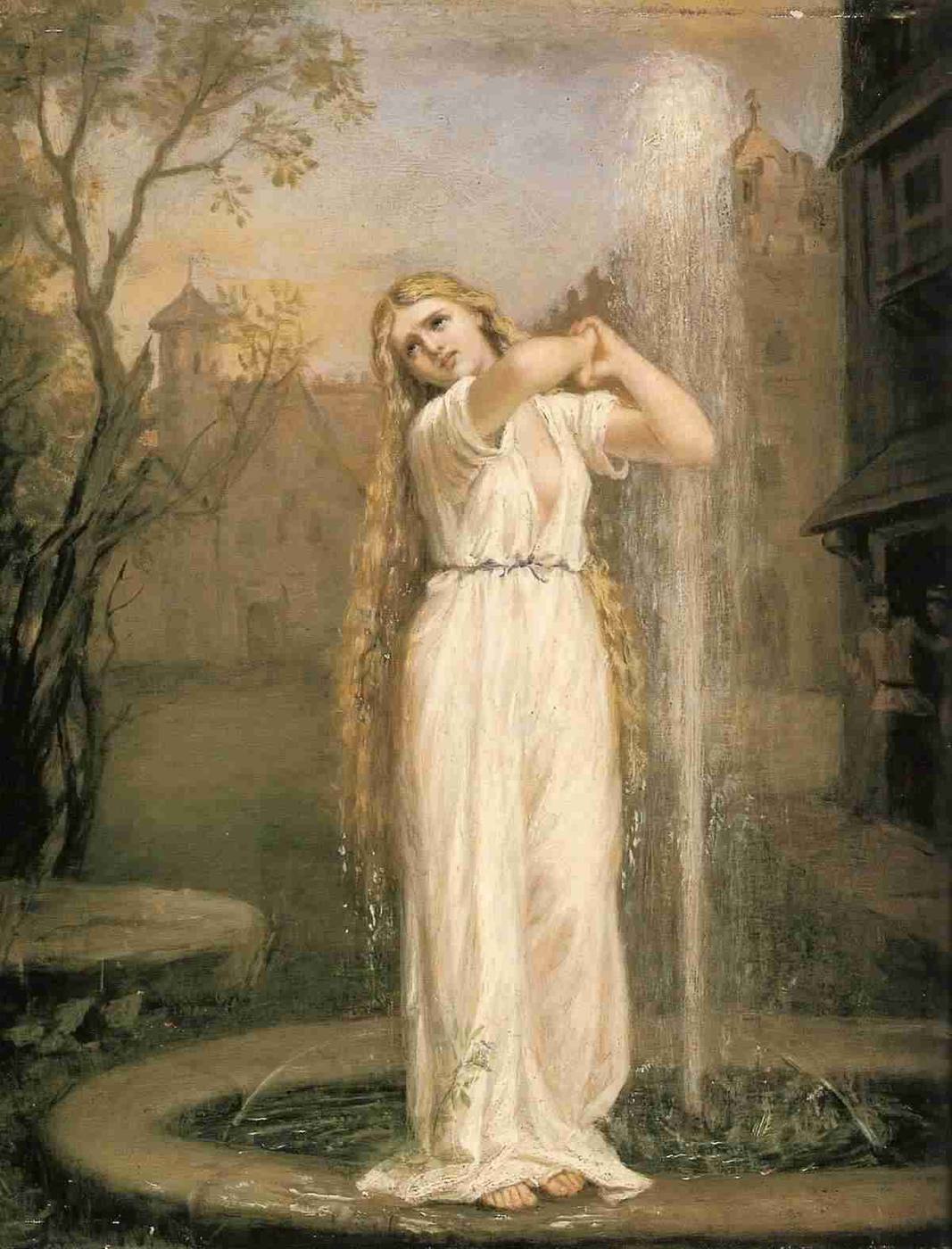
In 1811, the German writer Friedrich de la Motte Fouque turned that doctrine into the tale Undine, later painted by John William Waterhouse beside a mossy fountain. In Fouque's story, a water spirit weds a knight named Huldbrand and gains a soul on her wedding night. Their castle prospers for a time. Then Huldbrand grows cold, scorns his bride on a river voyage, and plans to marry a proud noblewoman.
Undine slips beneath the river with one warning. Keep the courtyard well sealed with stone, and never break your vow over water. On the night of his second wedding, the proud bride tells servants to pry the cap off the well. Cool mist climbs the stairs. Undine enters the chamber veiled in white, weeping without anger. She kisses Huldbrand as tears pour over his face, drowning him in sorrow before gliding back into a clear spring around his grave.
What water learns from its banks
Set Fouque's tale beside Paracelsus's rule, and two laws of water stand out.
First, fighting a ripple inside a stream leaves the current unchanged. When Huldbrand capped the castle well while breaking his oath, water rose through the stone seams anyway. Hiding grief behind thick armor drives feeling underground until it breaks out as a flood. Turbulence eases only when the current itself is given room to shift.
Second, water takes the shape and tone of the vessel holding it. Pour water into a square jar, and it stands square. Bring harsh noise to a spring or poison a river, and the conductor sends that static straight back. Faithful attention gives fluid force a shape worth keeping.
Bowl, well, blood and the syllable LEEM
The well, the bowl, and the blood inside a wrist each show how water keeps a record.
Begin with the still bowl or well. Rapids scatter sight, while water held inside a wide glass turns smooth as a mirror the moment ripples settle. Seers gazed into dark water bowls for centuries because a still surface reflects what a racing mind misses.
Look next at blood and lymph. Roughly sixty percent of an adult body is water, washing nutrients through vessels and carrying salt ratios older than forests. Emotion alters hormone flow in that inner sea within seconds.
In Chant of the Four Elements, Kenyon reports that the Hathors gave him the syllable LEEM for water. Sounding LEEM with gratitude passes signal back and forth between a vessel on the table and the tide inside your veins.
How water meets earth and fire
Water drifts into chaos when cut off from earth's banks and solar heat.
Water without banks spreads into shapeless marsh. Earth builds riverbeds, limestone basins, and clay cups that aim current toward useful work. In return, water softens seed coats and brings dissolved minerals to waiting roots.
Water without heat turns to locked ice. Sun fire lifts vapor off salt seas, leaves heavy brine behind, and drops fresh rain onto mountain snowpacks. Fire lifts, air carries, earth holds, and water remembers the journey.
Where Undines gather in the sky
Undines belong to alchemical lore, with no planet or asteroid bearing their name. Linking them with Western planets and signs is a modern symbolic lens, and not a classical sky rule. Readers who draw that parallel often look at the Moon, Neptune, and the water signs.
Look first at the Moon. The Moon pulls ocean tides twice a day and symbolizes memory, rhythm, and body fluids. Where the Moon sits by sign and aspect in a chart mirrors how a person holds feeling without spilling over or freezing dry.
Look next at Neptune. Neptune symbolizes open sea, mist, dreams, and the melting of rigid walls. Neptune in smooth aspect to Saturn acts like a stone aqueduct carrying deep currents safely into town. Neptune in hard aspect to Mercury can cloud plain speech unless anchored in concrete facts.
Check Cancer, Scorpio, and Pisces, along with the fourth, eighth, and twelfth houses, when a birth time is known. In a birth chart, the water signs symbolize memory carried across generations and sorrow softened into compassion.
Listening beside a still jar of river water
Turn to undines when grief locks behind stone walls, dreams feel tangled, or focus turns parched and brittle. Ask for fluid clarity and gentle release, never medical fixes.
Fill a glass jar or ceramic bowl with cool stream or tap water and set it on a firm table in front of you. Sit upright with both feet resting squarely on the floor.
Wait sixty seconds without touching the jar. Watch tiny ripples across the water slow down until its face acts like a flat mirror. Let your jaw and shoulders drop at the same pace.
Recall one unspoken feeling or memory you kept shut behind a stone lid, like the sealed well in Fouque's castle. Speak it softly in one sentence.
Recall Tom Kenyon's Hathor syllable LEEM and Anne Tucker's still bay. Cup both hands lightly around the glass without lifting it. Send simple gratitude to Earth's oceans, rain clouds, and fresh springs. Hum one soft LEEM toward the water, watching a tiny ring ripple across its skin.
Move attention inward to blood and lymph flowing behind your ribs and wrists. Sound LEEM twice more, letting thanks travel between the jar in your hands and the river inside your veins. Sit still for two minutes after the tone fades.
When the time is complete, bring the water back to living ground. Carry the jar outdoors and pour the water slowly out into grass or over waiting roots so nothing lingers stagnant indoors. Wipe the glass rim dry with a linen cloth, set the empty jar back on its shelf, and step into your daily work.
Questions people ask about undines
Where does the word undine come from?
Paracelsus coined the term Undinae in 1566 from the Latin word unda, meaning wave. He used it for water spirits dwelling in springs, streams, lakes, and seas, alongside the Greek Naiads and Nereids.
Why did Undine need to marry a human in old stories?
In Paracelsus's treatise and Fouque's 1811 novella, water spirits lacked an immortal soul unless wed in faithful oath to a human spouse. Fluid feeling needs loyal commitment to hold lasting shape.
How do contemporary teachers describe water and still reflection?
In Anne Tucker's 2026 Forecast of Energies Ahead and related Isla sessions, still water settling flat as glass shows how awareness clears when frantic forcing stops. Lee Carroll's Kryon compares subtle reality to ripples on an ocean surface, while Diana Cooper pairs undines with water dragons and Archangel Mary's aquamarine tide.
What sound pairs with water in Tom Kenyon's teachings?
In Chant of the Four Elements, the Hathors give the syllable LEEM for water, linking oceans, clouds, and vessels outside with blood and lymph inside the body.
How do you close a water elemental practice?
Carry the jar of water outdoors and pour it slowly into grass or over roots, then dry the glass rim with a cloth and put the empty vessel away. Returning the water to soil closes the practice in ordinary ground.
The tide inside the glass
Undines are the living water that carries memory across ages and turns grief back into clear sight when met in good faith.