In a mud-plastered courtyard before sunrise, dry mango twigs sit stacked inside a square brick altar. A priest pours warm golden ghee from a copper spoon onto the kindled coals. Bright yellow flame leaps three palms high, carrying the scent of clarified butter straight into the pale morning air.
Agni is the fire god of the Vedas, the very first word of the Rig Veda: I praise Agni, the household priest set in front of every offering. He is Jatavedas, knower of all born things, Havyavahana, carrier of gifts to heaven, and Vaishvanara, the universal digestive fire warming every creature inside. In Hindu wisdom he is the witness flame that turns food, wood, and unlived feeling into light and fuel. Across India, the fire altar, the ladle, and the word Svaha form a working craft for turning daily acts into clear offering.
Three fires from star to belly
Most people picture fire inside a stove or roaring through dry brush. Vedic seers watched one flame work across three planes at once: sun in heaven, lightning in clouds, and warm fire inside the belly.
Modern biology meets that third fire in every cell. When you eat bread or fruit, your gut breaks it down and cell powerhouses, the mitochondria, burn that fuel slowly without scorching tissue. That slow oxidation turns food into warmth, motion, and faint cellular light called biophotons.
The Hathors, speaking through Tom Kenyon in The Inner Sun Hathor Message and Chant of the Four Elements, bring this map into view. For ages, Kenyon writes, yogis have met the fire element Agni in sacred fire rites called yajnas to burn away blocks. Inside the solar plexus, the Hathors point to two fires. Jathara Agni is the slow burn of digestion that keeps physical life running. Bhuta Agni is the subtle fire feeding the mitochondria and raising light inside the body. Sending warmth and gratitude to the solar plexus feeds both fires without force.
Amit Goswami translates that flame into quantum terms in The Quantum Doctor. Drawing on Ayurveda, he defines tejas as vital heat and creativity that turns raw matter into living shape. When tejas runs smoothly, life renews itself. When it overheats or stalls, balance breaks down.
Swami Muktananda, reading verses eighteen and nineteen of the Vijnanabhairava in his Kashmir Shaiva commentary, steps closer to the core. The Self lives inside fire as the soul of fire. Just as heat and burning power cannot leave a flame, active Shakti cannot split from pure awareness.
The messenger in the waters and the boy at Death's door
Two old stories show how Agni links earth to sky and why no gift reaches heaven without his witness.
In the Rig Veda, Agni grew tired of carrying smoke and prayers between mortals and gods. Three elder brothers before him had burned out on the altar. Fearing the same end, Agni fled the hearth and hid deep under cosmic waters.
The gods searched earth and sky in darkness while altars sat cold. At last a fish and a frog betrayed his hiding spot beneath the waves. When the gods drew him gently out of the sea and begged him to return as priest, Agni named his price. If he carried every gift upward, he must hold deathless life and a share of every offering. The gods agreed, and Agni stepped back onto the hearth as the unbroken bridge between worlds.
The second tale stands in the Katha Upanishad, also told by Amit Goswami in Physics of the Soul. A proud priest staged a grand fire rite to win heaven, yet cheated by giving away frail cows while keeping his strong herd. His young son Nachiketa watched the trick and asked his father plainly: to whom will you give me? Three times the boy pressed until his father snapped in rage: I give you to Death.
True to the spoken word, Nachiketa walked straight to the house of Yama, lord of death. Yama was away, so the boy waited three nights at the gate with zero food or water. Ashamed that a guest had gone unserved, Yama granted Nachiketa three boons. First the boy asked for peace between himself and his father. Next he asked to learn the secret of the sacred fire that lifts souls past sorrow. Yama taught him the altar fire so fully that he named that flame Nachiketagni after the boy. Only for his third boon did Nachiketa ask what survives death, winning the Upanishad's teaching on deathless awareness.
And in the Puranas, Agni never stands at the hearth alone. Beside him stands his consort Svaha, whose name means well-spoken gift. When priests pour ghee into flames, they speak Svaha as the final seal. Without her name, no offering reaches its mark.
Laws of heat and true offering
Two plain laws govern Agni wherever fire burns.
First, fire refuses neither bitter bark nor sweet cedar. It turns whatever enters into heat, light, or pale ash. Inner digestion works by the same rule. In her talk We Are on the Precipice and Can Create in 5D Now, Anne Tucker notes that the gut chooses what to take in and digest instead of repeating fear on a loop. What stays half-swallowed turns sour. What meets open fire warms the house and leaves zero clutter behind.
Second, a gift holds power only while the giver stays whole inside it. In her talk Putting Yourself Last, Anne Tucker warns against abandoning your own light to buy someone else's ease. Real offering brings whole selfhood and plain truth to the flame. Swami Muktananda states the same law from Kashmir Shaivism: in true sacrifice, the offerer, the gift, and the fire are one Shiva.
Reading the two faces and the ram
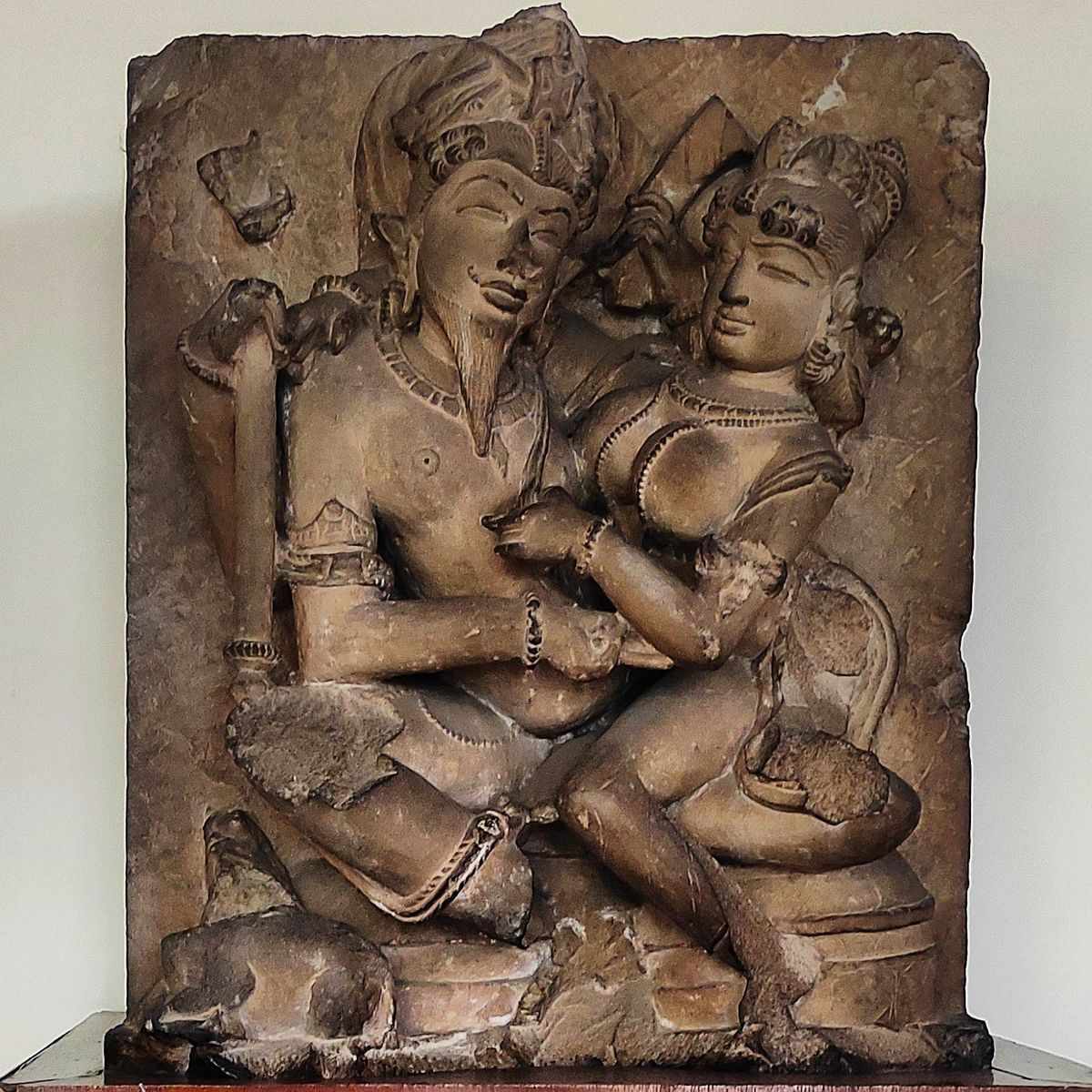
Stand before the eleventh-century sculpture of Agni and Svaha from Jabalpur, and notice how each feature works.
Agni often carries two faces or seven tongues of flame. Two faces look both ways at once: outward to daily deeds, and inward to the witness inside the chest. His seven tongues stand for seven bands of light and seven layers of food, breath, and thought that fire refines.
Look at his mount, the leaping ram Mesha. A ram charges ahead with horns low, catching the raw heat of a start before doubt cools it down. In his hands, Agni holds prayer beads and a water pot beside a ladle. Fire without water and bead-count burns the house down. Fire held beside water turns heat into craft.
Beside him stands Svaha, known in tradition as the power that cannot be burned by Agni. Pure intent walks straight through close scrutiny and shines brighter on the far side.
Where the altar star rises
In Jyotisha, Agni rules the third lunar mansion, Krittika, running from twenty-six degrees forty minutes of sidereal Aries into ten degrees of Taurus. Its marker star is Alcyone in the Pleiades, and its sign is a sharp blade or leaping flame. Vedic priests watched Krittika rise due east before lighting a household altar fire, a rite called agnyadhana.
Among the planets, Agni moves through the Sun and Mars. The Sun holds his high celestial warmth and plain truth. Mars holds his ram-like drive and belly heat. With Indra, Agni also rules Vishakha in late Libra and early Scorpio, joining spiritual fire with leadership at the gate of choice.
Tending the inner hearth at dawn
Turn to Agni when old grief, anger, or unkept vows sit heavy in your belly like damp wood, or when daily work has cooled into gray ash.
Come at sunrise or dusk, when light shifts across the sky. Light one beeswax candle or ghee lamp in a safe dish. Sit tall with your spine straight and your eyes level with the wick.
Follow Tom Kenyon's method from The Inner Sun Hathor Message. Rest attention at your solar plexus, above the navel and opposite your lower spine. Do not grip your belly or force the breath. Send warm gratitude to that inner furnace for digesting your food and feeding every cell with light. Let Jathara Agni and Bhuta Agni warm at their own speed.
Name one unfinished burden or stale grudge you are ready to release into clear fire. Watch the upright tip of the flame and speak Svaha softly once aloud as you breathe out, giving the fuel wholly to truth.
Finish with respect before you step away from the hearth. Never walk off and leave a fire rite loose. Thank the flame, and cover the wick with a brass snuffer or copper spoon instead of blowing harsh air across it. Take a warm spoonful of cooked rice or a drop of melted ghee beside the kitchen stove, let that warm bite settle your belly, and go finish one real task in daylight.
Questions people ask about Agni
What is Agni the god of?
In Hindu and Vedic lore, Agni is the god of sacred fire, light, truth, and change. He acts as messenger carrying gifts between earth and heaven. He is also the digestive flame inside living bodies.
Why does Agni have two faces and seven tongues?
Agni's two faces look toward outer acts and inner sight, linking daily life with truth. His seven tongues symbolize seven bands of light and the layers of fuel that fire refines.
Who is Svaha beside Agni?
Svaha is Agni's consort, the power of true offering that crosses flame unburned. Speaking her name at the end of a Vedic chant seals the intent so the gift reaches its mark.
What is Jathara Agni and Bhuta Agni?
In yoga, Jathara Agni is the physical fire of digestion that breaks down food. Bhuta Agni is the subtle fire that refines elements and feeds cell energy and inner light.
How can someone honor Agni safely at home?
Light a small candle or ghee lamp at dawn and hold gratitude at the solar plexus. Speak one clear intent without rush, snuff the wick with a copper spoon, and eat a warm spoonful of cooked food afterward.
The spark and the ash
Agni is the incorruptible witness, the warm hearth inside every cell that turns raw life into light.