Frost locks the winter fields hard as hammered iron. Snow fills the ditches, and days stay short under a pale sky. Deep beneath the turf, a pulse wakes in the dark soil and begins to soften the ground.
This is the hour of Brigid.
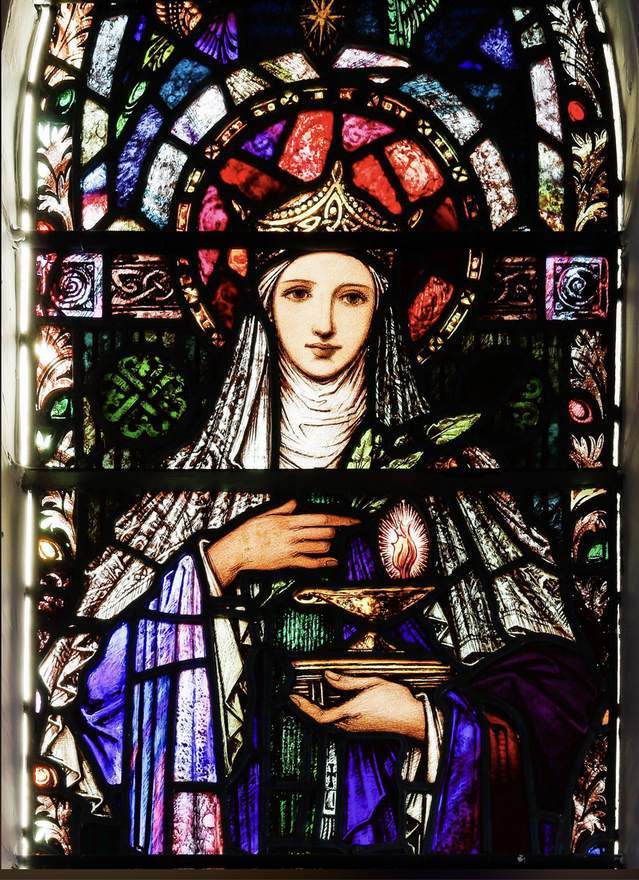
Brigid is the Celtic goddess of Ireland, Britain and Gaul, known as Brighid, the Exalted One, and as Brigantia across the sea. She watches over smiths, poets and keepers of the hearth. Her sanctuaries pair a burning fire with a spring of fresh water. Wherever raw ore, sorrow or winter seed must be shaped into life, Brigid holds the forge, the flame and the stone well.
Water that holds the fire
A blacksmith plunges a glowing blade into a trough of water, and steam rises in a cloud. To ordinary eyes, fire and water look like enemies. At the anvil, each one depends on the other.
In The Matter With Things, Iain McGilchrist describes how real making happens in the mind. Trying to force an answer narrows focus onto one tight spot, like a smith hammering cold iron until it splits. Broad, unforced attention lets distant ideas meet and fuse into something new.
Tom Kenyon and the Hathors describe the human vessel in matching terms. In their message Gaia's Song, they teach that your body is a standing wave of light and matter forged from the elements of Earth. You carry heat and water inside the same skin. Brigid stands at that meeting point, where heat softens the frame and water cools the edge.
Three sisters and the first keening
This account comes from Cormac's Glossary and the Second Battle of Mag Tuired.
In Irish lore, Cormac's Glossary names Brigid as a woman of poetry whom the poets worshipped because her care was great. The text says she had two sisters with the same name. One watched over poets and inspired speech. One watched over smiths and the shaping of metal. One watched over traditional herbs and the tending of the household.
She was daughter of the Dagda, a father god of the Tuatha De Danann. Her kin included the smith Goibniu, whose spearhead never missed its mark. In time she wed Bres, a king born of mixed blood between the Tuatha De Danann and their foes, the Fomorians. They had a son named Ruadan.
War broke out between the two peoples on the plain of Mag Tuired. Bres sent Ruadan across the lines as a spy to learn how Goibniu forged weapons so fast in battle. Ruadan watched Goibniu shape a spear with three blows of his hammer. He asked for a spear of his own, then drove it into Goibniu's side.
Goibniu pulled the iron from his flesh and threw it back at the boy. Ruadan fell upon the grass with a mortal wound and died on the field.
Brigid walked out among the slain and found her son lying in the mud. No one in Ireland had ever heard a formal song of mourning before that day. Brigid opened her throat and raised the first keening cry over Ruadan. She wove shock and sorrow into a rising wail that carried across the valley. The lore says weeping and keening were heard in Ireland from that hour.
Long after the old gods faded from altars, a fire still burned in her name at Kildare. Nuns tended the flame inside an oak ring, feeding it night after night, while a well flowed beside the sanctuary. Her feast fell at Imbolc in February, when ewes first come into milk and frost begins to loose its grip.
Hearth fire and cold spring
Take this story out of the war tent and bring it to the hearth. Two laws govern the work of Brigid.
First, heat without water cracks the blade. A bar pulled straight from the coals stays brittle if the smith never quenches it in the trough. Mind and spirit work by the same rule. Inspiration that burns without pause turns harsh and dries out the craft. It needs water to cool its fever and set its edge.
Second, grief locked behind a wall freezes the spring. Anne Tucker explains this law in her talk We Can Release Suffering. Pain arrives when life takes someone we love, she says. Suffering grows when we build a wall against grief and replay it in resistance. When we let sorrow move through the chest once, as Brigid did over Ruadan, the weight passes and freedom returns.
In another message, Today We Change Direction, Anne Tucker speaks of opening the heart so an alignment reaches down to the bones. That is what the first keening did on the field. It turned silent numbness into breath, sound and movement. Water that stops moving grows stale in a ditch. Water that finds its outlet runs clear down the hill.
Anvil, flame, spring and woven rush
Four objects mark Brigid's sanctuary, and each one does a distinct kind of work.
At the center of the smithy stands the anvil with its horn and flat face. Iron comes out of the coals soft and shapeless. On the anvil, each hammer blow drives out slag and packs the grain tight. Vision needs resistance and backing before it takes useful shape.
Beside the oak ring burns the hearth flame of Kildare. A perpetual fire does not flare high and die by midnight. It feeds on split wood and measured air from the bellows, day after day. It marks attention that stays present across slow winters when nothing in the yard looks green.
Down the path lies the stone well, like the spring at Brallistown Little in County Kildare. In Irish tradition, people brought ribbons, coins and prayers to these wells at dawn for spiritual renewal and clear sight. The spring never forces growth. It rises through limestone from deep rock, reminding the mind to draw from a source older than hurry.
Over the door hangs a woven cross made from green reeds gathered on Imbolc Eve. Four arms fold around a square center, locking together without nail or glue. It shows how four directions and four seasons hold one hearth at the middle.
In The Dwellers of Egypt, Maia Nartoomid points to an older link, quoting a line from the Acts of the Holy Wells. In that teaching, spinal fire climbs up the back to join the sacred waters inside the skull, so head and heart reconcile. Fire rises from below, water waits above, and the meeting makes the vessel whole.
Brigid in the winter sky
In the wheel of the year, Brigid belongs to Imbolc, the midpoint between winter solstice and spring equinox. The Sun stands near fifteen degrees of Aquarius, a fixed sign of structure and community. Light grows longer each afternoon, even while snow still covers the threshold.
In a birth chart, Brigid appears wherever the Sun, Venus and Mercury weave inspiration into lasting craft. Venus gives warmth, song and care for what grows. Mercury shapes sparks of thought into spoken verse, hammer rhythm and skilled hands.
Modern astrology also looks at Chiron near the fourth or tenth house, a layer added long after the ancient Celtic feasts. Chiron marks the place where a wound opens a doorway to wisdom and service. In the fourth house of hearth and roots, or the tenth house of public calling, Brigid turns loss into song that warms a hall.
At the hearth, the anvil and the well
Turn to Brigid when you stand before new work, when sorrow sits heavy in the ribs, or when winter leaves the spirit dry. Meet her at dawn or at the turn of Imbolc, when daylight begins to push back the dark.
Set a candle inside a safe dish on your table. Beside it place a cup filled with fresh water. Sit straight on a wooden bench or stool with your hands open on your knees.
Look at the flame for three breaths. Bring one craft, poem or problem into your mind without forcing an answer, letting wide attention hold the picture as McGilchrist describes. Ask for a spark without rush.
Now name aloud one sorrow or knot you have been holding behind a wall. Let your voice carry one low hum on the out-breath until the chest softens. Dip your fingertips into the water and touch your brow, cooling the heat without putting out the flame.
When the prayer ends, bank the fire and empty the spring. Snuff out the candle so the spark sleeps inside the wick. Carry the cup outside and pour the water over bare earth or a threshold stone. Place a single reed, pen or small tool beside the snuffed candle, and leave tomorrow's work to rest until dawn.
Questions people ask about Brigid
What is Brigid the goddess of?
In Irish and Celtic tradition, Brigid is the goddess of poetry, smithcraft, the hearth flame and sacred springs. She watches over inspired words, metalworking, traditional herb-care and the growth of spring.
Why do fire and water belong together in Brigid's story?
Fire heats metal and water tempers the blade. Together they show that creative spark needs cooling to hold its shape, just as water absorbs vast heat in nature without boiling away.
How did Brigid invent keening in Irish myth?
In the Second Battle of Mag Tuired, Brigid found her slain son Ruadan on the field. Her weeping and sung lament became the first keening heard in Ireland, giving voice to grief so it could move.
What happens at Imbolc, Brigid's feast day?
Imbolc falls at the start of February, halfway between winter solstice and spring equinox. Households once wove rush crosses, welcomed returning light, tended hearth fires and watched for ewes giving milk.
How do people honor Brigid at home?
People light a hearth candle, keep fresh water near the door, or weave rushes into a four-armed cross at Imbolc. A simple practice pairs craft with rest, always ending by snuffing the flame and pouring out the water.
The spark and the spring
Brigid is the flame on the hearth and the spring in the stone, shaping ore and sorrow into living craft.