A seed beneath January frost looks like a dead pebble. Snow crusts the ridge, gray clods sit still, and no green shoot breaks the ground. Yet inside that dark hull, an entire summer waits coiled for the hour to split its coat and climb toward the light.
Demeter is the Greek goddess of grain, tilled earth, seasons and sacred law. Rome called her Ceres, the root of our word cereal. Her title Thesmophoros means bringer of law, because bread and settled life depend on rules deeper than any decree. She is a consciousness that holds the memory of every seed and the timing of every harvest. And Greece built an instrument at Eleusis to step inside her cycle of loss, winter dormancy and return.
The living planet beneath the plow
Most people treat soil as dead dirt, a brown shelf waiting to hold whatever we plant or pour upon it. Science discovered a very different truth when it checked the air of neighboring worlds.
In The Web of Life, Fritjof Capra tells how James Lovelock helped design instruments to test for life on Mars. Comparing Mars with Earth revealed a stark gap. Mars sits in dead chemical balance, its reactions finished long ago. Earth's air burns with reactive gases like oxygen and methane side by side. Plants, rocks, oceans and soil bacteria push and pull those gases every hour. Working with biologist Lynn Margulis, Lovelock named this living web Gaia. Soil microbes speed up how rain and stone trap carbon, tying living roots directly to rock and sky.
What Lovelock measured with instruments, the Hathors state through Tom Kenyon in Gaia's Song. Earth is no inert rock beneath our boots. She is a conscious mother whose intelligence dwarfs human thought. Each human body is a standing wave built out of her minerals, air and water. When a person breathes gratitude from the heart straight back to the Earth, Kenyon says, the planet knows her child and answers in resonance.
Every seed obeys this shared pulse. In God Is Not Dead, Amit Goswami writes about a seed falling onto prepared ground, which he calls tilted earth. Even while the farmer sleeps at night, the seed sprouts and grows in the dark by laws no hand forces.
The Carla Rueckert transcripts of The Law of One use that same farm word for the ripening of a world. Across those sessions, harvest names the close of a long cycle. When asked in Session 42 whether feeding hungry bodies matters beside study of the mind, the answer comes back bluntly. To a starving body, the right answer is food. Patience is needed too, Session 42 adds, because catalyst in dense matter ripens slowly across many days.
The torch search, the hearth and the year without grain
The Homeric Hymn to Demeter tells the story in grave detail, just as it was sung before Eleusis.
Persephone, daughter of Demeter, walked across a meadow picking roses, crocuses and violets. A giant narcissus bloomed with a hundred heads, shining across the grass. As she reached out to pluck it, the earth split wide. Hades, lord of the dead, drove his golden chariot up from below, seized her, and plunged back into the dark.
Persephone cried out as the sky vanished. Only Hecate heard her from a cave, and Helios saw from his sun chariot. For nine days and nights, Demeter roamed the earth holding two pine torches. She tasted neither nectar nor bread, and no water touched her skin. On the tenth morning, Hecate met her with torches in hand. Together they stood before Helios until the sun named Hades as the thief.
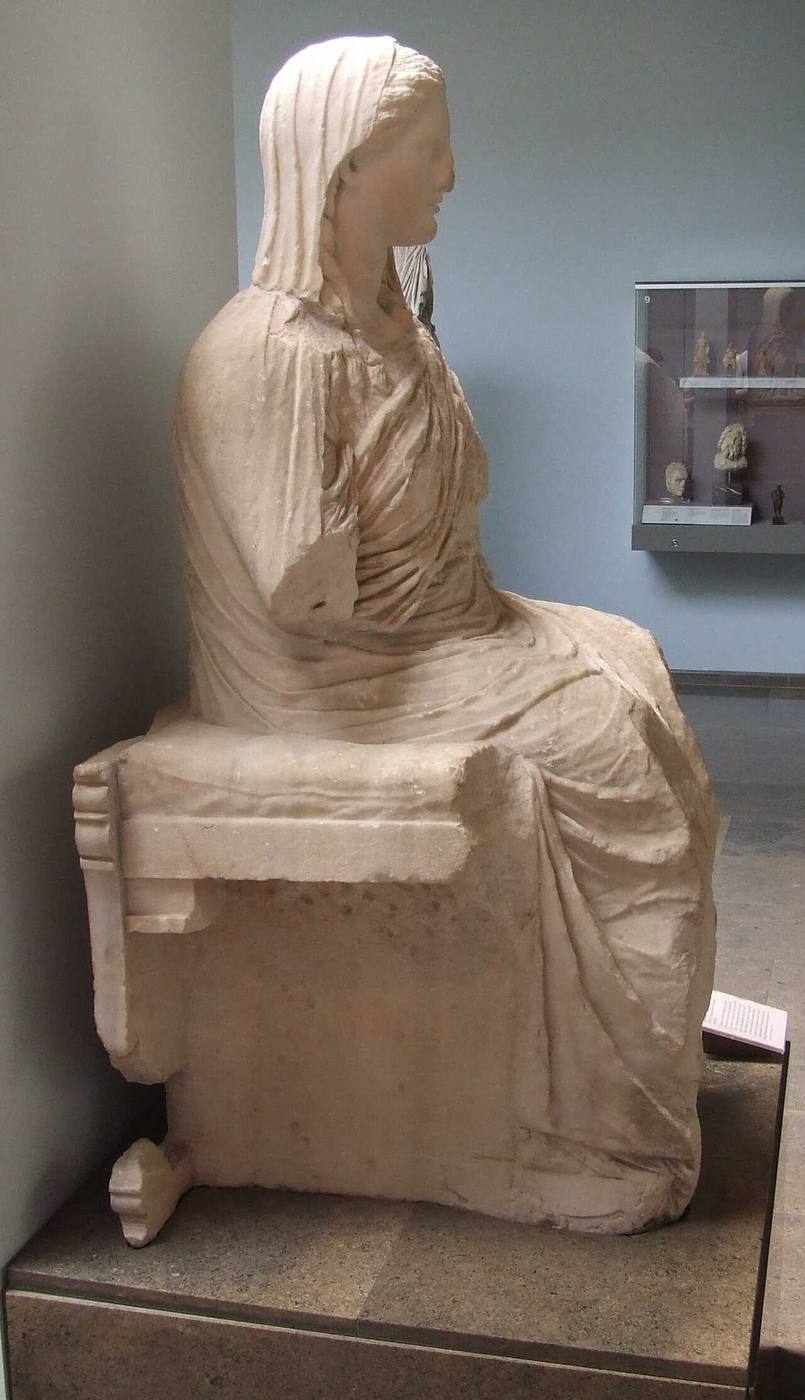
Demeter turned from Olympus in fierce grief. She disguised herself as an old woman, walked to Eleusis, and sat veiled in silence beside the Maiden's Well under an olive tree.
The daughters of King Celeus brought her home to nurse their son, Demophon. Demeter spoke no word and drank only a brew of barley, water and mint. By day she rubbed him with ambrosia so he grew like a god. Each night, while the house slept, she laid him into the hearth embers to burn away his mortal parts. Queen Metaneira spied through the door, screamed in terror, and broke the spell. Demeter lifted the child from the ash, set him down, and threw off her veil until golden light filled the hall.
Then she sat alone inside her new temple. For one full year, Demeter locked every seed inside the dirt. Oxen pulled plows through empty furrows. Barley rotted unseen. No green shoot broke the crust, and mortals starved while altars stood cold without grain.
Zeus sent Hermes down to the underworld to broker peace. Hades let Persephone climb into the golden chariot, yet before she left, he slipped sweet pomegranate seeds into her mouth. Because she tasted the food of the dead, she could not stay above all year. Two parts of each year she walks beside Demeter in the sunlight, and one third of the year she returns below as queen of winter.
Only then did Demeter lift her hand over the Rarian plain. At once the brown dirt grew heavy with nodding wheat, and spring flowers covered the hills.
Callimachus tells a sharper story of a proud prince named Erysichthon. He marched into Demeter's grove with axmen to cut ancient oaks for a banquet hall. When she warned him, he swung his axe at her. Demeter struck him with bottomless hunger. The more he swallowed, the thinner he grew, until he sold his house and starved at a crossroads.
What the famine and the oak teach
The tale of Eleusis and the tale of Erysichthon lay down two laws of nourishment.
Nothing living produces real fruit without a season underground. People demand spring grain in January frost, yet Demeter's famine proves the earth refuses to bloom while a vital bond lies broken. Winter is no flaw in the system. Winter is the chamber where a seed gathers strength to split its shell.
The second law comes from Erysichthon and the hearth of Eleusis. What feeds life cannot be chopped down for quick show. Treat living soil like dead timber, and hunger turns bottomless. Meanwhile, Demophon in the embers shows that even a mother's fierce care can burn too hot if it tries to skip mortal mud and time.
The emblems of the Eleusinian instrument
Walk past her altars at Eleusis, and each tool beside the goddess marks one step in the harvest.
At the climax of the rites at Eleusis, after fasting and torchlight, the priest held up one object in total silence. It was a single ear of reaped wheat. Cut grain looks dead to an untaught eye, yet inside that dried stalk sits the seed of next year's bread. Death and harvest live in one stem.
Her twin torches light the nine nights of searching before answers arrive. You do not wait for noon to walk through loss. You carry a small flame through the dark fields until truth clears.
Red poppies grow straight through wheat fields. The ancients placed poppies in Demeter's hand because sleep heals exhaustion between harvests, letting grief rest before spring starts.
The winnowing basket tosses threshed grain into the wind. Heavy kernels drop back into the weave, while light chaff blows across the yard. Patience works like that basket, sorting what feeds from what wastes space.
In black robes at Phigalia in Arcadia, she sat inside a cave as Melaina, the Black One. The cave holds the clear right to step back from noise until true spring returns.
Ceres and the maternal ground in the sky
In 1801, astronomers spotted a small world orbiting in the asteroid belt between Mars and Jupiter. They named it 1 Ceres. Sitting between the planet of drive and the planet of growth, Ceres marks the hinge where effort turns into patient care.
In modern astrology, look to 1 Ceres, the Moon and the fourth house to see how a person feeds themselves and shelters what they love. Taurus, Cancer and Virgo echo her rhythm, binding earth, kitchen and careful harvest into daily life.
Watch where Saturn or Pluto touches the Moon or Ceres. Saturn beside the Moon teaches lean winters and slow ripening, showing devotion that survives scarcity. Pluto touching Ceres marks deep loss and the strength to walk into dark soil and bring living green back out.
Keeping the winter fast at dusk
Meet Demeter at dusk or at the turn of a season, when exhaustion warns that you have forced growth too long, or when grief asks for stillness.
Sit on bare earth, grass, or a wooden chair with a bowl of plain grain, seeds, or whole fruit in your lap. Rest both open hands over your lower belly.
Breathe slowly down into your hands. Remember Tom Kenyon's practice from Gaia's Song: let your exhale carry simple gratitude down through your legs into the soil holding your feet. Name one unfinished project in your life that has not sprouted yet. Leave it undisturbed in the dark for its winter instead of digging up the roots.
Eat one small bite of bread or fresh fruit slowly, tasting the sun, rain and earth inside it.
Then leave the winter bed to its rest. Carry the bowl to a doorstep or windowsill, and set a handful of dry grain or whole seeds onto an empty saucer as a small sheaf laid by for morning. Step off the dirt or wooden floor as a reaper leaves the threshing floor at dusk, and shake the chaff from your hem. Speak one line aloud: the seed rests in its season, and I return to the daylight work ahead of me.
Questions people ask about Demeter
What is Demeter the goddess of?
Demeter is the Greek goddess of grain, harvest, soil fertility, seasons and sacred law. Rome knew her as Ceres, guardian of crops and daily bread.
Why did Demeter stop all crops from growing?
After Hades carried Persephone below, Demeter sat in grief at Eleusis and locked every seed in the ground for a year until Zeus arranged her daughter's seasonal return.
What happened at the Eleusinian Mysteries?
Initiates walked from Athens to Eleusis, fasted, and drank barley kykeon. Inside a dark hall, a priest silently showed a single ear of reaped wheat.
What is the meaning of Demeter's poppy and wheat symbols?
Wheat stands for life stored across winter and shared as bread. Red poppies among grain stand for deep sleep and peace after loss.
What does Ceres mean in an astrology birth chart?
Dwarf planet 1 Ceres shows how you feed and shelter what depends on you. It also shows how you move through loss and return.
The stalk that holds the winter
Demeter is the patient law of earth, the truth that nothing blooms until its roots have rested in the dark.
Child's Horoscope traces the Moon and the nurturing foundations of a birth chart to show what feeds young life and helps it grow in its own season.