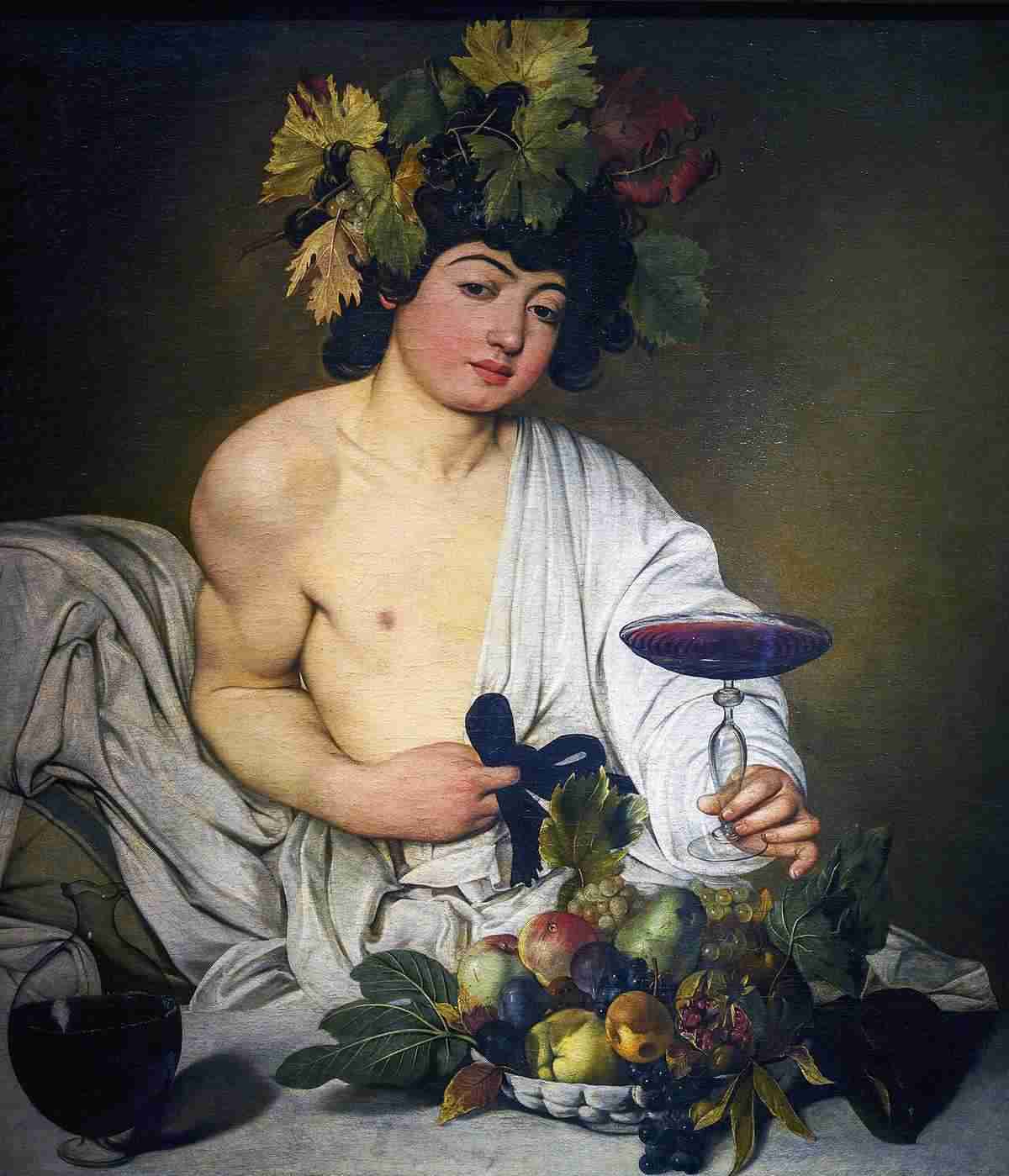
Every winter, grape vines look like crooked sticks hammered into frozen dirt. Cut a stem back with a knife, and the pith looks dead. Then the spring sun warms the root, and sap pushes up through the dry bark until leaves and heavy clusters burst out of wood that seemed finished.
Dionysus is the Greek god of the vine, theater, sacred madness and release from stiff form. Rome called him Bacchus and Liber Pater, Father of Freedom. His Greek titles tell his art. Dithyrambos means twice-born. Lysios means the unbinder, who loosens tight knots around the heart and city walls. He is a consciousness older than polite rules. He is the current of ecstasy that breaks hard order open and joins separate beings in rhythm. And Greece built an instrument of wand, mask, drum and mountain dance to ride that current and walk home intact.
When control opens into flow
Every mind builds fences to stay safe. Rules and schedules keep tasks in line, yet over time those fences harden into stone. Inside stone walls, life dries out.
In Quantum Creativity, Amit Goswami writes about that shift in his chapter on ecstasy. Ordinary mind runs on old habits from the past. In creative flow, the ego lets go of the wheel for an instant, and an unconditioned field enters. Surprise and ecstasy wake together because stiff limits drop away and something new floods the vessel.
The Hathors, speaking through Tom Kenyon, describe ecstasy as a bridge built right inside the body. It moves up the central spine axis to the crown and radiates from the magnetic field of the physical heart. Culture worships fear and grind, Kenyon teaches, yet ecstasy tunes our field back to the Earth and cosmos.
Still, Kenyon gives a sharp warning in The Shadow and the Power of Myth. When mystics enter boundless bliss without a grounded center, they lose their footing on return. Ecstasy without a vessel tears the house down.
In One Easy Change That Changes Everything, Anne Tucker writes that joy and delight in being alive keep awareness anchored inside the body instead of fleeing into fear. That grounded bliss is the real wine of the god.
Twice-born, the dolphin ship and the fall of Pentheus
Three ancient stories show what happens when Dionysus is welcomed, mocked by pirates, or locked out of a city.
His birth happened twice. Semele, a mortal princess of Thebes, loved Zeus and carried his child. Jealous Hera took the shape of an old nurse and urged Semele to ask Zeus to appear in his full splendor. Bound by oath, Zeus came wrapped in thunder and lightning. Mortal flesh burned to ash under that fire. Zeus snatched the unborn baby from the flames, cut open his own thigh, and sewed the child inside until full term. Thus Dionysus was born once from mortal fire and once from immortal flesh.
Years later, pirates spotted the god on a headland in a purple cloak. Hoping for ransom, they dragged him onto their ship and tied him with stout ropes. The ropes dropped from his wrists on their own. Only the helmsman warned that the boy was divine, while the captain laughed and raised the sails. At once sweet wine poured across the planks, and grape vines climbed the mast with dark clusters. Ivy wrapped the oars. A roaring lion stalked the deck beside a bear. In terror, the sailors leaped into the sea and turned into dolphins, while the wise helmsman stayed aboard and lived.
In The Bacchae by Euripides, Dionysus walked into Thebes disguised as a smiling stranger with ivy curls. His cousin, King Pentheus, refused to honor him. Pentheus jailed the dancing women and locked the stranger inside a dark stable. An earthquake shook the palace to rubble while Dionysus walked free. Driven mad by stiff pride, Pentheus dressed in linen and climbed a pine tree on Mount Cithaeron to spy on the rites. The women spotted him in the branches, pulled down the tree, and tore him limb from limb, led by his own mother Agave in blind rage.
What breaks out when a door is bolted
Behind the wine and the blood stand two laws of energy.
Whatever is alive in a system cannot be walled out forever. Pentheus tried to rule Thebes by locking music, trance and grief behind bars. Denied a lawful door, that power shook his palace and broke his walls from inside. Honored inside rhythm and sacred space, ecstasy heals isolation. Denied and mocked, it returns as madness.
The second law belongs to the return. Contact with raw fire melts daily borders, as Semele learned too late. A human vessel needs both the open cup and solid ground beneath its boots. What rises to the crown must come back down into the belly and the earth.
The thyrsus, the mask and the leopard
The staff, the mask and the wild beasts beside Dionysus show how a human body carries that charge without breaking.
His staff is the thyrsus, a hollow stalk of giant fennel wrapped in ivy and topped by a pine cone. That shape is a map of the body. A hollow stem runs upright like the spine. Ivy climbs around it like rising breath. At the top sits the pine cone, emblem of the pineal and crown flower taught by Kenyon and the Hathors. The thyrsus shows a channel strong enough to hold upward current without splitting.
At Athens, every play began at his festival, where actors wore carved masks. A mask lets a person step outside daily habit and speak hidden grief or laughter aloud in safety. Once the play ends, the mask comes off.
Leopards pulled his chariot, and bulls bellowed in his groves. The leopard leaps in forest shadow, trusting instant timing. The bull plants heavy hooves in dirt and sounds from deep in the chest. Even wine teaches patience: grapes are crushed in autumn and sealed in dark jars through winter before clear spirit wakes.
Neptune, Pluto and the ecstatic chart
Modern astrologers link Dionysus with the outer planets Neptune and Pluto, both discovered long after Greece. Both worlds move beyond Saturn, where hard walls dissolve.
In a birth chart, Neptune marks where edges soften into music, trance and shared feeling. When Neptune touches Venus, the Moon, or the fifth house, art and longing open wide toward something larger than one self. The risk lies in chasing numb escape in place of communion.
Pluto adds the fire of Semele and the tearing of Pentheus. Pluto strips away false pride so real life rises twice-born from ash. Look at Venus beside Pluto, or the eighth and twelfth houses, to see where desire refuses cages and asks for whole change.
Waking the vine inside the spine
Meet Dionysus at dusk or on a warm evening when routine feels stiff and joy sits locked behind glass. Bring music and a small bunch of grapes or a cup of grape juice, ready to loosen grip without losing your name.
Follow the Hathors' practice through Tom Kenyon for waking ecstasy along the central axis and the heart.
Stand or sit with a tall spine and both soles flat on the floor. Rest your attention at the base of the spine. Recall one simple moment of pleasure, like warm sun on your hands or true laughter. Draw your attention slowly up the hollow center of your torso, like sap climbing a fennel stalk, letting that warmth brighten at the chest and throat.
Pause at your physical heart. Feel plain appreciation for being alive right now, letting that wave spread through your ribs and arms. Lift attention to the crown, picturing a pine cone opening gently like a flower. Hum one easy note or sway to a drum beat for two minutes while that warm current moves through you.
What climbs to the crown must come back down into your boots. Following the Hathors' Earth Offering, draw your attention slowly back down the spine to the base. Exhale long and slow, sending that warm brightness down through both legs and feet straight into the earth beneath you.
Eat one dark grape or take one slow sip from your cup. Set the cup down, lift both hands to your face as if taking off a carved Athens theater mask, and lay the mask face down on the table. Stamp both heels once onto the floor, speak your own name aloud three times, and walk back into the open evening air.
Questions people ask about Dionysus
What is Dionysus the god of?
Dionysus is the Greek god of wine, grape vines, theater, ritual trance and ecstatic freedom. Rome worshiped him as Bacchus and Liber Pater.
Why is Dionysus called twice-born?
After lightning consumed his mortal mother Semele, Zeus sewed the unborn baby into his own thigh until birth, giving Dionysus a second birth from immortality.
What is the thyrsus staff that Dionysus carries?
The thyrsus is a hollow fennel stalk wound with ivy and topped by a pine cone, serving as an instrument for life force climbing the spine toward awakened sight.
Why did Dionysus turn the pirates into dolphins?
When sailors kidnapped him and mocked the vines and wine appearing on deck, they leaped overboard in terror and became dolphins, creatures drawn to music and waves.
How does Dionysus relate to astrology?
Modern astrologers connect Dionysus with Neptune and Pluto, linking him to creative flow, ecstatic communion, deep transformation and the fifth and twelfth houses.
The unbinder of form
Dionysus is the living sap, the ecstasy that melts stiff walls and returns safely through the feet to the earth.
Love, Flirtation & Desire looks at how Venus, Mars, Neptune and Pluto stir longing, spark and playful union between two charts.