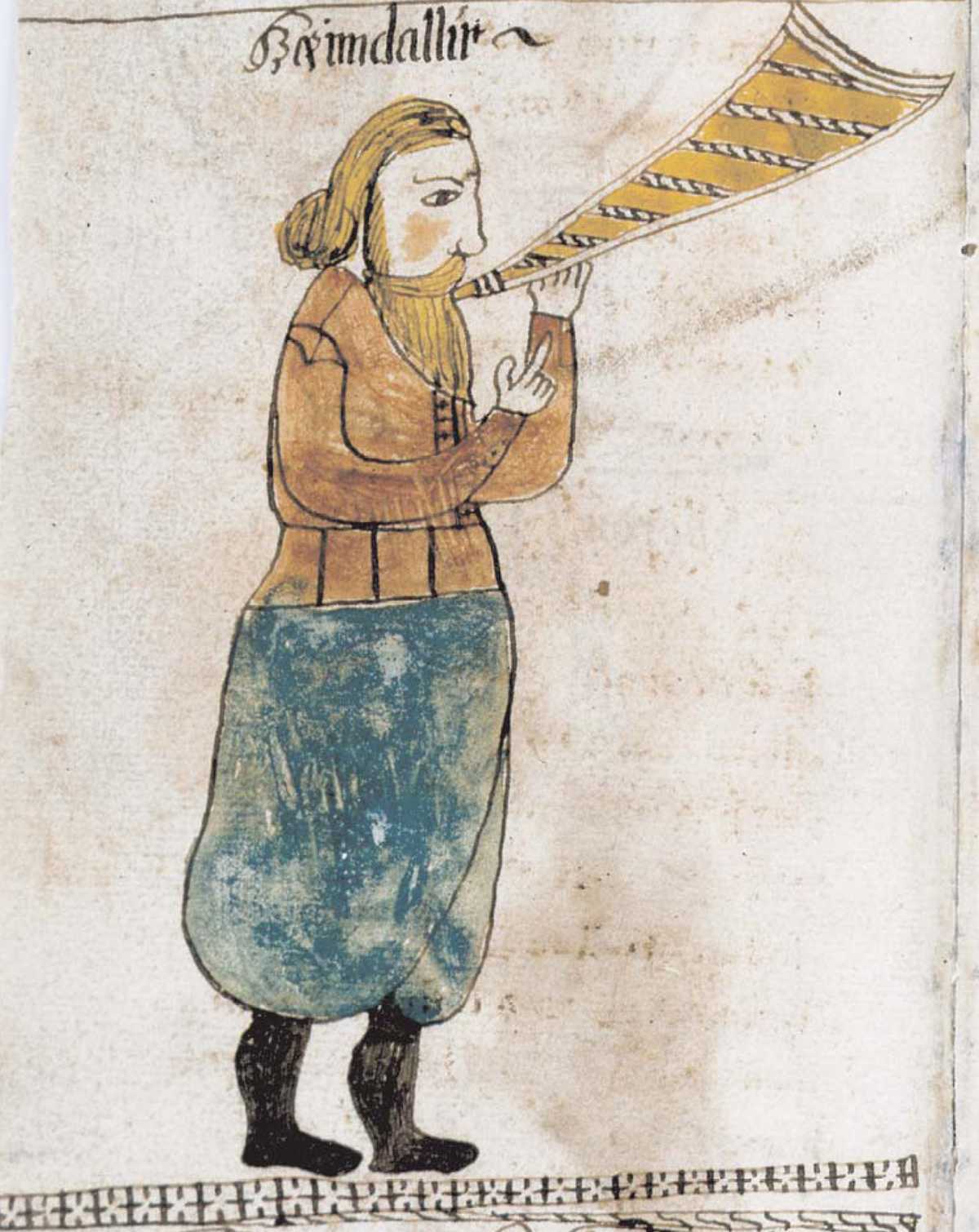
At the edge of the world, nine cold waves rise out of the sea and strike the dark cliff below the sky. Between earth and heaven stands a bridge of burning light.
The keeper who stands at the head of that bridge is Heimdall.
Heimdall is the watchman of the Norse gods, named World-Brightener and Gold-Toothed in the Icelandic books. Born of nine wave-mothers at the horizon, he keeps watch at Himinbjorg where the rainbow bridge Bifrost touches heaven. Older than the raids and wars of Asgard, his way lives on in the three-colored bridge, the sleepless ear, the horn hidden under the tree and the coastal walk of Rig.
Watching the edge where sea meets sky
Most watchmen look down one road for an enemy carrying steel. Heimdall listens to the grass growing in the dirt.
In The Matter With Things, Iain McGilchrist separates two ways attention meets the world. One narrow beam grabs a single target and shuts out the rest. The other is wide vigilance, held open to the whole horizon without jumping to conclusions. He notes that the Greek word for a sceptic comes from skopos, meaning a watchman who keeps lookout to see for himself.
McGilchrist also points out a strange fact about perception. Rain and sunlight stand outside us, yet a rainbow appears only where a seeing eye meets the water drops at the right angle. A falling tree makes air tremble, yet sound exists only where an ear receives the wave.
Heimdall stands at that living threshold where light and air become signal. His attention stays wide enough to catch the faintest shift before the storm breaks.
Nine waves, a seal rock and the silent horn
This is the story told across Voluspa, Grimnismal, Rigsthula and the Prose Edda of Snorri Sturluson.
In the early dawn of time, nine giantess sisters who were daughters of the sea bore one son together at the edge of the earth. They fed him on the strength of the earth, the cold sea and sacrificial blood until he grew tall and bright.
The gods posted him at Himinbjorg, the Heaven-Cliffs, at the top of Bifrost. That three-colored rainbow bridge carries a band of fire so frost-giants cannot climb across. There Heimdall drank sweet mead in peace and kept watch. He needed less sleep than a bird. By day or night he saw a hundred leagues ahead. His ear caught grass sprouting from earth and wool growing upon sheep.
Once, Loki stole the glowing necklace Brisingamen from Freya while she slept. Heimdall tracked the thief to a wave-washed rock called Singasteinn out in the sea. Both gods shifted into seals and fought across the stone through the tide. Heimdall won the necklace back for Freya.
Heimdall also walked mortal shores under the name Rig, as told in Rigsthula. He stopped at three houses along the coast, shared bread at each hearth, and fathered the lines of human craft and kingship. To the youngest son Konr, he taught the secret of runes and bird speech.
Beneath the roots of Yggdrasil, or hidden inside Mimir's well, lay Gjallarhorn, the ringing horn. Heimdall kept it silent through small alarms and noisy quarrels. Only when the final frost arrived and Yggdrasil shivered from root to crown did he lift Gjallarhorn. He blew one blast heard across all nine worlds. Then he met Loki at Vigrid, and each slew the other as the old age ended.
How light turns into sound at the gate
Two laws of signal sit inside Heimdall's bridge and horn.
First, light and sound are two octaves of one message, and both need a tuned receiver. Bifrost is a band of split light, while Gjallarhorn and the sprouting grass belong to sound. In Chaotic Nodes and Dimensional Attunements, Tom Kenyon and the Hathors describe sound patterns as an auditory reflection of complex waves of light. They point to the tiny crystals inside the pineal gland at the center of the head, calling it a cosmic antenna for those with ears to hear.
Second, great turns show themselves as small signals long before they shake the roof. In his Kryon talk Attributes of Awakening, Lee Carroll compares human history to a darkened room where people bump into each other out of fear. When a door cracks open, a thin seam of light appears first. Many call that crack a trick and stay in the dark. Others walk calmly toward the light and become beacons for the rest. Heimdall never panics at rumor. He hears the wool grow. He waits for the true hour before lifting the horn.
The bridge, the horn and the golden teeth
The bridge, the horn and the golden teeth around Heimdall form one working watchtower.
Bifrost is called a burning bridge of three colors. It joins earth and sky yet keeps out crude force with fire. Only what travels light enough to cross a spectrum of vibration makes it to Himinbjorg.
Gjallarhorn rests silent under the roots of the World Tree for entire ages. A horn blown every morning teaches people to ignore it. A horn held silent until the roots tremble wakes every sleeper across nine worlds with a single note.
Even his epithet Gullintanni, Gold-Toothed, points to resonance. Gold does not rust, and his teeth shone like bright metal at the threshold of speech. Beside his horse Gulltoppr and his sword Hofund, meaning head-measure, Heimdall marks perception that stays clear between sleep and waking.
Where Heimdall watches in the sky
Norse weeks gave Heimdall no day of his own, yet his watchtower shows clearly across a natal chart and an electional sky.
Look first to Mercury and Uranus. Pairing Heimdall with Uranus is a modern reading, since Uranus was discovered only in 1781, long after the Eddas were written. Mercury hears the grass move, while Uranus reads lightning across Bifrost before thunder arrives.
Look next to the Ascendant, the eastern horizon where sky rises out of earth at the exact minute of birth or beginning. Heimdall belongs to the horizon line, where timing turns potential into an open bridge.
In electional work, when you choose an hour to launch a venture or sign a pact, Heimdall governs the still window between two noisy storms. Check transits to your natal Ascendant and Mercury to spot when reception sharpens.
Listening from the sea-cliff
Come to Heimdall's cliff when noise fills your mind and you cannot tell real warning from passing rumor. Approach him before choosing the hour for a big step, or when you need wide sight over a tangled plan. A true watchman reads the open horizon instead of chasing dread or inventing fires in the dark.
Step outside at dawn or dusk, when light splits across the sky like Bifrost between dark and day.
Stand facing the eastern horizon with feet hip-width apart and soft eyes. Do not lock onto one narrow point. Let your gaze take in the wide edge of sky, roof and trees at once.
Breathe slowly until your shoulders drop. Shift your attention from sight to hearing. Listen past the loudest sound in the street for the smallest sound underneath it: wind in dry leaves, a distant bird, the hum inside the air. Hold that wide listening for two minutes without naming or judging anything you hear.
Rest your awareness gently in the center of your head, behind the brow, as Kenyon's Hathor teaching suggests for an open antenna. Ask one clear question about timing: is this hour open, or still sealed? Wait in silence for one plain impression instead of forcing an answer.
When the watch ends, step down from the cliff. Staying at the horn all night wears down the watchman.
Cup both hands softly over your ears for three breaths until the wind fades. Lower your arms to your sides and look down at the ground near your shoes. Speak one line aloud: the bridge stands clear, the horn rests under the tree, and I return to ordinary hours.
Questions people ask about Heimdall
Who are Heimdall's nine mothers?
In Hyndluljod and the Prose Edda, Heimdall is born of nine giantess sisters who represent nine ocean waves rising together at the rim of the world. They feed him on earth-strength, cold sea and sacrificial blood.
What is Bifrost in Norse mythology?
Bifrost is the trembling three-colored rainbow bridge linking Midgard to Asgard. Its red band burns with fire so frost-giants cannot cross, and Heimdall stands watch at Himinbjorg where the bridge meets heaven.
Why can Heimdall hear grass and wool grow?
The Eddas say his senses are tuned beyond ordinary sleep, needing less rest than a bird and seeing a hundred leagues by night or day. His keen hearing symbolizes early perception that catches small shifts before crisis arrives.
What is Gjallarhorn and when does Heimdall blow it?
Gjallarhorn is the great ringing horn kept hidden under the roots of Yggdrasil until the end of the age. Heimdall blows it once at the onset of Ragnarok to wake all nine worlds together.
Why is Heimdall also called Rig in the Eddas?
In the poem Rigsthula, Heimdall walks along mortal coastlines under the name Rig, meaning king, teaching runes and seeding the three orders of human craft and leadership.
The Heimdall archetype
Heimdall is the sleepless horizon, the wide ear that knows when to wait and when to sound the hour.