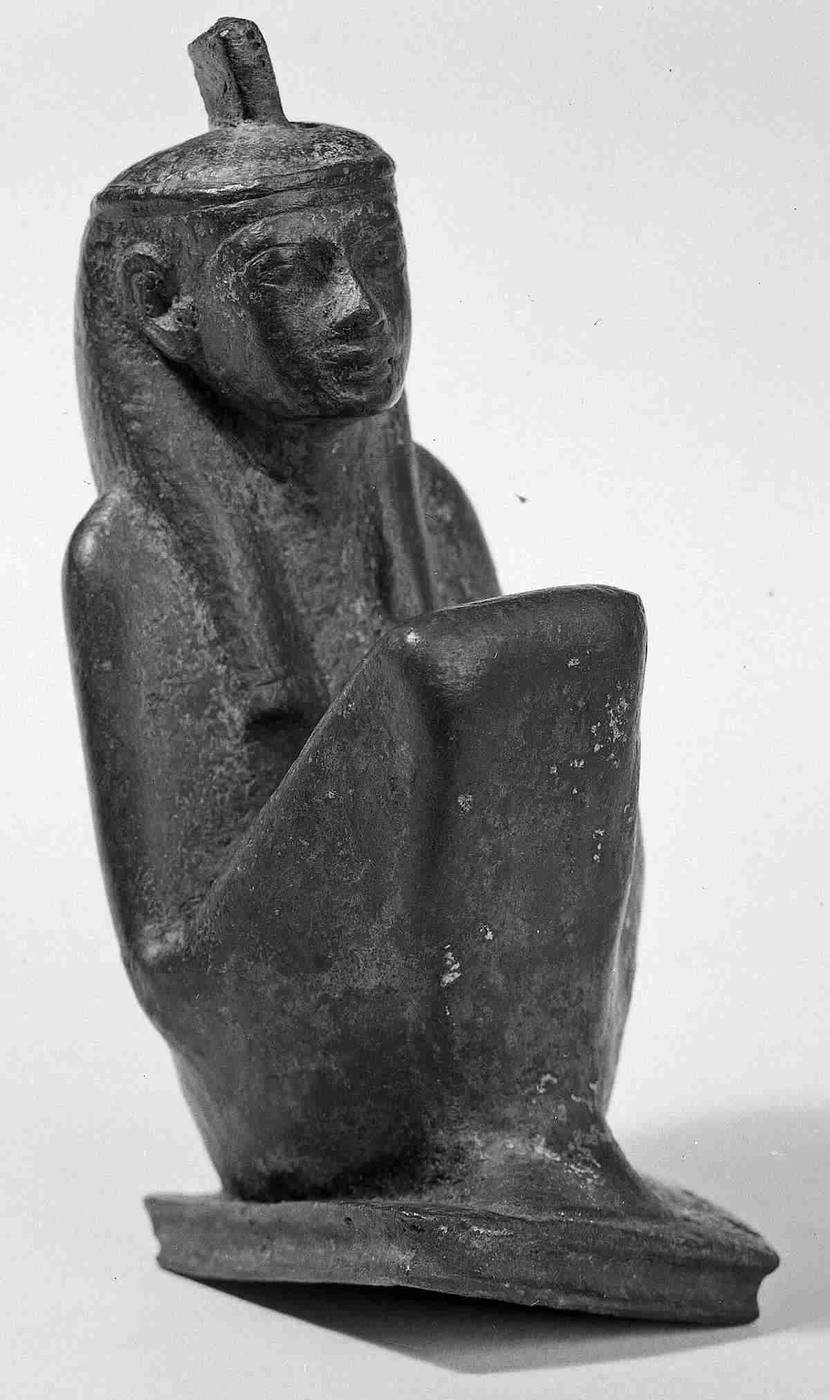
In the first hour the water wandered, for nothing had told it where to go. Then one straight line was drawn through it. Egypt called the wandering Isfet, and it called the line Ma'at.
Ma'at is the goddess of ancient Egypt who stands for truth, cosmic order, justice and right proportion. She is the daughter of Ra, the daily bread of the gods, and the hidden rule that keeps stars in orbit and rivers in their banks. Egypt carved her seated on a stone block with one white ostrich feather on her brow. Her scales and her feather are a technology, and what they measure is the heart.
Why balance moves instead of freezing
A stone at rest looks balanced. Nothing alive is balanced in that way.
In The Web of Life, Fritjof Capra explains Ludwig von Bertalanffy's discovery about open systems. A dead rock sits in cold rest, unchanging because nothing moves through it. A body stays alive through flowing balance. It takes in food, air and light while shedding waste without losing its shape.
Capra pairs this with Norbert Wiener's picture of a steersman holding a boat on course. When wind pushes the bow right, the steersman reads the drift and turns the rudder left. Balance is never a frozen pose. It is a constant, gentle answer to every pull off center.
The physicist Carlo Rovelli describes a similar law in The Order of Time. Inside a warm glass of water, countless molecules collide in every direction at once. Yet the surface lies calm, because through all that motion the whole keeps the same energy.
Egypt had one word for it. Ma'at is the straight line that holds moving water inside one living vessel.
Feeding order to the gods
In temple reliefs from Karnak to Abydos, a pharaoh does not kneel before Ma'at asking for favors. Instead, the king lifts a small bronze figure of Ma'at on his palm and presents her back to Ra or Osiris.
Temple texts state plainly that the gods live on Ma'at. She is their food and their breath. A ruler did not invent laws to frighten subjects. The ruler kept canals clear, measured grain fairly, and aligned temple calendars to the stars. Then the king offered that upright order back to heaven so heaven could go on shining.
At dawn and dusk, Ma'at stood at the prow of Ra's boat beside Thoth. As the sun crossed the sky by day and sailed through night waters below, she held the course true so chaos could not overturn the hull.
The scales in the Hall of Two Truths
This is the hour that waits for every soul, as the Book of the Dead tells it.
When a mortal crossed out of life, Anubis took them by the wrist and led them into the Hall of Two Truths. Forty-two judges sat along the upper wall while a tall bronze balance stood in the center of the floor.
The soul spoke aloud to each judge, naming what it had refused to do on earth. I have not stolen. I have not muddied the water. I have not tipped the grain measure. I have not caused tears without cause.
Then the soul's heart, called the ib, went into one pan of the scale. In the opposite pan lay a single ostrich feather, the feather of Ma'at.
Anubis knelt beneath the beam and touched the plumb line with his fingers to check that nothing was rigged. Thoth stood beside the post with reed pen and ink to record the exact reading. Below the beam crouched Ammit, part crocodile, part lion and part hippopotamus, waiting to swallow any heart weighed down by falsehood.
If the heart balanced level with the feather, the soul walked forward into the green fields of Osiris, crowned with life.
What the feather and the beam encode
Three laws hang from this beam.
First, truth weighs almost nothing while deceit is heavy. A true word is said once and leaves nothing behind. A false one must be carried, and held up, and carried again. The heart that carries nothing false rests level with a feather.
In his Inner Sun commentary, Tom Kenyon points to tomb scenes where Ma'at stands right behind Ra. She anchors the fierce solar fire so power does not burn out of control. Kenyon also notes Ammit crouching beside the djed pillar with her snout tucked between the third and fourth centers, the solar plexus and the heart. The Upper Worlds do not open, he writes, to one who lives only for security, desire and power. Only an open heart passes the scale.
Second, compassion without wisdom loses proportion. In Session 42 of the Law of One, the voice that calls itself Ra speaks of balance. Balance, it teaches, is no indifference. It is an observer whom no feeling of separation can blind, filled with love. Yet compassion alone, seen through the eyes of wisdom, is folly, and it runs to martyrdom. True order joins wide care with clear sight.
Third, a whole world can stand on the scale. Humanity is at its meeting point with Ma'at, the Hathors say through Tom Kenyon in The Art of Jumping Time Lines. Whoever believes in the timeline of doom adds to its reality, and whoever holds to the New Earth adds to that. Each of us is a weight.
Feather, square and beam
Every part of Ma'at's form works as a gauge.
Her single ostrich feather, called shu, grows evenly on both sides of its shaft. Unlike the curved feathers of a hawk or goose, an ostrich plume carries equal barbs left and right. Egypt chose it for fair measure because its own geometry splits evenly down the spine.
Her seat is a stone plinth cut with a square angle. Builders used a wooden square and plumb line to keep temple walls from leaning and cracking. The sign beneath Ma'at is that builder's level.
Her title, Lady of the Two Truths, marks two halves of one beam. Inner truth must match outer speech. Anne Tucker, who channels the Mother of Creation, says where the beam is hung. The mind dissects, and dissection is chaos. The center point is the heart, the central sun, and there is no second guessing in it.
Behind the sun, beside the scribe
Ma'at stands between Egypt's two chief powers. Behind Ra, she anchors solar fire so light ripens grain instead of scorching towns. Beside Thoth, she guards the weight of every word before the ink dries.
Without Thoth, order lacks a record and a voice. Without Ma'at, clever speech twists into traps. Together they steer the boat through dark water, proving that wisdom and justice are two oars on one hull.
Where she weighs the sky
Modern astrologers match Ma'at first to Libra, the seventh sign of the zodiac and the only sign shown as a tool instead of a creature. Venus rules Libra, giving Ma'at harmony, fair exchange and pleasing form. Saturn is exalted in Libra, giving her the stone plinth, the plumb line and the law of consequence that refuses to bend for flattery.
Look in a birth chart to Saturn and Venus together, or to planets in the seventh house of agreements and the tenth house of public duty. When the Sun meets Saturn, drive learns Ma'at's measure and builds lasting work. When Mercury meets Saturn, speech is cut until every sentence stands square. Even Chiron in Libra points to old wounds around unfairness that ripen into keen judgment.
How to work with Ma'at and close the beam
Interface with Ma'at when you stand before a choice and are ready to have it weighed.
Pick an hour when choices have weight, such as noon when shadows shrink or the pause before speaking or signing. Sit upright at a bare wooden table with no screen open.
Lay a straight pencil or a small feather flat on the table before you. Rest one palm over your ribs, near the fourth center where Kenyon places the gate past Ammit. Breathe slowly until your mind stops arguing both sides.
Name the choice you face in one short sentence. Ask two questions aloud. Does this add hidden weight I must carry later? Can I tell both sides of this story in daylight without changing a word?
Wait until the answer sits level in your chest, neither puffed with pride nor heavy with dread. Make your choice and write down one straight step you plan to take, along with the hour to begin.
Then close the beam. Pick up the pencil or feather and put it away inside a drawer or book. Lay both palms flat on the bare wood, press down until your shoulders drop level, breathe out once through the mouth, and step up to act on what you chose.
Questions people ask about Ma'at
What does Ma'at mean in ancient Egypt?
Ma'at means truth, straightness, cosmic order and fair proportion. It named both a goddess and the living balance that kept seasons, rivers, rulers and human hearts aligned.
Why is Ma'at's symbol an ostrich feather?
An ostrich feather has equal barbs on both sides of its central shaft, making it a natural sign of symmetry and fair balance. It is also almost weightless, showing that a heart free of deceit carries no heavy burden.
What happened in the Weighing of the Heart ceremony?
In the Hall of Two Truths, Anubis set the dead person's heart against Ma'at's feather while Thoth wrote down the reading. A heart that balanced level entered eternal life, while a heavy heart fell to the devourer Ammit.
Who is Ma'at connected to in Egyptian mythology?
She is the daughter of the sun god Ra and the constant partner of Thoth aboard the solar boat. In tomb art she stands alongside Anubis and Osiris in the judgment hall.
How does Ma'at help with timing and decisions today?
Working with Ma'at strips away noise, flattery and self-deception before you commit to a path. Checking whether an act feels light, level and defensible in daylight shows when the hour is right.
The straight measure
Ma'at is the feather on the bronze beam, the straight line that keeps power from breaking its banks.
Electional weighs the days ahead against your own chart, and shows which of them have the least in the way.