At the river ferry outside a Tarapith shrine, black water swirls under mist while a brass oil lantern swings from a wooden post. A temple bell rings once across the channel, and a single star breaks through low cloud above the far bank. By that one spark and one tone, the boatman holds his line until dawn.
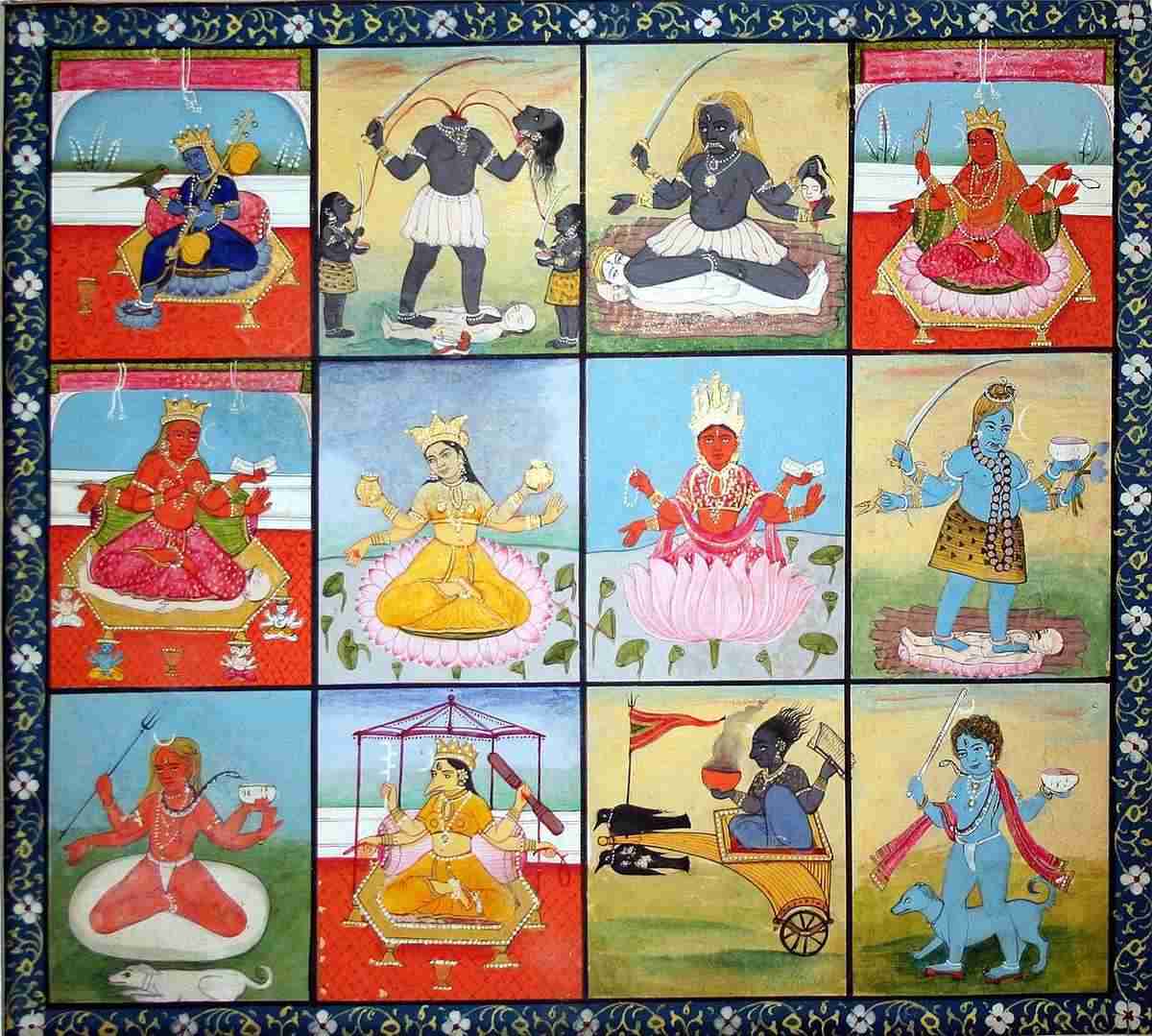
Mahavidya Tara is the second of the ten Mahavidyas in Hindu and Shakta Tantra. Her names include Ugra Tara, the fierce deliverer, and Tarini, she who carries across. She is also called Nila Saraswati, the blue goddess of speech, and Ekajata, she of the single braid. She is the consciousness of mercy that steps into crisis to ferry beings to the far shore. Around her blue lotus, her scissors, and the syllable Om, Tantra built a craft for crossing dark water intact.
How one wave crosses the gate
When a route splits in the dark, people expect a signal to scatter and fade. Physics shows how separate streams can meet directly at a single gate.
Amit Goswami traces that mystery in Physics of the Soul. Two split beams of light travel separate routes toward one crossing point. When an experimenter sets a half-silvered mirror at that gate, both waves join on one side. Signal crosses space without losing pattern.
Tom Kenyon speaks to that dark gap in his July 2020 Hathor message on transition states. When the markers of your old life vanish, he writes, you stand inside a void point. Nothing in the old map works there. You must witness the gap without panic and set fresh stars in the sky of your mind to steer by.
Anne Tucker describes the same threshold in her talks on the void. Old forms undo themselves there so new crossings begin free of stale rules.
The milk that cooled the poison throat
This story comes from the Kalika Purana, the Todala Tantra, and the Brihad Nila Tantra.
At the dawn of the world, gods and titans churned the ocean of milk for the nectar of life. They used Mount Mandara as a rod and the serpent Vasuki as a rope. Back and forth they pulled until deep water boiled.
At first, instead of sweet nectar, black poison burst from the sea floor. They called it Halahala. Its fumes rolled across sky and earth like fire, scorching clouds, trees, and stars alike. Gods and titans fled in terror. None dared touch the venom.
Shiva stepped forward alone. To save every creature from ash, he scooped the boiling poison into his palm and drank it down. At once the venom burned inside his throat, turning his skin indigo. Pain dropped the lord to the stone floor, senseless and still.
Then Mahavidya Tara appeared beside him as a tender mother. She lifted Shiva onto her lap like a fevered child and fed him pure milk from her breast. Cool grace washed down through his burning throat. The poison locked harmlessly in his neck, his eyes opened, and creation lived on.
Cutting dead weight and sounding one clear note
Two sharp laws sit inside Mahavidya Tara's crossing.
First, real mercy cuts dead weight before it lifts. A boat packed with rotting timber sinks halfway across the bay. Tara holds scissors and a curved knife in her hands. True help never leaves a traveler tangled in stale chains.
Second, one clear tone carries further across storm water than a hundred frantic shouts. Swami Muktananda explains this in his Kashmir Shaiva talks on the Shiva Sutras. He quotes the verse naming Om as Brahman in one syllable, the single throb beneath the universe. He also cites the root of mantra: mananat trayate iti mantrah. Mantra is what protects and carries the thinker across.
In verse thirty-nine of the Vijnanabhairava, Muktananda notes how pranava, the first sound, works. Chanting it with heart clears obstacles and leads the mind straight into stillness. That saving syllable is Tara's boat.
Reading the blue lotus and the single braid
Look at a Kangra painting of Ugra Tara among the Dasha Mahavidyas. Every sign on her form maps how a soul crosses storm water.
First, look at her indigo skin. Indigo is the color of deep ocean water and night sky before dawn. It absorbs heat and holds calm depth where red flame would scorch.
Second, trace her upper hands holding scissors and a knife. Scissors snip old threads in one crisp snap. The blade cuts false ties so nothing drags the swimmer backward under waves.
Third, check her lower hands holding a skull-cup and a blue lotus. The skull-cup holds raw life drained of panic. Beside it, the blue lotus blooms out of black mud with zero grime on its petals. Clarity stays whole inside grief.
Fourth, notice her single matted lock of hair, giving her the name Ekajata. Hair flying loose in ten directions shows scattered panic. One braid gathered down the spine shows undivided aim in an emergency.
Fifth, look closely at her crown. Resting in her hair sits Akshobhya, the sage whose name means unshakable. Even while Ugra Tara lunges forward over supine Shiva, unmoving peace crowns her head.
Compassion guided by clear sight
In the ten Mahavidyas, Tara stands second, right after Kali. Kali is midnight void where every form dissolves. Tara takes that dark expanse and aims it like a compass needle toward rescue. She also bears the name Nila Saraswati, joining Saraswati's river of wise speech with Tantric power.
Later teachings echo that union of mercy and clear sight. In Session Forty-Two of the Law of One, delivered through Carla Rueckert, the teaching warns that fourth-density love without fifth-density wisdom can lose balance. True balance is never cold numbness, those sessions explain. Yet it sees the cause of pain clearly without falling into blind reaction.
Lee Carroll makes the same point in an April 2022 Kryon talk. Compassion is never weak daydreaming. Mind shapes compassion into a focused wave of love that crosses a room or an ocean and softens anger on contact.
Tom Kenyon writes in his essays on Bhutan of seeing Green Tara in a high temple hallway as a guide of mercy and freedom. He also notes Black Tara as a form of White Tara who transforms dark shadow through sound. In his Blue Medicine Buddha notes, the syllables Om Ah Hum align head, throat, and heart inside vast emptiness.
Where the guiding star shines in the sky
In Jyotisha, Mahavidya Tara moves through Jupiter and the Moon. Jupiter is the pilot across wide water, giving direction when shorelines vanish. The Moon marks the feeling boat rocked by tides. Modern astrologers also connect her deep mercy with Neptune, which hears silent distress across distance.
When Jupiter touches the Moon in a traditional chart, or meets Neptune in a modern reading, a person is often drawn to ferry others through grief or sudden change. Saturn beside the Moon shows the discipline that keeps a boat watertight in rough weather.
Her star mirror shines in Revati, the twenty-seventh and final nakshatra at the end of sidereal Pisces. Its Vedic deity is Pushan, protector of travelers and guide of safe paths. Revati's marker star is zeta Piscium, right at the border where Pisces ends and Aries begins. Ancient sky watchers called Revati the harbor at the edge of the wheel, guiding crossings between one cycle and the next dawn.
Steering by one star with Mahavidya Tara
Turn to Mahavidya Tara when life drops you between two shores, when grief feels deep, or when an old chapter ends before land shows ahead. Meet her with focused breath and a single sound, never scattered worry.
Come just before sunrise or on Thursday nights under open sky. Set a bowl of clear water on a table beside one blue flower or a brass bell.
Sit upright on a firm chair, gathering scattered thought like Ekajata's single braid. Remember Tom Kenyon's rule for the void point. Stop looking back at lost shoreline markers. Set one star of intent ahead of you.
Look at the water bowl. Name one worn tie or heavy fear you must cut before crossing forward. Picture Tara's scissors snipping that wet rope so your boat rises free.
Breathe in slowly and sound the saving syllable Om, or her root sound Hrim, or Strim softly on the outbreath. Follow Muktananda's guide to the pranava. Let the tone rise from belly through heart and throat into open space until the bowl water stills. Remember Lee Carroll's image and send that calm wave toward anyone caught in storm weather today.
Finish clearly before rising from your chair. Strike the small brass bell once and listen until its last ring fades into the air. Set the bowl aside, step onto firm floorboards as though stepping ashore from a crossing boat, and speak her gentle name Tarini once aloud.
Questions people ask about Mahavidya Tara
Who is Mahavidya Tara in Hinduism?
Mahavidya Tara is the second of the ten Tantric wisdom goddesses. Revered as Ugra Tara, Nila Saraswati, and Tarini, she stands for fierce mercy, saving speech, and safe passage across crisis.
How is Mahavidya Tara different from Buddhist Green Tara?
Both share ancient roots in Indian Tantra as saviors who guide beings across danger. Mahavidya Tara belongs to Hindu Shakta Tantra, shown with blue skin, scissors, skull-cup, and warrior stance over Shiva.
Why does Mahavidya Tara hold scissors and a blue lotus?
Her scissors cut tangled habits and false ties that hold a traveler back. The blue lotus blooms spotless out of black mud, showing clear awareness surviving storm and grief.
What is the story of Tara nursing Shiva?
When Shiva drank Halahala poison from the churned cosmic ocean, the venom burned him unconscious. Mahavidya Tara lifted him onto her lap and nursed him with milk, cooling the poison and saving creation.
How can someone connect with Mahavidya Tara respectfully?
Sit before dawn with clear water and one intent, cut one lingering worry loose, and chant Om or Hrim slowly into stillness. End by ringing a small bell into silence, stepping forward as if landing ashore, and speaking Tarini.
The star above the black water
Mahavidya Tara is the fixed star and single syllable that ferries a soul from a broken shore to open dawn.