Outside the stone walls of a temple courtyard, green vines climb over broken brick. Birds call without reading any sheet music. Priests inside sweep crumbs off the marble floor and polish brass bowls for neat offerings. Beyond the gate, the earth turns those spilled scraps into thick forest growth, and a parrot sings a tune no choir wrote down.
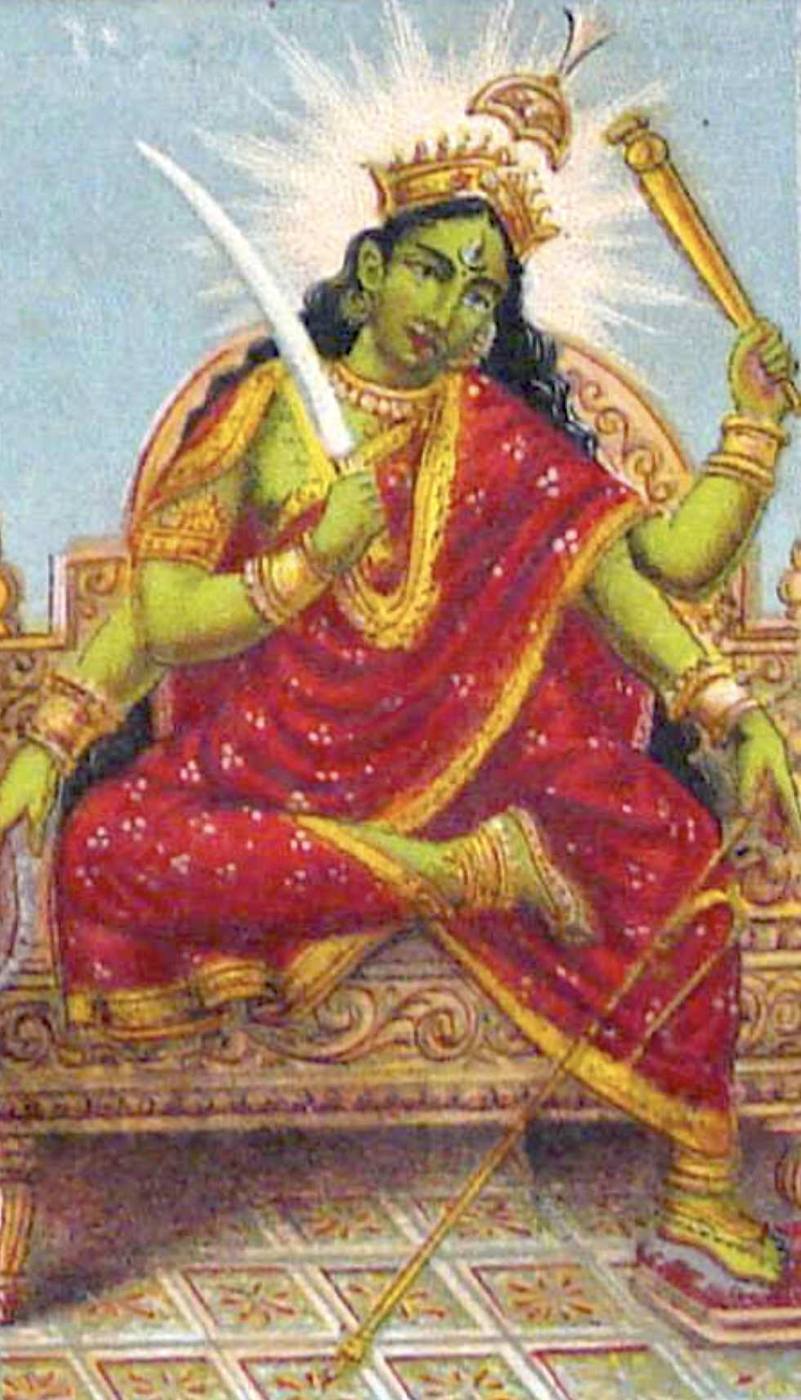
Matangi is the ninth of the ten Mahavidyas in Hindu and Tantric tradition. Her names include Raja Matangi, the royal goddess, and Shyamala, the emerald one. She is also called Mantrini, chief minister to Tripura Sundari, and Ucchishta Chandalini, lady of the leftover offering. She is the consciousness that turns rejected scraps, forest rhythm, and untamed voice into living wisdom. Around her emerald skin, her jewel veena, her parrot, and spilled food, Tantra built a craft for freeing speech from dead rules.
How song grows before grammar
Most schools teach that language starts as neat rules stamped onto paper. Music gets pushed to the side as mere ornament. Both human speech history and Indian sound lore point the other way.
In The Matter With Things, Iain McGilchrist traces how human speech grew out of song. Evidence shows that language began as pitch, rhythm, and living breath long before formal rules stiffened into fixed labels. McGilchrist adds that music never lives inside a closed score on a shelf. It comes alive each time players and listeners meet it in the room.
Swami Muktananda names that living spark inside words while commenting on the Shiva Sutras. He calls it Matrka. Matrka is the power hidden in letters and sounds that rises from the heart before speech hits the air.
The fallen crumb and the forest minister
Two linked stories carry Matangi's secret across the Tantras and the Brahmanda Purana.
In the first tale, Vishnu and Lakshmi came to visit Shiva and Parvati for a feast. After the meal, tiny crumbs fell onto the floor beside the plates. In strict rules, food touched or dropped becomes ucchishta, spoiled scraps that priests never touch.
Out from those rejected scraps rose a goddess glowing like emerald. She gathered the spilled crumbs in her hands and smiled without shame. Shiva and Parvati bowed to her right there. They named her Ucchishta Matangi, showing that sacred power hides inside what proud rules throw outside the gate.
In a second story, the sage Matanga lived deep in the woods far beyond city walls. He prayed for years to Tripura Sundari, asking for a daughter who could defeat evil through wisdom and song. Touched by his devotion, Lalita sent her own green radiance into his grove as young Shyamala.
Raised among forest drums and birds, Matanga's daughter grew into Raja Matangi. When Tripura Sundari rode out to fight the forces of Bhandasura, she placed Shyamala at her side as Mantrini. As prime counselor and general of speech, her music shattered confusion across the field.
What falls past polite rules and answers alive
Two bold laws rise out of Matangi's stories.
First, whatever polite order sweeps out the back door often holds the seed of growth. When rules grow stiff, life leaks out through the cracks. Anne Tucker warns in her talk This Goes Against What I Thought Was True that clinging to dried husks of yesterday blocks fresh creation now. Matangi refuses stale pride. She picks up the seed nobody else wanted.
Second, a living voice answers in real time instead of repeating echoes. In another talk, Anne Tucker notes how seeing a stranger with a parrot on his shoulder snaps you awake out of habit. You cannot stay asleep when wild color talks back.
Reading the parrot and the emerald lute
Look at the classic Calcutta Art Studio print of Matangi seated in green forest light. Every detail maps how untamed art wakes intelligence.
Look first at her emerald skin. White silk belongs to Saraswati's morning study. Green belongs to jungle sap, mossy banks, and wild growth that refuses to stay inside trimmed hedges.
Look at the veena across her lap. Its hollow gourd and stretched strings match the spine and vocal cords. Unlike Saraswati's pale classroom lute, Matangi's veena rings with forest rhythm, improvisation, and sudden turns of tune.
Look closely at the parrot perched beside her hand or shoulder. Parrots listen, remember, and call back across thick canopy. In Tantric lore, the parrot stands for wild speech, sharp wit, and memory freed from dead scripts.
Check her crimson silk and red flowers. Crimson marks vitality, earth blood, and fearless delight. Seated at ease, she needs no spear or bow. Music and unvarnished truth already rule the room.
Sister to Saraswati and voice of the heart
In Hindu worship, Matangi is often called Tantric Saraswati. Yet the two sisters govern opposite sides of the voice.
Saraswati walks mountain rivers and teaches grammar, books, and careful study. Matangi walks back alleys, forest edges, and music halls where folk drums and raw poetry are born before anyone writes them down. You need Saraswati to tune the strings. You need Matangi to play a song nobody has heard before.
Amit Goswami writes in Quantum Creativity that real creativity sounds like a song with many harmonies. When each person risks singing their own true note, individual voices join the larger cosmic chorus.
Tom Kenyon points to the physical seat of that note in his Blue Medicine Buddha essay. In Tantric sound craft, the vowel Ah rings inside the throat center, clearing tightness so awakened speech flows freely from heart to mouth.
Where Matangi plays in the sky
In Jyotisha, Matangi moves through Mercury, Venus, and Rahu, the North Node. Mercury gives quick wit, tongue, and handcraft on strings. Venus gives beauty, song, color, and taste for art. Rahu adds the edge that crosses caste walls and speaks truths polite tables avoid.
When Mercury meets Venus and Rahu in a chart, a person rarely fits inside neat boxes. Their voice grows strongest when they stop polishing it for stiff judges and speak straight from lived craft. Saturn beside Mercury asks that wild melody to keep time without turning sloppy.
Her star mirror sits in Chitra, the fourteenth nakshatra spanning sidereal Virgo into Libra. Its Vedic deity is Tvashtr, the divine artist and builder of gleaming forms. Chitra holds one bright jewel star, Spica, at the Virgin's hand. Sky watchers tied Chitra to gems, fine craft, and creative spark shining out of ordinary grain.
Playing past the courtyard wall with Matangi
Turn to Matangi when your voice feels trapped in polite scripts, when art turns dry, or when fear of breaking rules locks your throat. Meet her with rhythm, green earth, and unvarnished speech.
Come on Wednesday or Friday evening, ruled by Mercury and Venus, or at twilight when birds call across trees. Place one green leaf, a piece of fruit, and a brass cup of water beside a drum, lute, or blank page.
Sit comfortably on a mat with your jaw loose and shoulders low. Drop the urge to sound clever or proper. Notice the air moving across your throat and chest. Follow Tom Kenyon's throat cue and sound an open Ah on the outbreath until your collarbone hums.
Or hum her syllables Aim and Hrim together, letting pitch slide wherever breath moves instead of forcing a rigid scale. Let your voice invent one short phrase like a wild parrot calling beyond the temple wall, and listen to the silence answer back.
Speak or write one plain, unpolished truth you have held back out of fear of looking messy. Let it stand on the page without editing it into gray prose.
Finish by resting your open palm across the lute strings or setting your pen down on the page. Sweep any loose paper scraps or dried husks off your desk into a basket. Set the green leaf beside a fresh blossom on the sill, and step out humming a line of your own.
Questions people ask about Matangi
What is Matangi the goddess of in Hindu Tantra?
Matangi is the ninth Mahavidya, honored as goddess of music, untamed speech, wild art, and wisdom beyond social walls. She serves as Mantrini, prime counselor to Lalita Tripura Sundari.
Why is Matangi linked with leftover food?
Called Ucchishta Matangi, she rose from crumbs fallen after a feast. Her myth teaches that real creative power hides inside whatever rigid purity and snobbery throw away.
What do Matangi's parrot and veena stand for?
Her jewel veena stands for living music tuned to the heart. The green parrot stands for wild speech, sharp memory, and spontaneous truth spoken outside stiff scripts.
How does Matangi differ from Saraswati?
Saraswati rules formal scholarship, pure grammar, and refined study. Matangi governs improvised music, folk rhythm, fearless expression, and creativity born outside strict rules.
How can someone honor Matangi at home?
Sit at dusk with green leaves or fruit, relax the throat with open tones like Ah or Aim, and make free music or unedited writing. End by muting the strings, sweeping stray desk scraps aside, and speaking Shyamala.
The parrot and the emerald string
Matangi is the living music that rescues discarded truth and turns wild breath into royal song.