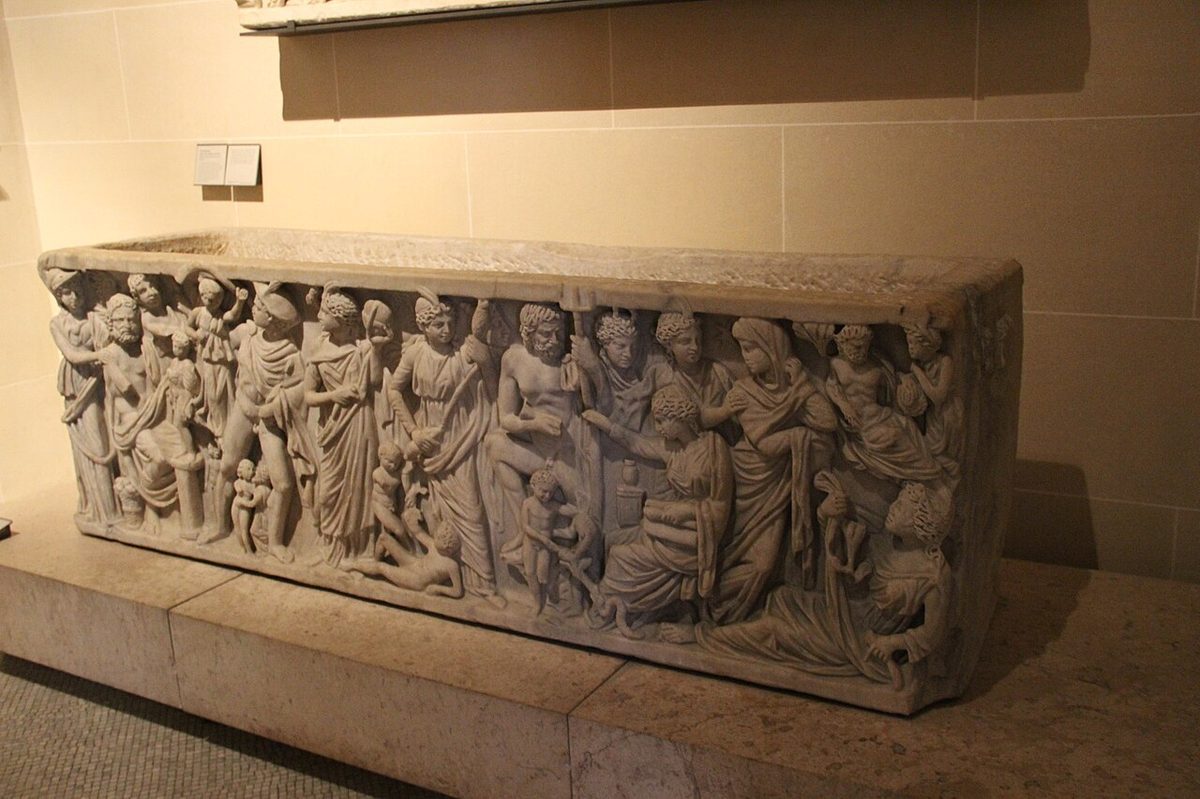
Strike flint against iron in a cold room, and a single yellow spark leaps off the stone. Catch that spark inside dry tinder, and winter yields to baked bread, forged bronze and lamp light after dark. Between the closed hearths on Mount Olympus and shivering caves below stood one hollow reed stalk.
Prometheus is the Titan of forethought, craft and rebellion in ancient Greece. His name means Forethought. Greeks honored him as Pyrophoros, the fire-bearer, and Philanthropos, the friend of humankind. He is a consciousness that leaps outside closed rules to carry light into waiting hands, even at steep cost. His hollow fennel stalk, his twin brother Epimetheus and the rock of Caucasus form a technology for holding sudden breakthroughs without letting raw fire consume the carrier.
How rebellion turns spark into heat
Most people picture invention as calm polishing inside an old rulebook. Science tells another story.
In The Order of Time, physicist Carlo Rovelli opens his chapter on heat with a striking claim. Rebellion, the refusal to accept the present order of things, is one of the deepest roots of science. He tells how Lazare Carnot voted against a king in Paris, and how his son Sadi Carnot studied fire and steam engines. Sadi saw that heat moves forward in one direction, from hot to cold, driving motion and change across the world.
Yet psychiatrist Iain McGilchrist sounds a sharp warning beside that leap in The Matter With Things. He names the myth of Prometheus directly as a mirror of left-brain overreach. When cleverness strives to seize more power and control than wisdom can hold, we unlock forces we cannot put back in the box.
Greece drew that exact edge on stone and stage. Prometheus gave mortals fire, numbers, medicine and ships, yet spent ages chained to a crag until wisdom caught up with heat.
The bones at Mekone and the hollow stalk
Hesiod, Aeschylus and Apollodorus preserve the full arc of how fire crossed from Olympus to earth.
At Mekone, gods and mortals met to settle who received which portion of a sacrifice. Prometheus slaughtered a large ox and split it into two piles. Under rough hide and stomach he buried rich meat and marrow. Under gleaming white fat he hid bare white bones. Then he told Zeus to choose. Zeus picked the shiny fat, lifted it up and saw bare bones underneath. Furious at the trick, Zeus hid fire away from earth so humankind would freeze in darkness.
Prometheus did not strike back with a sword. He climbed up to heaven's hearth, caught a live spark from the furnace and slipped it inside a giant fennel stalk, called a narthex. Its dry pith smolders slowly like tinder while its outer bark stays whole. Carrying that hidden ember down the mountain, Prometheus lit fires across the plains.
As he left Olympus, he warned his twin brother Epimetheus, whose name means Afterthought, never to accept a gift from Zeus. Epimetheus forgot the warning as soon as Pandora arrived at his door with a sealed jar. When the lid lifted, toil and sickness scattered across the world, while hope stayed caught beneath the rim.
For stealing heaven's fire, Zeus sent Hephaestus to nail Prometheus with iron wedges to a cliff in the Caucasus Mountains. Each day a huge eagle swooped down to tear at his liver. Each night, because he was immortal, the liver grew back whole for the next day's beak.
Centuries passed while Prometheus refused to trade away his secret about Zeus's future downfall. At last, Heracles climbed the ridge and shot the eagle down with an arrow. Still the old decree held: someone immortal had to step into death's door in his place. The wise centaur Chiron, aching from an incurable poison arrow on his knee, freely gave up his immortality so Prometheus could unchain his wrists and walk free.
Smoldering reed and foresight's price
Smoke from that hollow reed writes two strict rules for any breakthrough.
First, sudden power needs an insulated vessel. Prometheus never carried live coals in bare hands. He hid the spark inside a dry fennel stalk where heat could travel slowly without burning the carrier's skin. Insight without structure scorches whatever touches it.
Second, a breakthrough demands conscience equal to its heat. Forethought saw the need for fire. Afterthought forgot to check the sealed jar. Whenever speed outruns wisdom, the bill arrives daily like an eagle returning at noon.
Anne Tucker, sharing insights from her angelic talks, touches both halves of that lesson. In Remembering Your Soul's Journey, she defines forethought as looking forward with clear awareness so old wounds stop repeating tomorrow. In Creating Heaven on Earth, she adds that waking up means turning back to the divine spark inside instead of chasing control outside.
Lee Carroll, channeling Kryon, names that same test across human history. In his talks on earth cycles, he teaches that the spark of divinity arrived with free choice. Can a young race holding vast power grow wise enough to tend it without wrecking its own house?
Fennel stem, liver and the iron wedge
Each object in Prometheus's story acts as one piece of his technology.
The hollow narthex stalk is the relay. A single reed carries star fire safely across the cold miles because its pith slows the burn down to a human pace.
The two ox piles at Mekone expose surface glamour. Gleaming fat covers hollow bones, while rough leather hides true nourishment. Invention starts by seeing past shiny packaging to what actually feeds life.
The regrowing liver marks vital resilience. Ancient Greeks placed raw passion and courage inside the liver. Torn down each afternoon by consequence, it rebuilt itself overnight whenever conviction refused to fold.
And Hephaestus's iron chain beside Chiron's ransom shows how rebellion matures. First comes the clash with old authority. Later comes the centaur's calm sacrifice, joining raw invention to seasoned healing so the rebel returns useful to the city.
The twin mind and the wounded teacher
Prometheus stands at the center of a fourfold circuit.
Zeus guards existing order from high clouds. Prometheus breaks through barred doors from below so life can grow. Between them sits Epimetheus, the hurried mind that acts first and sees damage later. Prometheus alone keeps watch ahead of the curve.
Chiron completes the circuit. An immortal healer suffering an endless wound meets the rebel suffering an endless eagle. When Chiron trades immortality for rest, he frees Prometheus from the crag. Invention and healing shake hands, proving that new fire belongs beside care for living flesh.
Uranus, Chiron and the rebel star
Ancient Greece tied Prometheus to human craft and the hearth, never to a planet in the night sky. William Herschel discovered Uranus in 1781, and modern astrologers later linked that new outer world to the Fire-Bearer.
In a modern birth chart, look first to Uranus, whose orbit takes eighty-four years and brings sudden breaks from stale rules. When transiting Uranus touches the Sun, Moon, Mercury or Ascendant, old ceilings crack overnight.
Pair Uranus with Mars for courage and with Mercury for sharp leaps of thought. Look closely at Chiron too, a small outer body discovered in 1977, for Chiron holds the mythic key that unchains Prometheus when brilliance meets humility. Watch Aquarius, where Prometheus serves the whole town instead of one king. Look up toward Altair, the bright star of Aquila the Eagle, soaring above the summer Milky Way. Telescopes also track modern asteroid 1809 Prometheus beyond Mars, discovered in 1960.
How to handle stolen fire safely
Turn to this lamp when a bold idea knocks at your ribs, stale habits block the road, or rapid change asks for foresight ahead of action. Meet him to test fresh fire with patience, never to burn down what keeps others safe.
Come near dawn, when rooms are cool. Set one small beeswax candle and one dry wooden match or reed twig on a bare table. Sit upright on a plain chair with your hands resting open on your knees.
Strike the match or light the candle, watching how small the flame sits on the wick. Hold the dry twig in both hands, remembering the fennel stalk that carried coals without burning fingers.
Ask two clear questions out loud. First, what locked door or stale habit asks for fresh fire today? Second, what price could Afterthought pay next year if I rush without looking ahead? Wait for six slow breaths until both answers stand clear side by side.
Put the fire away as carefully as Prometheus sealed it inside fennel pith. Snuff out the candle flame completely, press the charred match tip into a small dish of sand or ash, and lay the dry twig flat beside it. Write down one modest, concrete step in your notebook to build today before reaching for another spark.
Questions people ask about Prometheus
Who was Prometheus in Greek myth?
Prometheus was a Titan whose name means Forethought. He shaped humankind from clay in some tales, tricked Zeus at Mekone, stole fire in a fennel stalk and suffered chained on Mount Caucasus.
Why did Prometheus steal fire from the gods?
After Prometheus tricked Zeus with ox bones hidden in white fat, Zeus took fire away from mortals. Prometheus stole an ember back so humankind could cook food, forge tools and keep warm.
How did Prometheus carry fire down to earth?
Hesiod writes that Prometheus hid a glowing coal inside a hollow giant fennel stalk called a narthex. Its dry pith smoldered slowly inside the outer stem without burning his hands.
Who freed Prometheus from Mount Caucasus?
Heracles climbed the mountain and shot down the eagle tearing Prometheus's liver. Then the wise centaur Chiron surrendered his immortality so Prometheus could be released under Zeus's law.
Which planet represents Prometheus in astrology?
Modern astrologers link Prometheus to Uranus, the planet of sudden insight, rebellion and invention, along with Chiron, who unchained him in myth.
The bearer of the ember
Prometheus is the spark of forethought that breaks barred ceilings so human hands can build.