Where the southern river mouths of Mesopotamia meet the Persian Gulf, brackish salt tides roll over broad mudflats without dikes or marker stones. Sweet water from inland springs mixes with heavy ocean brine until marsh reeds, silt and open current move as one undivided sea.
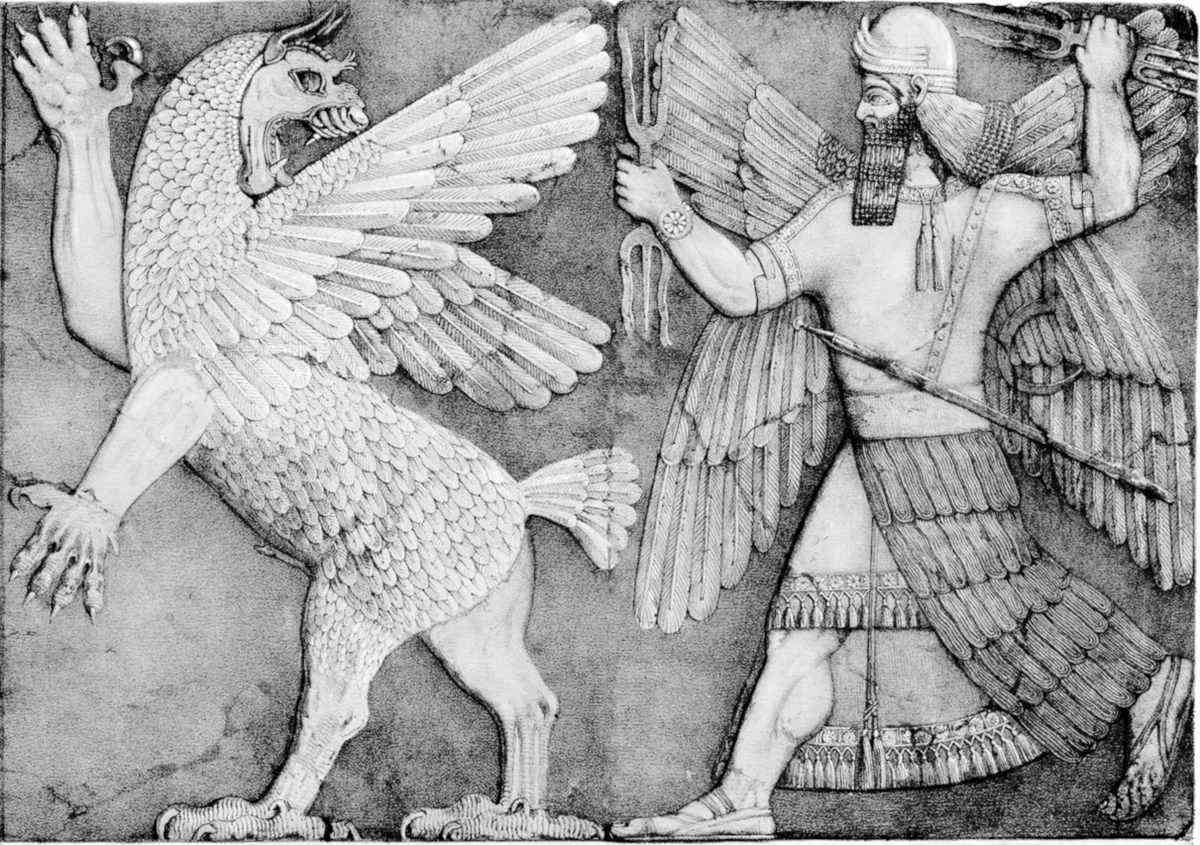
Tiamat is the primordial goddess of that salt ocean in ancient Mesopotamia. Her Akkadian name comes from the word for sea, and older hymns call her Ummu-Hubur, the mother who shapes all things. She holds the boundless depth before division, carrying both creative power and storm fury when stirred without rest. The mingling of her waters, her eleven beasts and the world built from her body show how raw potential crosses turbulence without breaking apart.
How open oceans build higher order
People often picture chaos as a blind enemy waiting to wreck a tidy room. Living systems work differently.
In The Web of Life, Fritjof Capra explains Ilya Prigogine's discovery about open systems in physics. A closed box left alone runs down into flat rest and dust. An open system fed by constant energy stays far from thermal equilibrium. When turbulence builds inside an open system, old shapes crack and jump into a richer order.
Tom Kenyon and the Hathors describe that jump in Gaia's Song as a Chaotic Node. Chaos swells whenever one energetic pattern gives way to a radically new pattern, like a planetary birth canal. In his essay Chant of the Four Elements, Kenyon notes that Western traditions of earth, water, fire and air reach back to the Babylonian tablets of the Enuma Elish. In his work on Dragon Points, he adds that chi shifts sharpest where two currents meet and cross.
Maia Nartoomid points to the same living fluid in The Shamir and the Tree of Osiris. The primordial ocean was never a flat mirror, she writes. It churned like a cosmic egg holding the Dragon spark from which stars and worlds flash forth.
Babylon named that living sea Tiamat long before physics had a name for turbulence.
When the salt sea turned to storm
This is the creation song chanted at the New Year in Babylon, stamped across the tablets of the Enuma Elish.
In the beginning, Apsu, the sweet water below earth, and Tiamat, the salt ocean, poured their streams into one pool. Out of that mingling came the first pairs of gods, Lahmu and Lahamu, then Anshar and Kishar, and after them Anu and clever Ea.
As the younger gods grew strong, they danced and raised a loud uproar across heaven's belly. Apsu could not sleep by day or rest by night. He went to Tiamat with his servant Mummu and laid out a plan to destroy the noisy children so silence would return.
When Tiamat heard those words, she cried out in grief and anger. Why should we destroy what we ourselves brought into being, she asked. Though their ways are loud and rough, let us show mercy and wait.
Apsu refused to listen. Before he could strike, Ea learned the plot. Ea sang a deep sleep spell over Apsu, stripped off his crown, slew him inside his own spring and built a shrine above the deep. There Ea's son Marduk was born with four eyes, four ears and fire at his lips.
Anu gave young Marduk the four winds as toys. Marduk sent gales racing across the face of the sea until Tiamat's waters churned without pause day and night. Exhausted gods inside her deeps begged her to avenge Apsu and stop the wind.
Tiamat rose at last. She shaped eleven fierce forms, horned serpents, storm lions, scorpion-men and furious dragons with venom in their blood. She chose Kingu as captain of her host and hung the Tablet of Destinies upon his chest.
Ea rode out against her and turned back shaking. Anu rode out after him and fled in terror. Then young Marduk stepped forward, demanding kingship if he won. Armed with bow, mace, net and seven storm winds, he drove straight toward Tiamat's jaws.
When she opened her mouth to swallow him, Marduk loosed the evil wind Imhullu down her throat so her jaws could not close. He shot one arrow straight into her heart, ending her breath. He cast his net over her eleven beasts and took the Tablet of Destinies from Kingu.
Then Marduk split Tiamat's vast body down the middle like a dried fish. Half he lifted high to roof the sky and set bolts to keep upper waters from falling. Half he spread below to form the dry earth. He opened the Tigris and Euphrates out of her weeping eyes, fixed the stars and moon across her ribs and shaped order inside her skin.
When deep waters turn and bear the sky
Look past the war drums on clay, and two clear laws rise out of the water.
First, chaos turns violent only when pressed without rest. Tiamat did not attack her grandchildren at the start. She defended them against Apsu's anger. Only after her partner was killed and four winds whipped her face without mercy did she summon dragons to defend the deep.
Second, every wall of order stands inside the sea it conquered. Marduk never burned Tiamat to ash. Her body became the sky ceiling and ground floor, and her own eyes watered Babylon's grain every spring. Anything you cut apart to build a shelter remains the ground that keeps you fed.
In How to Help the Earth Release Gently, Anne Tucker shares a message from Isla speaking to this rule. Moving through turbulent change in panic feeds fear back into the field. Stepping in calmly, like a midwife helping the Earth through birth, lets fierce energy move without shattering the room.
Salt water, dragons and the weeping rivers
Four images around Tiamat map how raw depth turns into living form.
Salt water and sweet water stand at the base. Sweet spring water stays inside clear channels, while salt water holds the open horizon where borders vanish. Both waters must meet before life begins, because freshwater alone stagnates and brine alone leaves crops dry.
Her eleven monsters show raw instincts roused when deep borders break. Later kings carved dragons onto city gates to remind rulers that wild power stands guard at every threshold.
The Tablet of Destinies hung on Kingu marks legitimate authority over cycles. Whoever holds it holds the decree of what wakes and what rests.
And her weeping eyes feeding the Tigris and Euphrates reveal the secret engine of the myth. Grief from the deep earth is what turns barren desert into green barley fields.
The ocean beneath the storm king
Tiamat forms one half of a great circuit with Marduk and Apsu.
Apsu seeks stillness before creation moves. Marduk drives wind and division to carve calendars, walls and stars. Tiamat holds the living medium between them, carrying the memory of both silence and form.
Iain McGilchrist cites an old warning from the I Ching in The Matter With Things. A dragon that keeps pushing forward when its peak is past isolates itself from the whole and meets ruin. In the myth, both Apsu's rigid silence and wind-driven division forget that lesson until Tiamat reminds heaven of the ocean underneath.
Where the salt sea moves in the sky
Mesopotamian skywatchers saw the Milky Way as the cosmic river and charted the Southern Fish, where Fomalhaut burns beside the celestial stream, on clay star tablets such as Mul.Apin. Modern astrology traces Tiamat's salt tide through Neptune, discovered in 1846, Pluto, discovered in 1930, and Black Moon Lilith, the lunar apogee point.
In a birth chart, Neptune carries her boundless salt sea, dissolving rigid borders until separated parts merge again. Pluto shows the volcanic pressure beneath the ocean floor where old forms break to release raw vitality. Black Moon Lilith marks the untamed force that refuses polite cages when cornered. Watch Pisces, Scorpio and the fourth and twelfth houses, where deep ancestral waters rise.
Setting down the storm in the salt bowl
Turn to Tiamat when sudden change shakes your plans and rigid rules can no longer hold the tide. Meet her to ground yourself inside deep flux and find where two currents meet, without drowning in panic.
Come near evening or beside moving water. Fill a ceramic or clay bowl with water on a table and stir in one pinch of sea salt. Sit upright with your feet flat on the floor.
Rest two fingers an inch below your navel, where Tom Kenyon locates a core Dragon Point of convergence. Breathe in slowly like a rising swell, and breathe out longer like a tide sliding back from sand.
Name one place where you have fought change out of fear of losing control. Imagine setting that tight fist down into the salt bowl until the water takes its weight without splashing over the rim. Stay for six calm breaths, letting the water carry what you could not hold alone.
You cannot live inside an endless flood without banks. Stand up, carry the bowl outside or to a drain, and pour the salted water away with thanks to the sea. Wipe the empty bowl dry with a cloth. Then draw one straight line on paper or sweep a threshold of your room to mark a firm bank, and name one plain duty for tomorrow.
Questions people ask about Tiamat
Who was Tiamat in Babylonian myth?
Tiamat was the goddess of the salt sea in the Babylonian creation epic Enuma Elish. Mingling with freshwater Apsu before sky or earth existed, she was the mother of the first gods.
Why did Tiamat fight Marduk?
She did not start the war. After Ea killed Apsu and Marduk churned her waters with four winds, older gods urged her to fight back with eleven monsters until Marduk slew her.
What was made from Tiamat's body?
Marduk split her body in two, lifting half to form the sky vault and spreading half to make the dry earth. From her eyes flowed the Tigris and Euphrates rivers.
Was Tiamat a dragon?
Later stories and art often show Tiamat as a sea dragon because she birthed eleven horned serpents and storm dragons. In the oldest lines of the Enuma Elish, she is the salt ocean itself.
Which planets connect to Tiamat in astrology?
Astrologers connect Tiamat to Neptune, Pluto and Black Moon Lilith, along with the water signs Pisces and Scorpio. Those placements highlight deep emotional tides, dissolution of rigid forms and renewal from the abyss.
The mother of the salt deep
Tiamat is the boundless ocean out of which every sky, river and living form takes shape.