On a high alpine ridge in autumn, silver moonlight falls across frost and snow onto a carved stone seat shaped like a blue lotus. Nothing on the slope hurries. Every pebble and pine needle stands outlined in pale clarity, as if far mountain peaks were near enough to touch.
White Tara is the female Buddha of calm presence and seven-eyed sight in living Tibetan Buddhism. Her Sanskrit name is Sitatara. Tibetans call her Drolkar, or White Savioress. She is also named Saptalochana, the Seven-Eyed One, and Chintachakra, the Wish-Fulfilling Wheel. Devotees honor her for clear seeing, shelter from inner fog, and long endurance on the path of wisdom, separate from bodily medicine. Her seven eyes, her folded lotus seat, her moon disk, and her white utpala flower form a tool that keeps attention unbroken.
All twenty-one rays folded into white light
Many people think white is an empty page. Sunlight through a prism or drops of rain proves the reverse, splitting one white beam into every color of the rainbow at once. Red, orange, yellow, green, blue, and violet all live folded inside that single ray.
Tom Kenyon teaches that same truth about White Tara in his Surangama and Orcas Island retreat notes. Tibetan Buddhism honors twenty-one forms of Tara, showing twenty-one frequencies of awakened light. Kenyon writes that White Tara holds all twenty-one Taras inside herself. Every color lives in her glow, yet her main note is radiant white light in the Sambhogakaya, the realm of pure light and sound.
Kenyon calls her field sattvic, meaning calm, gentle, and harmonizing. In his view, White Tara moves swiftly to guard a person's mind from the snares of samsara, the habit of splitting life into warring camps. When someone meets her calm presence, Kenyon writes, she supports a long span of focused practice so the practitioner has time to wake up to Buddha-nature in this life.
Silence opens doors that frantic effort locks. Busy striving repeats yesterday's ruts, while stillness gives deep sight room to breathe. Tibetan teachers hold that once tight grasping for a rigid self falls away, the mind sees clearly and rests like an autumn sky above valley clouds. White Tara embodies that calm witness over a long path.
The second tear and the snow kingdom of White Tara
This is the origin told in Tibetan temple lore and the old records of the mountain kingdoms.
In the age when Avalokiteshvara looked down upon the pain of countless worlds, sorrow pierced his heart so deep that two tears fell from his eyes. Where those tears hit the valley floor, a lake formed, and a lotus rose out of the water. Out of one tear stepped Green Tara, poised for fast rescue. Out of the second tear shone White Tara, bright as an autumn moon, resting in deep calm.
Ages later, when Buddhism took root in Tibet under King Songtsen Gampo in the seventh century, folk memory wove White Tara into the story of the land. Tibetans remembered his Chinese queen Wencheng as a living reflection of White Tara, bringing sacred scrolls and gentle arts across the passes, beside his Nepalese queen Bhrikuti as Green Tara.
From the eleventh century onward, masters like Atisha passed down White Tara practices to support lifelong focus. Across Tibet, Bhutan, Nepal, and Mongolia, she sits beside Amitayus and Ushnishavijaya as one of the Three Longevity Figures of Vajrayana lore. In Buddhist worship, that longevity means guarding fragile focus and spiritual vigor long enough for wisdom to ripen, with no claim of physical cure or endless life in the body.
Unhurried white light and eyes on every palm and sole
Look closely at White Tara's stillness, and two laws of mind stand clear.
First, a mind holding every hue needs no haste. Green Tara leaps like wind to answer a sudden cry. White Tara rests like the full moon over high water. When you rush in panic, sight shrinks to a pinhole. When you rest in white light that holds every color, you meet change without tearing attention apart.
Second, presence lasts only when it watches every touch. Most people lock mindfulness behind the brow while hands grab blindly and feet rush down the stairs. White Tara sets eyes on her palms and soles as well as her face. Nothing you hold or step on stays asleep. Buddhist meditation teaches the same art for building spiritual will. Gather scattered focus and hold it calmly on one chosen shape or light.
The seven eyes of White Tara as an instrument
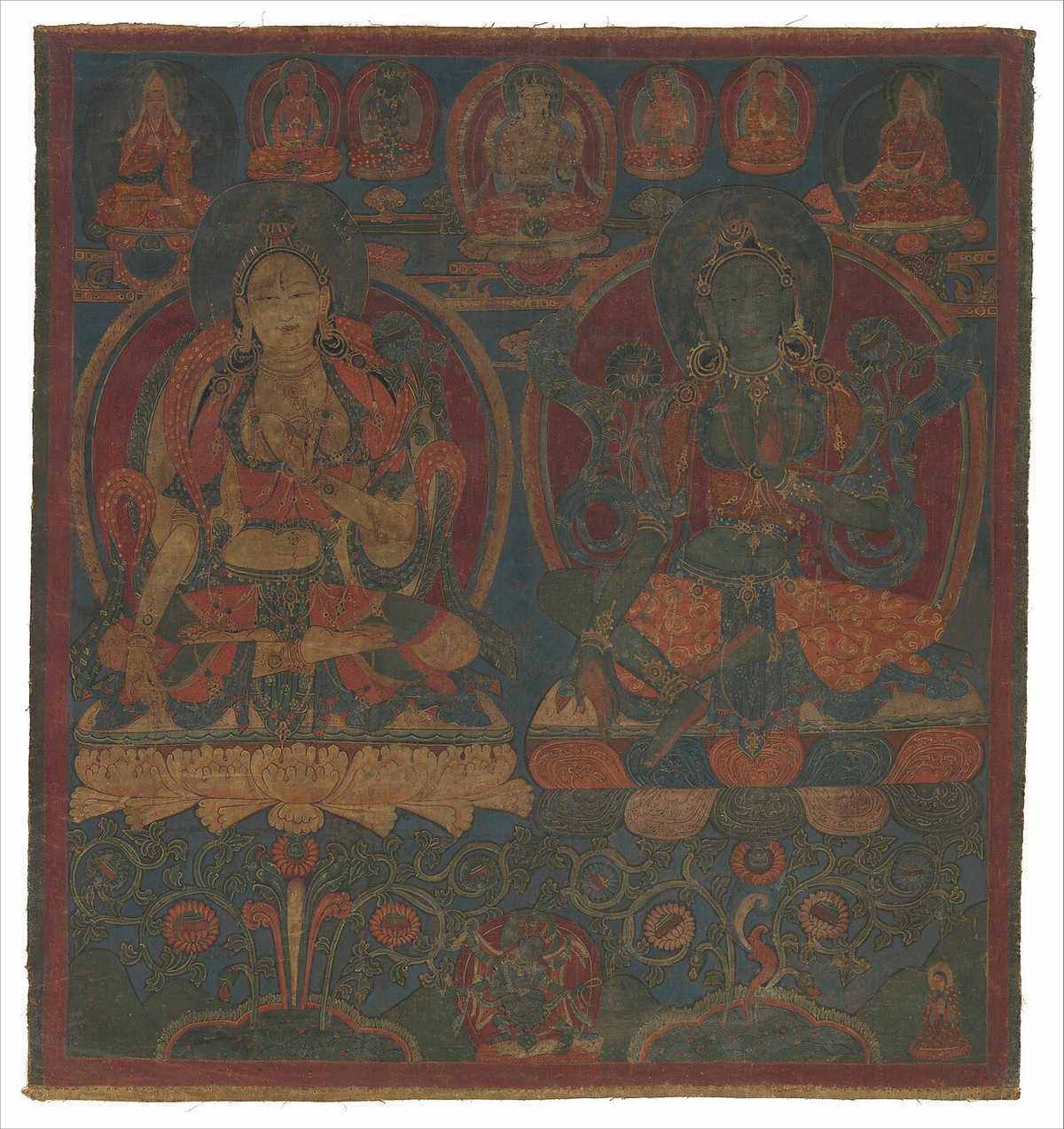
Look closely at a bronze statue or a museum painting of White Tara. From brow to soles, her posture and lotus petals form one attentive frame.
Start with her seven eyes. Two eyes sit on her face, plus a wisdom eye between her brows. Now look at her open palms and the soles of her upturned feet. An eye sits in the center of each palm and each sole, making seven eyes in all. Two eyes watch the road ahead. The brow eye sees past surface masks. Two palm eyes watch what the hands give and take. Two sole eyes watch every path where the feet step. Sight is no longer locked inside the skull. It stays awake at every door where person and world meet.
Next look at her seat. Unlike Green Tara with one foot down, White Tara sits with both legs crossed in the full vajrasana lotus pose. Her ankles turn upward on her thighs, showing the eyes on both soles. Her base sits wide and level like a mountain foot. Storms wash past the flanks while the peak stays still.
Behind her head and torso glow twin round moons, pale like autumn moonlight. Moonlight reflects solar light without burning the eyes. That pale glow softens inner rush before it wears the spirit thin.
Look at her hands and flower. Her right hand rests open on her knee in the varada sign of giving, palm turned out with an eye watching every gift. Her left hand lifts by her heart in the refuge sign of the Three Jewels, holding the stem of a white utpala lotus. Where Green Tara's blue flower shows three stages of growth, White Tara's white blossom opens wide beside her left ear in full peace. Art shows her sixteen years old, marking vigor untouched by doubt.
White Tara beside Amitayus and Ushnishavijaya
In Tibetan shrines, White Tara often sits in a triad with Amitayus, the red Buddha holding a jar of nectar, and Ushnishavijaya, the white goddess crowned with a stupa.
Together the three map how endurance works in mind and breath. Amitayus draws life-giving light from the western sky into the center behind the navel. Ushnishavijaya guards the crown against sudden loss of clarity. White Tara sits at the heart, weaving seven-eyed sight through hands, feet, and brow so vitality does not leak out through rush or fear.
Tom Kenyon notes in Song of White Tara that chanting her mantra while resting focus in the heart opens calm insight without straining the breath. He reminds listeners that white light works gently like dew, guarding the mind from split thoughts without force. In living Buddhism and sound practice alike, this shelter nurtures calm devotion and spiritual endurance.
White Tara under the eighth and fifteenth moons
White Tara is a living Buddha of Tibetan worship, not a planet or star in sky tables. In Tibetan tradition, her prayers follow the eighth and fifteenth full-moon days of each lunar month. Linking her calm lunar witness with modern Western planets is a contemporary symbolic comparison, distinct from Himalayan calendar astronomy.
In a modern birth chart, the Moon and Venus reflect that silver calm. The Moon holds memory, tides, and rest, while Venus rules grace, tone, and what softens the heart after strife. When Moon and Venus meet by trine or conjunction, awareness seeks beauty and gentle repair. When sharp squares link them to Mars or Uranus, a person learns to pause before rush scatters focus.
Cancer, Taurus, and Pisces echo that protective stillness. Cancer shields tender starts, Taurus holds patient earth rhythm, and Pisces remembers the wide sea behind daily chores. Saturn beside the Moon, or in the fourth and twelfth houses, gives backbone to stillness across decades.
Resting in the seven-eyed autumn moon
Approach White Tara with real respect, whether you bow at a Tibetan shrine or sit peacefully outside Buddhism. Millions honor her daily as a living refuge.
Come at evening under moonlight, or at dawn before street noise rises. Light a white altar candle on a white cloth beside a small bowl of fresh water.
Sit upright with ankles crossed in a lotus pose if your knees permit, or upright on a firm chair with feet on the floor. Keep your spine tall without strain. Rest your right hand open on your knee and your left hand softly by your chest, or rest both palms lightly on your thighs.
Follow Tom Kenyon's step from Song of White Tara. Place attention in the center of your chest, just ahead of your spine behind the breastbone. Picture a calm orb of white moonlight resting there. Do not push or squeeze the breath. Let each inhale widen your ribs and each exhale drop your shoulders.
As you sit, move brief awareness through all seven points she watches: your two eyes, the spot between your brows, both palms, and both soles. Notice how presence deepens when hands and feet feel awake beside your mind.
Sound her mantra softly or in thought: Om Tare Tuttare Ture Svaha. You can also use her white-light line, Om Tare Tuttare Ture Mama Ayuh Punya Jnana Pushtim Kuru Svaha. That prayer asks for spiritual vigor, merit, and wisdom to grow. On the eighth and fifteenth full-moon days of each Tibetan month, devotees offer water bowls, butter lamps, and calm chants.
End the evening or morning sitting by letting the white orb inside your chest soften into warm stillness until it rests tucked inside ordinary sight. Bow your head once in gratitude, then gently blow out the altar candle before bed or daily work, letting the unhurried calm stay in the darkened or sunlit room.
Questions people ask about White Tara
Who is White Tara in Tibetan Buddhism?
White Tara, known as Drolkar in Tibetan and Sitatara in Sanskrit, is a female Buddha of calm mercy, shelter, and long focus on the path. She rose beside Green Tara from the tears of Avalokiteshvara.
Why does White Tara have seven eyes?
She has two eyes on her face, one wisdom eye at her brow, two eyes on her palms, and two eyes on her soles. They show awake awareness watching every thought, every touch of the hands, and every step of the feet.
What does White Tara stand for in Buddhist practice?
In Buddhist worship she stands for unhurried calm, inner endurance, and freedom from rush so wisdom can ripen. Her lore centers on spiritual peace and clarity, never medical cures or physical treatment.
Why is White Tara compared to the autumn full moon?
In Tibet, autumn skies clear after summer rains, making the full moon unusually bright and calm. White Tara's silver light mirrors that cool clarity free from glare or haste.
How do Buddhists meditate on White Tara?
Practitioners sit upright in lotus pose, picture a moon disk and seven-eyed Tara, rest focus in the heart center, and sound her mantra while keeping gentle awareness in daily acts.
The lunar mirror of White Tara
White Tara is the seven-eyed moon over snow, the stillness that holds every ray without haste.